
Crop Production

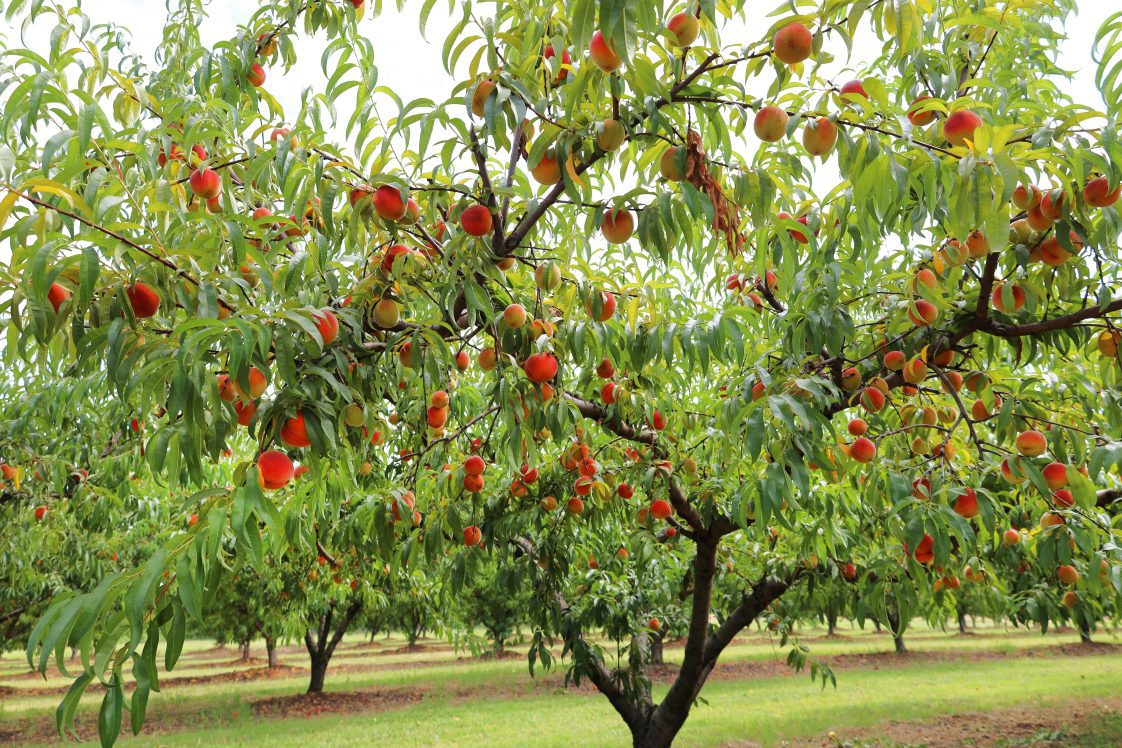
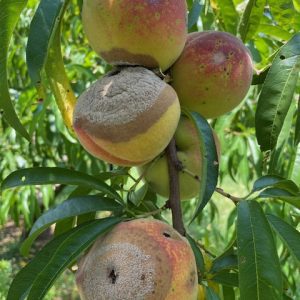
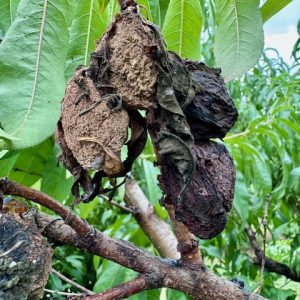
Brown rot is a common fungal disease that can damage peaches. The disease is most noticeable on fruit, but the fungus can also cause a flower and shoot blight in the spring. However, fruit rot is the most obvious problem during late summer and early fall in Alabama. Fruit become more susceptible as they ripen and mature, often within a few weeks of harvest. Brown rot begins as small round spots on fruit that get bigger over time. Under warm, wet conditions, infected fruit can rot within two to three days, with fruit completely covered with tan to gray fungal spores. Fruit will turn from gray to brown, then to black and shrivel up. Rotting fruit may drop to the ground or remain in the tree as dried fruit mummies. The mummified fruit are a major source of fungal inoculum for the following year.
Management
Managing brown rot for 2025 begins now by following good sanitation practices. Growers need to collect all rotting fruit that have dropped to the ground, and those mummified fruit still attached to the tree. These fruit need to be buried or discarded to remove the source of fungal inoculum from the garden. Properly pruning trees during the dormant season will open up the canopy and improve air movement allowing the canopy to dry out faster next year.
Managing insect pests and preventing bird damage during the season can help reduce brown rot infections as the wounds they cause on the fruit can provide openings for the fungus to enter. Fungicides can be used to manage brown rot though their much more effective when combined with the cultural controls outlined above. Fungicides are used to prevent infection and will not cure plant tissue already infected by the pathogen. Make sure to read and follow all label directions before applying any pesticide.