
Crop Production

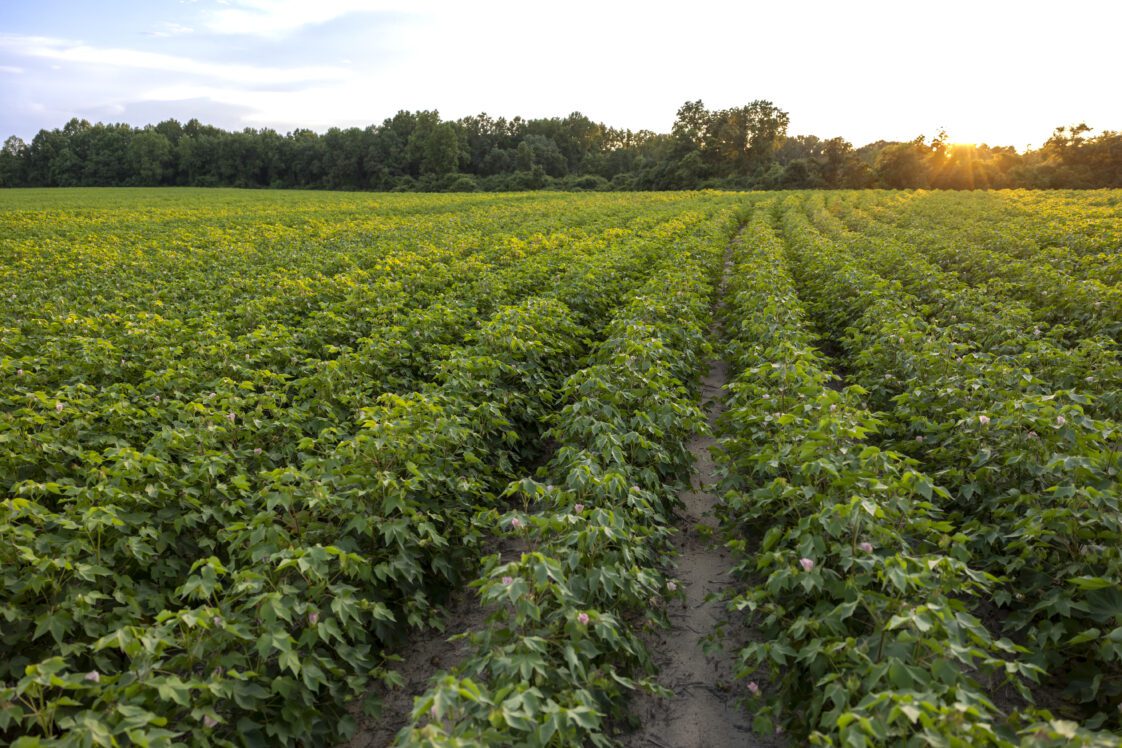
Learn the effects of repeated broiler litter application on soil fertility in a continuous cotton system. Recommendations are also provided based on the study.
Broiler litter is a rich source of organic matter and essential plant nutrients. Many Alabama farmers are experienced in using broiler litter as a soil amendment and fertilizer because of the history of broiler production in the region. In 2024, Alabama produced 1.17 billion broilers, which represented 12.4 percent of the total U S production. It is estimated that 1.5 to 2 million tons of broiler litter is produced annually in Alabama as an industry byproduct.
Cotton (Gossypium hirsutum L.) is a major crop in Alabama with an estimated 340,000 planted acres in 2025. Cotton farmers often apply broiler litter as a preplant soil amendment. However, repeated or excessive rates of broiler litter application could potentially result in elevated concentrations of phosphorus (P), potassium (K), and other nutrients in the topsoil, which may be susceptible to leaching and runoff losses during rainstorm events.
To assess the impact of repeated broiler litter applications on soil fertility (soil pH, total N, total C, and Mehlich-1 extractable P, K, Mg, and Ca) in a continuous cotton cropping system, studies were conducted at the Auburn University’s Wiregrass Research and Extension Center (WREC) on an Orangeburg sandy loam soil from 2021 to 2023 and at the Tennessee Valley Research and Extension Center (TVREC) on a Decatur silt loam soil in 2022 and 2023 (figure 1).
Treatments included two tons per acre of broiler litter surface-applied without incorporation before cotton planting every year, with or without 85 pounds per acre of urea-N at the first square growth stage. The fields also received 60 pounds of K2O per acre per year as muriate of potash. The K fertilizer was applied as a surface broadcast by hand along with urea. Treatments were arranged in a randomized complete block design with four replications. Each experimental plot was four rows wide and 20 to 25 feet in length. The WREC site was managed in strip tillage, while the TVREC site was under no-till field conditions. There was no history of broiler litter application at either site. Previous crops were cotton and corn (Zea Mays L.) at WREC and TVREC, respectively. The total rainfall during the growing season (May to October) and selected crop management information at each site-year are shown in table 1. The moisture content and nutrient concentration of broiler litter applied to the experimental plots during the study were determined and are shown in table 2. Soil samples were collected from a depth of 0 to 6 inches before initiating the study and in September 2023, reflecting the short-term (i.e., 3 years at WREC and 2 years at TVREC) effects of repeated broiler litter application on nutrient accumulation in the topsoil.
Table 1. Total Rainfall During the Growing Season and Selected Crop Management Information at Wiregrass Research and Extension Center (WREC) in 2021–2023 and Tennessee Valley Research and Extension Center (TVREC) in 2022–2023.
| Location | Year | Rainfall (Inches) | Broiler Litter Application | Planting | Cultivar | Seeds/Acre | Harvest |
|---|---|---|---|---|---|---|---|
| WREC | 2022 | 15.9 | May 18 | May 31 | DP 2038 | 43,560 | October 25 |
| WREC | 2023 | 13.1 | May 3 | May 16 | DP 2020 B3XF | 34,848 | October 26 |
| TVREC | 2022 | 16.4 | May 13 | May 20 | DP 2012 B3XF | 58,000 | October 14 |
| TVREC | 2023 | 15.3 | April 24 | May 10 | DP 2012 B3XF | 52,000 | October 3 |
| WREC | 2021 | 27.9 | May 14 | May 20 | DP 2038 | 34,848 | October 29 |
Table 2. Nutrient Concentration of Broiler Litter Applied at the Wiregrass Research and Extension Center (WREC) in 2021–2023 and the Tennessee Valley Research and Extension Center (TVREC) in 2022–2023.
| Location | Year | Moisture | C | N | P2O5 | K2O | Ca | Mg |
|---|---|---|---|---|---|---|---|---|
| WREC | 2021 | 33.1 | 32.2 | 2.71 | 2.82 | 3.58 | 1.79 | 0.87 |
| WREC | 2022 | 31.6 | 26.1 | 2.10 | 1.81 | 2.30 | 1.15 | 0.51 |
| WREC | 2023 | 16.3 | 36.2 | 2.77 | 2.17 | 2.53 | 1.49 | 0.55 |
| TVREC | 2022 | 32.3 | 30.6 | 2.98 | 2.08 | 3.01 | 1.54 | 0.54 |
| TVREC | 2023 | 26.6 | ---- | 3.24 | 4.29 | 5.63 | 3.71 | 0.95 |
Soil pH
The pH decreased by one unit from an initial 7.3 in the third year at WREC, which had sandy loam soil (table 3). In general, soil pH is expected to increase following broiler litter applications due to the addition of CaCO3. Also, the WREC site had received one ton per acre lime application in spring 2021. Researchers speculate that several factors, including the relatively low soil cation exchange capacity (<4.6 cmolc per kg of soil), the high leaching potential of basic cations (Ca2+, Mg2+, or K+), and the application of urea fertilizer, may be responsible for this pH decline. Soil pH is known to decrease with the application of ammonium or urea-based fertilizers due to the release of hydrogen ions (H+) through the nitrification process, i.e., microbial conversion of ammonium N (NH4 +-N) to nitrate N (NO3 –N). Unlike sandy loam soil, the application of broiler litter for 2 years on silt loam soil at TVREC increased surface soil pH (table 4). The increase in pH was higher in control plots that received no urea fertilizer. Previous studies have reported no change in soil pH after 3 to 5 years of broiler litter applications at TVREC, attributing it to the higher buffering capacity of a Decatur silt loam soil. The TVREC site had received a higher two tons per acre lime application in 2021, which may explain the increased soil pH in the study.
Table 3. Comparison of Soil pH, Total N, Total C, and Mehlich-1 Extractable P2O5, K2O, Mg, and Ca (0–6 inch depth) at the Initiation (spring 2021: baseline data) and at the End of the Study (fall 2023) at Wiregrass Research and Extension Center.
BL = Broiler litter alone.
BL+N = Broiler litter with supplemental 85 pounds N per acre per year through urea.
60 pounds K2O per acre per year was applied to both treatments.
| Year | Treatment | pH | Total N % | Total C % | P2O5 | K2O | Mg | Ca |
|---|---|---|---|---|---|---|---|---|
| 2021 | Baseline | 7.3 | 0.05 | 0.63 | 137 | 140 | 72 | 464 |
| 2023 | BL | 6.2 | 0.02 | 0.47 | 110 | 245 | 89 | 346 |
| BL+N | 6.3 | 0.02 | 0.40 | 94 | 213 | 88 | 358 |
Table 4. Comparison of Soil pH, Total N, Total C, and Mehlich-1 Extractable P, K, Mg, and Ca (0–6 inch depth) at the Initiation (spring 2022: baseline) and at the End of Study (fall 2023) at Tennessee Valley Research and Extension Center.
BL = Broiler litter alone.
BL+N = Broiler litter with supplemental 85 pounds N per acre year through urea.
60 pounds K2O per acre per year was applied to both treatments.
| Year | Treatment | pH | Total N % | Total C % | P2O5 | K2O | Mg | Ca |
|---|---|---|---|---|---|---|---|---|
| 2022 | Baseline | 5.9 | 0.12 | 1.18 | 105 | 268 | 140 | 2930 |
| 2023 | BL | 6.4 | 0.12 | 1.13 | 144 | 672 | 149 | 2339 |
| BL+N | 6.2 | 0.13 | 1.27 | 186 | 559 | 153 | 2326 |
Total N and Total C
Researchers expected that the repeated applications of broiler litter would maintain or increase soil total N levels, but the total N content of a sandy loam soil decreased more than 50 percent over a 3-year period (table 3). Total N showed no change over a 2-year period in a silt loam soil (table 4). The strip tillage and hot and humid conditions at WREC may have caused a higher mineralization (i.e., conversion of organic N into inorganic forms) rate, resulting in a significant decline in soil total N. Previous research has generally concluded that coarse-textured soils favor N mineralization due to good aeration and a lower degree of organic N stabilization, whereas N immobilization (i.e., conversion of inorganic N into organic forms) was found to be positively associated with the soil clay content. Unlike this short-term study, a 2006 study by C. C. Mitchell and S. Tu reported that the application of broiler litter based on standard N recommendation for 10 years on a coarse-textured Compass fine sandy loam in central Alabama had increased total N in the surface soil by 46 percent.
Similarly, despite receiving a total of 3,794 pounds C per acre from broiler litter over 3 years, total C decreased in a sandy loam soil of WREC (table 3). The decrease in soil total C was greater for plots that received urea fertilizer. This could be related to the quality and quantity of C substrates in broiler litter. Fresh broiler litter used in the study could have provided greater amounts of labile organic C, which decomposes rather quickly under the subtropical climate of the southeastern United States, thus, contributing little or nothing to the maintenance or buildup of soil C. The average monthly temperature during the growing season at WREC ranged from 65 degrees F to 83 degrees F across years.
Mehlich-1 Extractable P, K, Mg, and Ca
Soil P did not accumulate over the 3-year study period at the sandy loam site, most likely due to leaching (table 3). An average of 9 pounds P2O5 per acre per year was harvested in the cotton seed at this site. On the other hand, repeated applications of broiler litter resulted in 76 percent higher soil P levels in a silt loam soil for plots that received urea fertilizer, a soil test rating of “very high” (table 4). Surface soil K and Mg levels were increased by 53 percent and 22 percent, respectively, in a sandy loam soil and 109 percent and 9 percent, respectively, in a silt loam soil. The treatment plots received an additional 60 pounds K2O per acre of fertilizer each year at both sites, which helps explain the greater extractable K concentration in the soil at the end of the 2023 season. Approximately 274 pounds P2O5 per acre, 339 pounds K2O per acre, and 78 pounds Mg per acre was applied over 3 years at WREC, and 254 pounds P2O5 per acre, 346 pounds K2O per acre, and 60 pounds Mg per acre was applied over 2 years at TVREC from broiler litter (table 2). Similar increases in soil nutrient concentrations induced by broiler litter were also reported by other researchers. Soil Ca decreased compared to the initial levels at both sites. Researchers believe that soil Ca concentrations may have been influenced by soil pH and soil moisture content, affecting the solubility and extractability of Ca.
Concluding Remarks
The results of this study clearly demonstrate that repeated land application of broiler litter has elevated concentrations of P, K, and Mg in surface soil, especially on a fine-textured soil of northern Alabama. It is likely that long-term application of broiler litter at a rate typical for the region may be an environmental concern due to the potential of excess nutrient runoff and leaching, in line with previous studies. Therefore, it would appear advisable to limit yearly applications of broiler litter in the same field to less than two tons per acre. To reduce soil P buildup, broiler litter applications should be based on the P requirement of the crop. Any additional crop nutrient requirements can be balanced with supplemental commercial fertilizers. It is also recommended to regularly do soil tests and avoid broiler litter applications when soil test nutrients exceed critical levels.
References
- Mitchell, C.C., Tu, S., 2006. Nutrient accumulation and movement from poultry litter. Soil Sci. Soc. Am. J. 70, 2146–2153.
- Parker, M.A., Nyakatawa, E.Z., Reddy, K.C., Reeves, D.W., 2002. Soil carbon and nitrogen as influenced by tillage and poultry litter in North Alabama, in: Santen, E.V. (Ed.), Proceeding Southern Conservation Tillage Conference for Sustainable Agriculture, Auburn, AL, pp. 283–287.
- Ros, G.H., Hanegraaf, M.C., Hoffland, E., van Riemsdijk, W.H., 2011. Predicting soil N mineralization: Relevance of organic matter fractions and soil properties. Soil Biol. Biochem. 43, 1714–1722.
- Zhu, Q., Schmidt, J.P., Lin, H.S., Sripada, R.P., 2009. Hydropedological processes and their implications for nitrogen availability to corn. Geoderma, 154, 111–122.
- Sørensen, P., Jensen, E.S., 1995. Mineralization-immobilization and plant uptake of nitrogen as influenced by the spatialdistribution of cattle slurry in soil of different texture. Plant Soil. 173, 283–291.
 Rajveer Singh, Graduate Student, and Rishi Prasad, Extension Specialist, Associate Professor, both in Crop, Soil, and Environmental Sciences, Auburn University
New November 2025, Impact of Repeated Broiler Litter on Cotton Soil Fertility, ANR-3197