
Crop Production

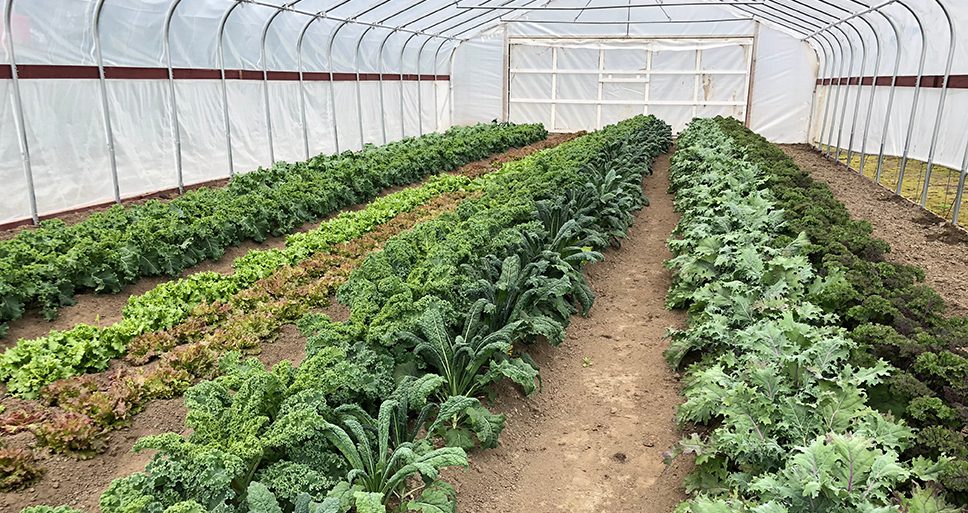
In the last several years, there has been a growing interest in the use of high tunnels for fruit and vegetable production. High tunnels are basically unheated greenhouses that are used to provide a shelter over fruit or vegetable crops. While they do require additional management compared to conventional practices, high tunnels can be extremely beneficial for commercial growers.
Characteristics of High-Tunnel Production
High tunnels are much cheaper than greenhouses but can still cost thousands of dollars to construct. They can be store-bought or homemade and different lengths and widths, which obviously determines the cost. High tunnels usually have one layer of plastic, and greenhouses may have two layers. A high tunnel should be built on a level, well-drained site. The lay of the land and available space may determine the orientation of the high tunnel, but a north-to-south or northeast-to-southwest direction is best.
Plants in high tunnels are usually grown in the soil but can also be grown in containers. The same plants that are grown in traditional fields can also be grown in a high tunnel. Plasticulture production is often used, which is the use of plastic mulch and drip irrigation. The tunnels are usually built where equipment can go in to till or lay plastic. Row covers can be used in a high tunnel just like in a field to protect plants from cold temperatures. An insect barrier (netting) can also be installed around the high tunnel to reduce the insect population in the tunnel.
Benefits and Challenges
High tunnels can lengthen the growing season and protect crops from rain and wind, as well as some diseases and insects. They also can overall be highly productive, providing higher marketable yields per plant and complementing traditional field production.
However, high tunnels also have some disadvantages. Pest problems will sometimes be different than traditional growing methods. Oftentimes, a pest that was a problem in the field has been replaced by a different pest in the high tunnel. High tunnels can also increase day and night temperatures, which stresses plants and may cause some not to set fruit. High-tunnel growers cannot take advantage of rain to water their plants, as crops in a high tunnel must be irrigated. Weather can also play different roles in high tunnels. Plants in a high tunnel can still be damaged by cold weather, and other weather acts (snow, wind, etc.) can destroy a high tunnel.
Crop Management
Just like in field production, growers need to conduct soil tests in high tunnels and fertilize according to the test’s recommendations. Crop rotation is also practiced in high tunnels. Crops from the same vegetable family should not be planted after each other. For example, tomatoes and peppers are both in the Solanaceae (nightshade) family, which means a grower should not plant peppers following tomatoes. More information on rotating vegetable plant families can be found in the Alabama Extension publication, “Crop Rotation: An Essential Part of Planning a Home Garden,” available at aces.edu.
Some of the management practices for high tunnels include rolling up the sidewalls for ventilation. Electric fans, which are commonly used for ventilation in greenhouses, are not used in high tunnels. Temperature will determine when to open and close the sidewalls. For example, air temperatures higher than 90 degrees F or lower than 55 degrees F can reduce tomato fruit set and affect pollination. To monitor conditions, it helps to hang a thermometer at plant height inside the tunnel.
During the cooler times of the year, such as spring and fall, growers will often roll up the sidewalls in the mornings and lower them in the evenings to keep the plants from getting too hot or cold. However, on windy days during those times of the year, it may be beneficial to only open the sidewalls partially, so the cool air does not hurt the plants. On cloudy days, growers may need to roll the sides up or down at different times of the day. Each day could have different conditions, so a grower may not adjust the sides at the same time as they did the day before.
Marketing
Growers should think about marketing their crops before building a high tunnel. There is a higher input cost when getting started, so can you get a higher price when you sell the produce? Since high tunnels are expensive and require additional management, growers need to plant high-dollar crops. Tomatoes are the most commonly grown crop in high tunnels. However, other crops are commonly grown in high tunnels, including cucurbits—such as squash, cucumbers, and melons—peppers, salad greens, strawberries, cut flowers, blueberries, and citrus.
More Information
More information on high tunnels is available at www.hightunnels.org. Growers can also contact the commercial horticulture Extension agent in their area for information.