
Crop Production

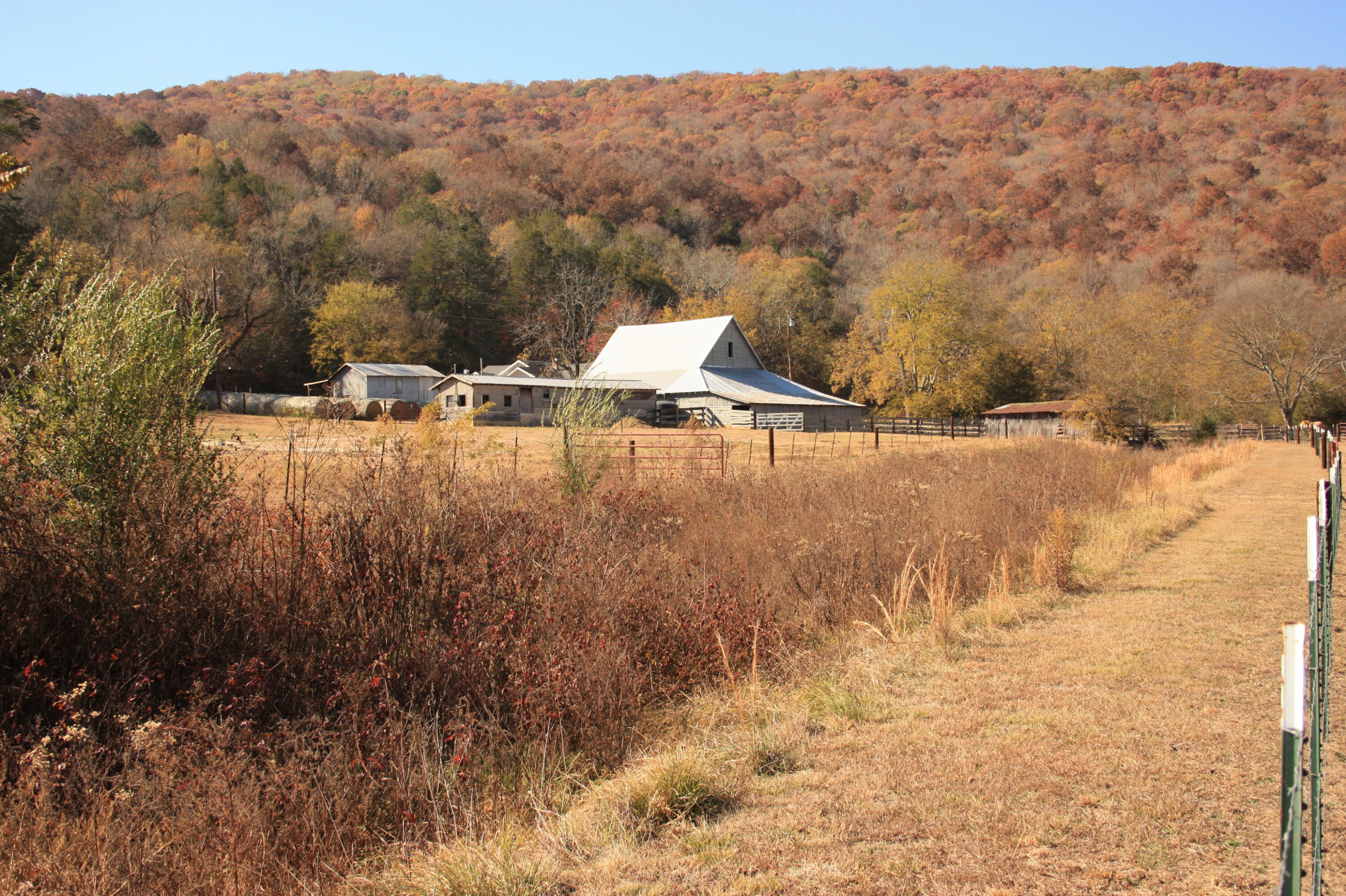
Drought conditions across Alabama and the Southeastern U.S. are intensifying, with several areas experiencing moderate to extreme drought (figure 1). While the impact on crop growth is immediate, an equally important consequence is how these conditions reshape pest pressure in vegetable and fruit systems, often leading to earlier infestations and faster population growth than typical seasons.
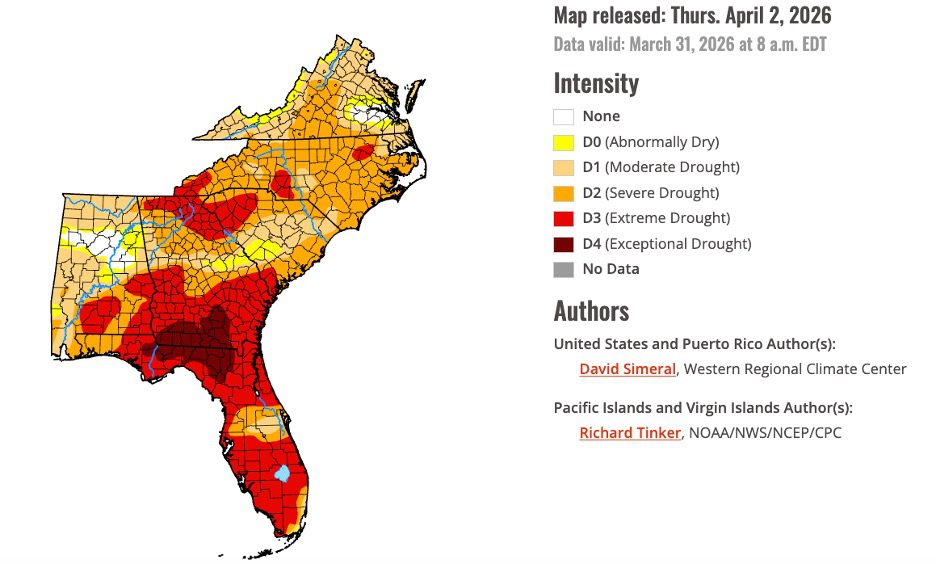
Figure 1. Southeast U.S. Drought Monitor, April 2026.
Hot and dry weather creates a favorable environment for several key pests common to Alabama production systems. Spider mites are often the first to respond, rapidly increasing under dry conditions and causing leaf stippling, bronzing, and early plant decline. Whiteflies can also establish earlier and build faster, particularly in crops such as tomato, cucurbits, and leafy greens. Thrips are also favored, especially due to increased movement and field colonization. The following sections highlight key identification features and early management strategies.
Spider Mites
Spider mites are among the most drought-associated pests in vegetable systems. They are very small and difficult to see without magnification, and infestations are typically first detected through plant symptoms. Feeding causes fine stippling that can progress to bronzing and leaf desiccation. Dust plays an important role in outbreaks under drought conditions. Plants near roads, field edges, or exposed soils often accumulate dust, which reduces natural enemy activity and favors mite buildup. Populations can increase rapidly under severe conditions, especially when natural enemies are reduced.
Management begins with early detection. Regular inspection of leaf undersides is essential. Adults are very small (less than 0.5 mm or 1/50 inch), pale green to reddish, and may produce fine webbing under heavy infestations. Eggs are spherical, translucent, and found on the underside of leaves (figure 2). Maintaining adequate irrigation, when possible, can reduce plant stress and limit outbreaks. Preserving natural enemies is also important; avoid unnecessary broad-spectrum insecticide applications.
Whiteflies
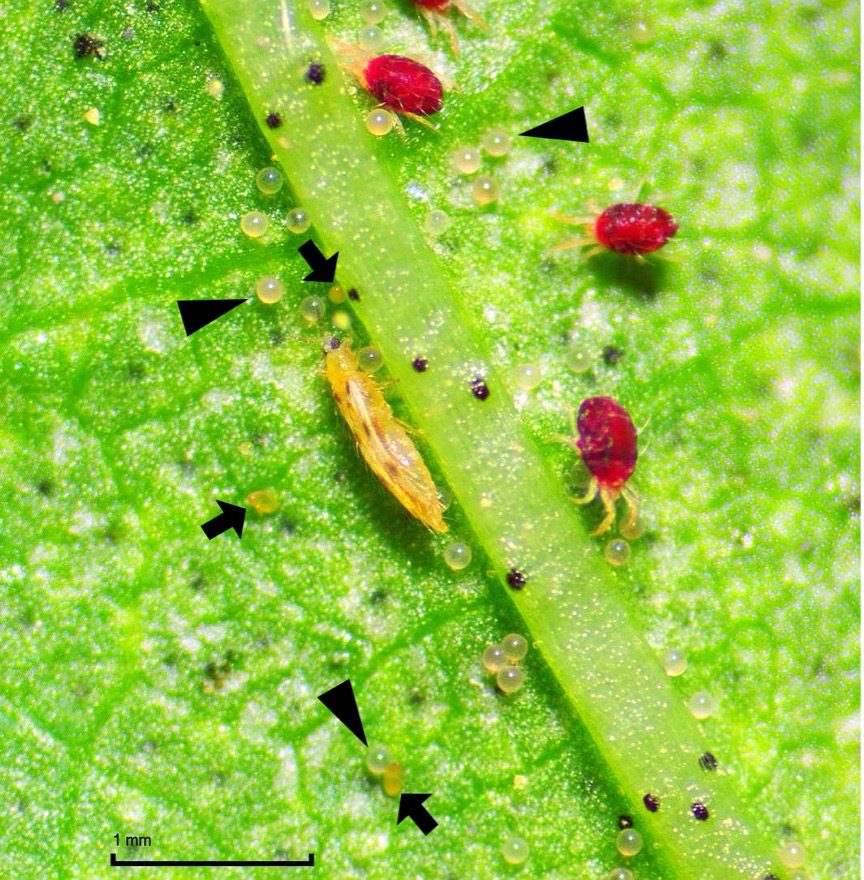
Figure 2. Mixed infestation case under a dry greenhouse condition: thrips, spider mites, and whiteflies on a cotton leaf. Arrowheads indicate spider mite eggs; arrows indicate whitefly eggs.
Whiteflies are common pests favored by hot and dry conditions. They are small, sap-feeding insects found on the underside of leaves, and infestations are often first detected by plant symptoms. Feeding causes leaf yellowing, reduced vigor, and honeydew accumulation, which promotes sooty mold. Under drought, whiteflies can establish earlier and build more quickly, particularly in tomato, cucurbits, and leafy greens.
Populations increase rapidly when plant stress reduces tolerance to feeding. In addition to direct damage, whiteflies transmit plant viruses that can further reduce yield under drought stress.
Management begins with early detection. Regular inspection of leaf undersides is essential. Adults are very small (less than 1 mm or 1/25 inch), white, and moth-like, often flying when disturbed. Eggs are oblong, cream to yellow, and laid on the underside of leaves (figure 2). Immatures are flat, oval nymphs attached to the leaf surface. Maintaining adequate irrigation can improve tolerance to feeding. Good spray coverage on leaf undersides is critical when control is needed. Rotate insecticides with different modes of action to minimize resistance.
Thrips
Thrips are small, slender insects favored by hot and dry conditions. They are commonly found in flowers and young plant tissues, where they feed by rasping and extracting cell contents. This causes silvery or bronzed streaking and can distort flowers and fruit. Dry conditions favor their movement and dispersal, increasing the likelihood of early infestations.
While feeding damage can be significant, the greatest concern in Alabama is transmission of tomato spotted wilt virus (TSWV) in tomatoes and peppers. Early-season infestations are particularly important, as they can lead to infection during critical crop stages.
Management depends on early and consistent monitoring. Thrips are best detected in flowers and tender tissues. A white paper, beat sheet, or foam cup can be used by tapping plant material onto the surface. Blue sticky traps can also aid monitoring. Adults are very small (1–2 mm or ~1/10 inch), narrow-bodied, and pale yellow to brown (figure 2); immatures are smaller and wingless. Because thrips are highly mobile and prone to resistance, avoid reliance on a single insecticide class. Maintaining plant health can help reduce impact.
General Considerations
Pest responses to drought are not always linear. Moderate plant stress can increase susceptibility to herbivores, while severe stress may reduce plant suitability, making outbreaks less predictable across fields. Drought also disrupts natural control, as beneficial organisms such as predatory mites and insect-pathogenic fungi are generally less effective under hot and dry conditions.
Early and consistent scouting becomes critical under these conditions. Growers should focus on the underside of leaves for mites and whiteflies and flowers for thrips activity, with particular attention to field edges and stressed areas. Maintaining plant health through proper irrigation, when available, can help improve tolerance to pest feeding. When intervention is needed, rotating insecticides by mode of action remains essential, as drought can accelerate pest population growth and increase the risk of resistance development.