
Crop Production

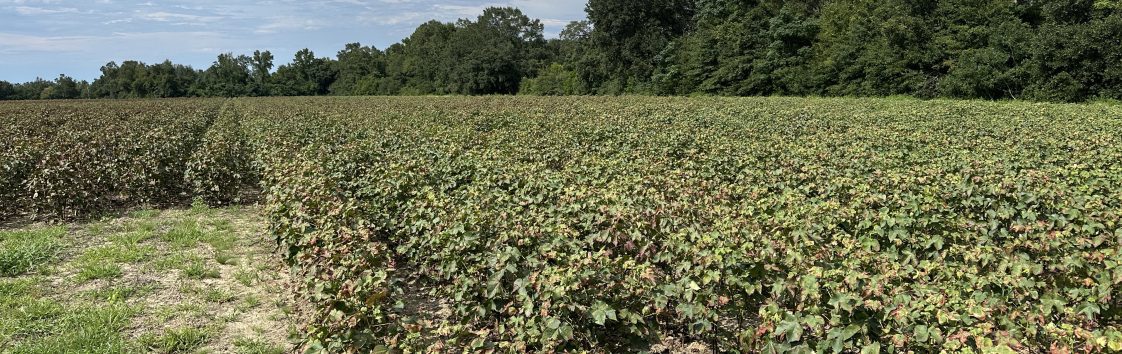
Alabama cotton growers are facing a new challenge with the recent detection of the two-spotted cotton leafhopper, also known as the cotton jassid (Amrasca biguttula). Cotton jassids are small, sap-sucking insects that feed on the underside of leaves, causing hopperburn—a rapid yellowing, reddening, and browning that can quickly weaken plants. Native to Asia and first reported in Puerto Rico in 2023, this pest was confirmed in Florida in 2024 and has now been found in Alabama cotton fields as of July 2025. Growers that see signs of this pest should contact their local agronomic crops Extension agent as soon as possible.
While the full impact on yields in Alabama is still uncertain, Extension experts and researchers across the Southeast are actively investigating the impact of this pest as well as potential control options. Alabama Extension at Auburn University experts will revise this web page to provide timely updates on this pest as new things develop. Read the latest updates.
-
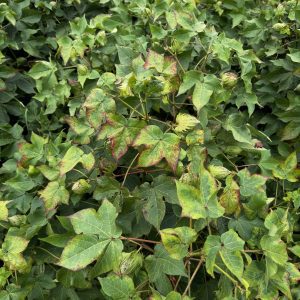
- Early signs of jassid damage on cotton. Symptoms may resemble potassium deficiency; red, yellow, or brown leaves; and/or leaf puckering or curling.
-
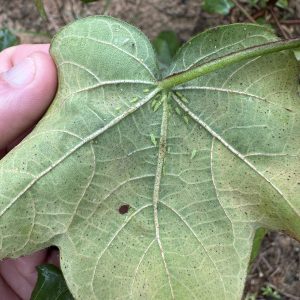
- Cotton jassids can be found on the underside of a cotton leaf, where they feed on plant juices with their piercing mouthparts.
-
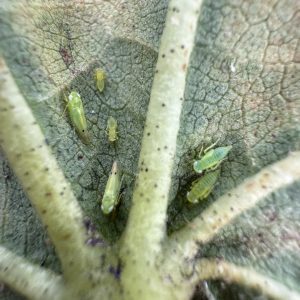
- A closeup of cotton jassids on the underside of a leaf.
-
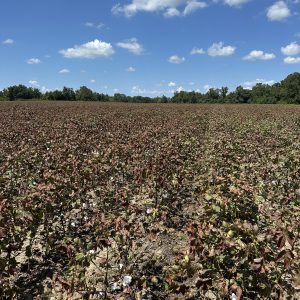
- Jassids can complete a life cycle in a short period, causing populations to build quickly and cause extreme field damage.
Alabama Cotton Jassid Tracker
At this point, cotton jassids have been confirmed in thirty-six Alabama counties. In the following map, dark-blue counties have a confirmed presence of adult cotton jassids. Dark-green counties do not currently have a confirmed presence of adult cotton jassids.
September 4 Update
The invasive two spot cotton leaf hopper (cotton jassid) has been confirmed in cotton fields in 18 counties across Alabama. Thus far, insecticide applications have been made in a timely manner and fields have been protected. This is and will continue to be an evolving situation, but experts have learned some things from their observations. The recent cold (or cool) front that moved through the state has seemed to slow down population growth. Cotton jassid numbers seem to be slower to build, which is a good thing.
Field Risks
Fertility. In observations, weaker fields seem to be at a greater risk of showing symptoms. There particularly appears to be a link between potassium levels and the crops ability to fight off jassids.
Planting date. For now, cotton jassid infestations have been greatest in older cotton. That will likely change soon as defoliation begins, and these fields are no longer suitable hosts. This will likely put later-planted fields at high risk of infestations.
Management Strategies
Threshold. As experts continue to learn about this insect, they are changing thresholds to avoid losses. Currently, the recommended threshold is one to two nymphs per leaf. Because there are several leafhopper species found in cotton, it is important to confirm adults in the field or to see symptoms somewhere in the field before making an application.
Insecticide strategy. Several insecticide efficacy studies as a group have been done across the Southeast. While several insecticides have been identified, Bidrin (6 ounces/acre) has been the most consistent and is generally widely available. Bidrin also has the added benefit of plant bug and stink bug control. Other materials that have provided good control include the following, listed alphabetically: Centric (2 ounces), Courier (12 ounces), Sefina (10.5 ounces), Sivanto (7 ounces), and Transform (1.5 ounces). Note. Bifenthrin has not provided acceptable control.
Insecticide termination. One of the most common questions has been when to terminate applications for cotton jassids. The honest answer is, experts don’t know. Based on their observations for how quickly cotton jassids can crash a field (as little as 2 weeks), experts recommend protecting cotton up to 2 weeks prior to defoliation. This means that cotton should be protected through 20 to 25 percent open boll.
If you have any questions or observations, reach out to your local agronomic crops Extension agent.
August 27 Update
The threshold at which treatment is recommended for the cotton jassid is one to two nymphs per leaf. To scout, Extension professionals recommend looking on the underside of the main stem leaf on the third, fourth, or fifth node from the top of the plant. Again, the threshold is one to two nymphs per leaf with injury present anywhere in the field. This helps to confirm the correct insect ID, as other leaf hoppers will not cause these symptoms. Populations and symptoms usually begin on field edges before moving into the field. For up-to-date control recommendations, contact your local agronomic crops Extension agent.