
Crop Production

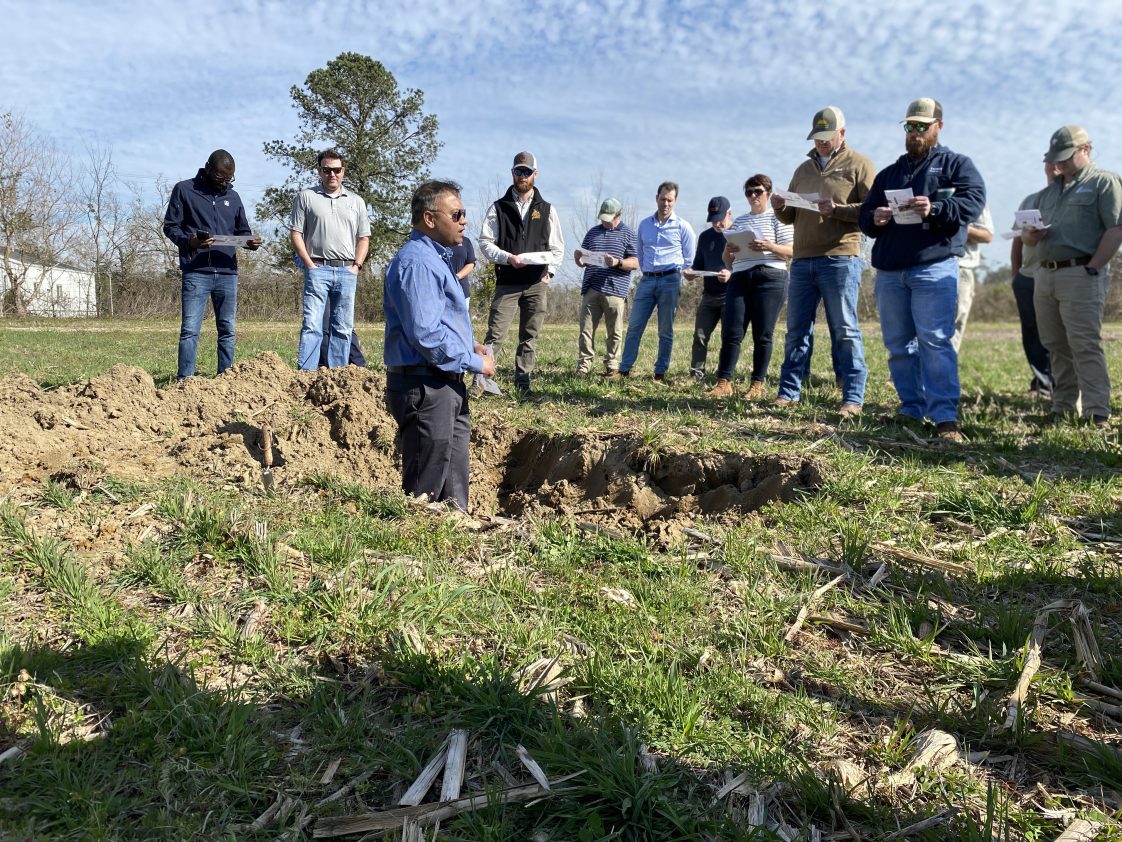
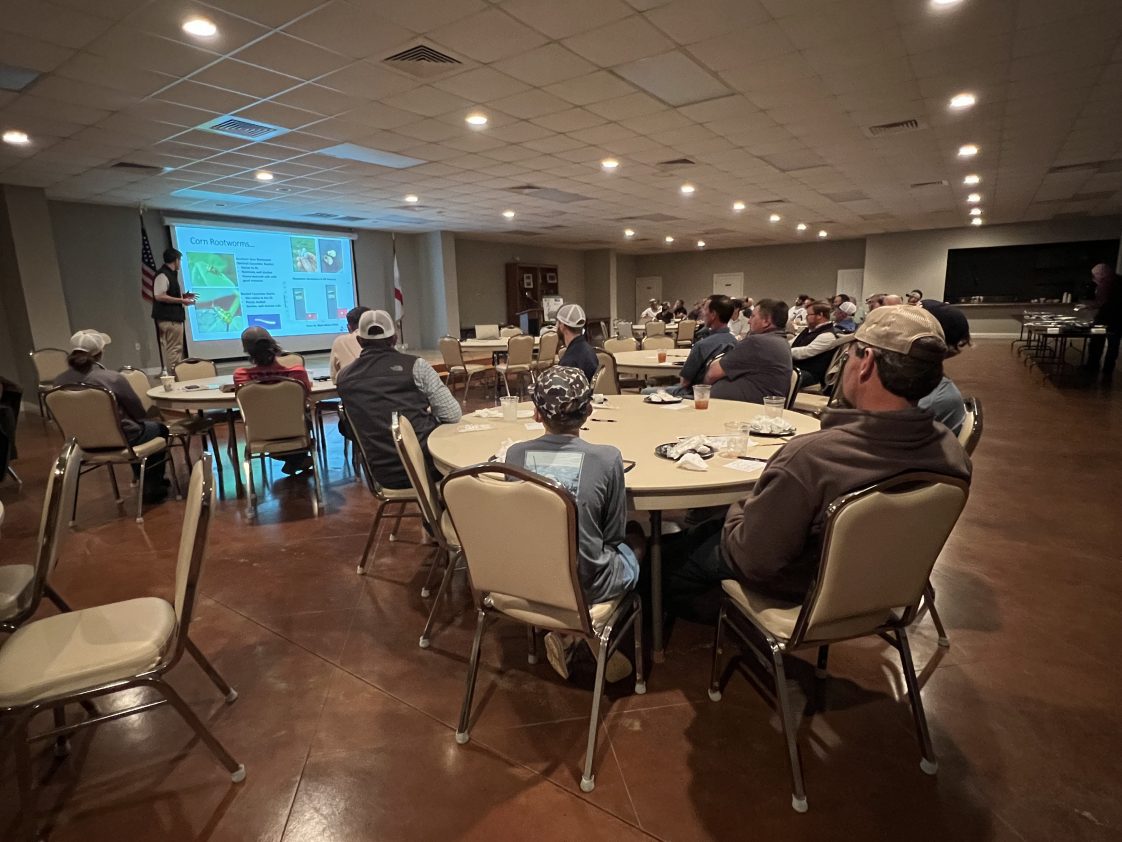
Figure 1 . Scott Graham and Caitlyn Lawton present insect control updates to local row crop growers at an Alabama Extension event.
Crop Protection & Cotton Scout Schools
Project Leader: Scott Graham
In 2024, a total of 33 Alabama Extension–sponsored events were held with more than 900 participants. These events ranged from county production meetings to experiment station field days and agent in-service training. Survey results showed that approximately 85 percent of respondents use Extension Integrated Pest Management (IPM) guides when making pest management decisions. Respondents also reported increased knowledge and planned changes in crop management.
The 65th Cotton Scouting Schools were held in Elmore, Cherokee, Henry, and Limestone Counties. Across all locations, 146 scouts were trained in the most up-to-date methods of scouting and managing insects in cotton, soybeans, and peanuts. Scouts reported learning new techniques or needing a refresher from previously attended scout schools. Timely insect management information was provided through newsletters, blog posts, and pest patrol hotlines. The overall economic impact of the Extension row crop entomology program was estimated to be more than $4 million in 2024.
Cotton Information Delivery
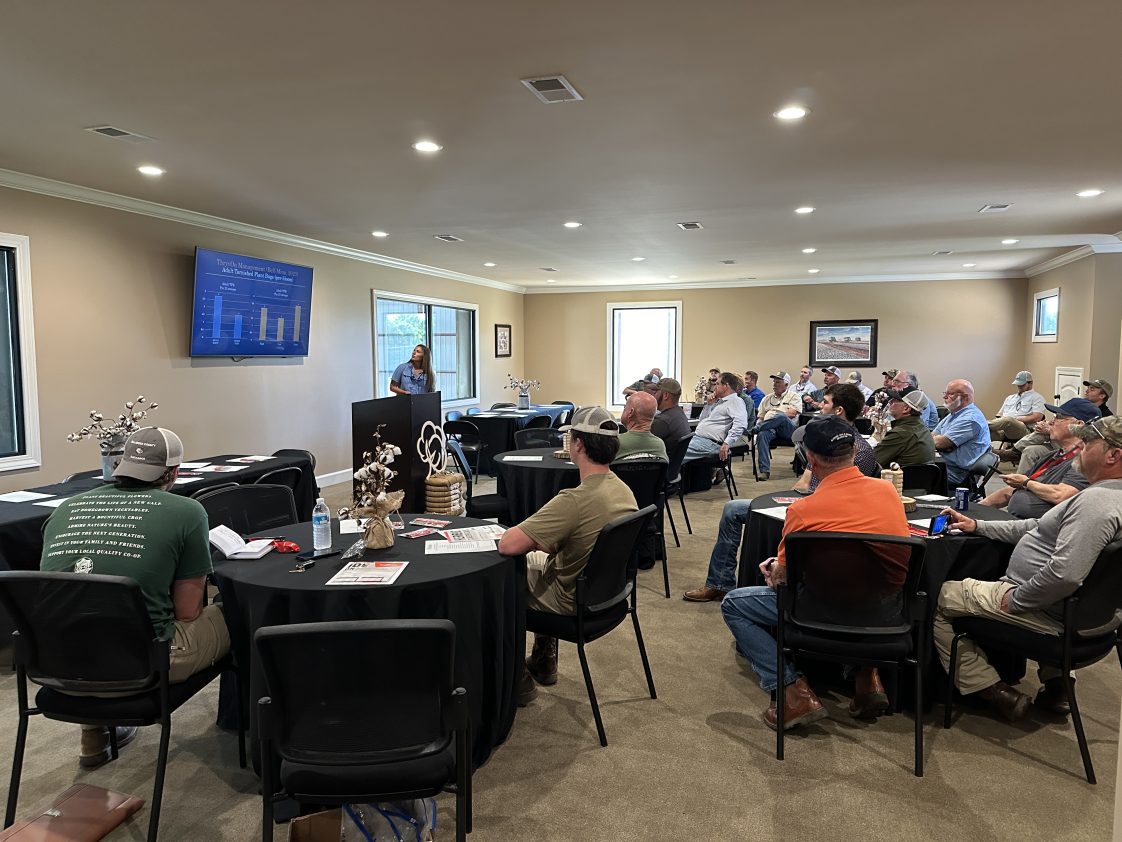
Figure 2. Scott Graham and Caitlyn Lawton present insect control updates to local row crop growers at an Alabama Extension event.
Project Leaders: Steve Brown and Scott Graham
The Agronomic Crops Team members focused on cotton share information in multiple formats each year. The Alabama Cotton Shorts newsletter is published monthly and delivers timely management information from Extension specialists and agents to about 1,500 recipients. In 2024, the percent open rate for Alabama Cotton Shorts for the 12 issues in 2024 averaged 62.9 percent, representing significant exposure to cotton information across the state and region. Specialists and agents discuss cotton issues in the Alabama Crops Report newsletter. AgFax, Farm Press, broadcast media, and other outlets often quote excerpts from these newsletters. Steve Brown, retired Extension cotton agronomist, and Scott Graham,Extension cotton entomologist, provided a monthly entry in the Cotton Farming magazine “Specialists Speaking’” column. The magazine has a national print circulation of approximately 22,000 and an e-news recipient list of 4,500. Brown also hosted the Cotton Specialists Corner podcast, a national effort sponsored by Cotton Incorporated that targets growers, consultants, and other management influencers.
Graham provides timely updates on the Alabama Insects Blog and the Syngenta Pest Patrol Hotline to provide in-season statewide updates. Downloads to these typically number more than 500 per update. Comments from the blog are often referenced in AgFax and other regional outlets. Specialists’ and agents’ collective and individual efforts provide significant delivery of cotton information to farmers, crop managers, and others.
AU Plant Diagnostic Laboratory
Project Leader: Kassie Conner
The AU-PDL processed 10,271 samples during 2024; 2,328 of those samples were routine (1,121 plant samples, 992 nematode samples, and 215 insect samples). Throughout the year 1 percent of clientele are surveyed to determine specific impacts based on recommendations provided through diagnostics. Clients surveyed (n=23) saved an average of $504 per sample from following Extension recommendations. With 2,328 routine samples, the AU-PDL saved clientele $1,173,312. Of the clients surveyed, 96 percent indicated that they adopted or plan to adopt the IPM recommendations provided by the AU-PDL based on their diagnostics.
-
- Figure 3. Scott Graham and Ron Smith visit a cotton grower in west Alabama.
-
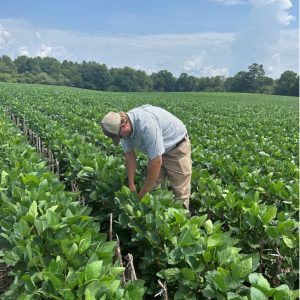
- Figure 4. Cade Grace scouts soybeans for disease in west Alabama.
Weed Management Strategies for Alabama Cropping Systems
Project Leader: David Russell
Results from county and regional needs assessments annually list weed management recommendations, weed species identification, or herbicide selection as their top priority needs. In 2024, the Agronomic Crops Team conducted at least 23 replicated field trials and participated in at least 55 statewide events to address these topics in various cropping systems, including row crops, forages, and rights-of-way. At least eight in-person events focused on weed management concerns in corn, soybean, or small grains, where Italian ryegrass, goosegrass, and pigweeds were listed as the most consistent weed problems. Although the online availability of auxin training was preferred to in-person options, more than 84 percent of the 195-plus attendees reported training and research updates as informative or very informative. Participants stated this research-based information will positively impact at least 54,130 acres, averaging 407 acres per farm represented.
Row Crops Field Days
Project Leader: Eros Francisco
Field days took place at E. V. Smith Research Center, Tennessee Valley Regional Research and Extension Center, and Gulf Coast Research and Extension Center in July and August 2024, focusing on row crops management and the 4R Nutrient Stewardship Certification Program. Several Extension specialists shared their research results and addressed the most relevant questions from farmers and stakeholders. Approximately 150 people attended the field days that will continue yearly in both experiment stations.
-
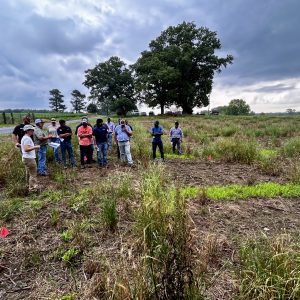
- Figure 5. Auburn University weed science students meet industry professionals and are trained in herbicide symptomatology and recommendations.
-
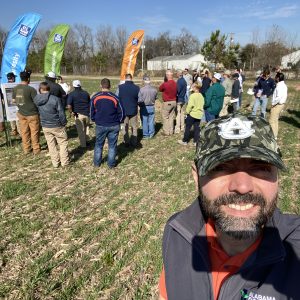
- Figure 6. Eros Francisco at an Extension field day.
On-Farm Variety Trials
Project Leaders: Eros Francisco and Tyler Sandlin
Every year, with the support of the Alabama Farmers Federation checkoff funds, corn and soybean on-farm variety trials are performed across different regions of the state. In 2024, nine corn trials were conducted in Colbert, Cullman, Geneva, Henry, Macon, Marshall, Perry, and Pike Counties, testing twelve different hybrids. For soybeans, trials were carried out in Geneva, Baldwin, Cullman, and Walker Counties. These trials give farmers important information on variety and hybrid performance—information needed for making decisions. A total of 10 on-farm cotton variety trials with multiple traits and technologies were planted across the state, representing major production areas and niche environments.
This information is available online in the Variety Trials Portal on the Auburn University Alabama Agricultural Experiment Station website.
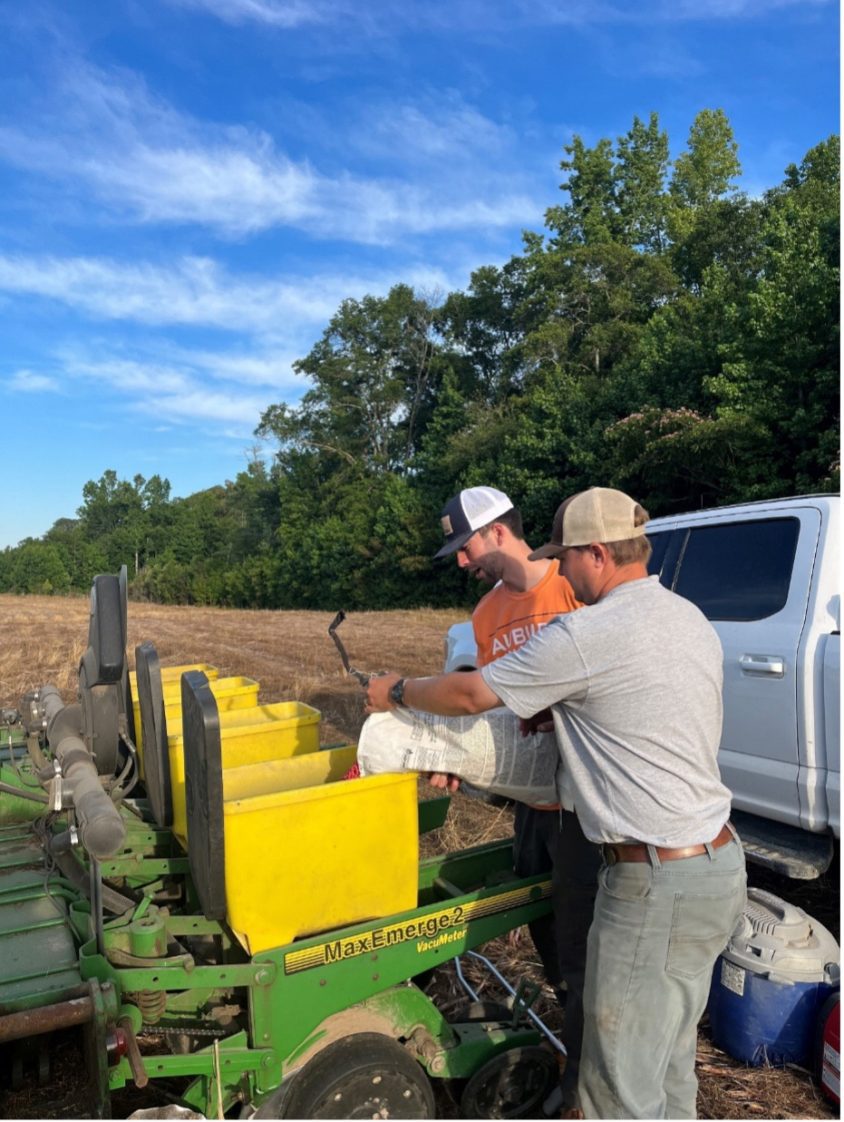
Figure 7. Alabama Extension intern Daniel Romine and Cade Grace load soybean seed for a variety trial in Walker County.
Cotton & Peanut Disease Management
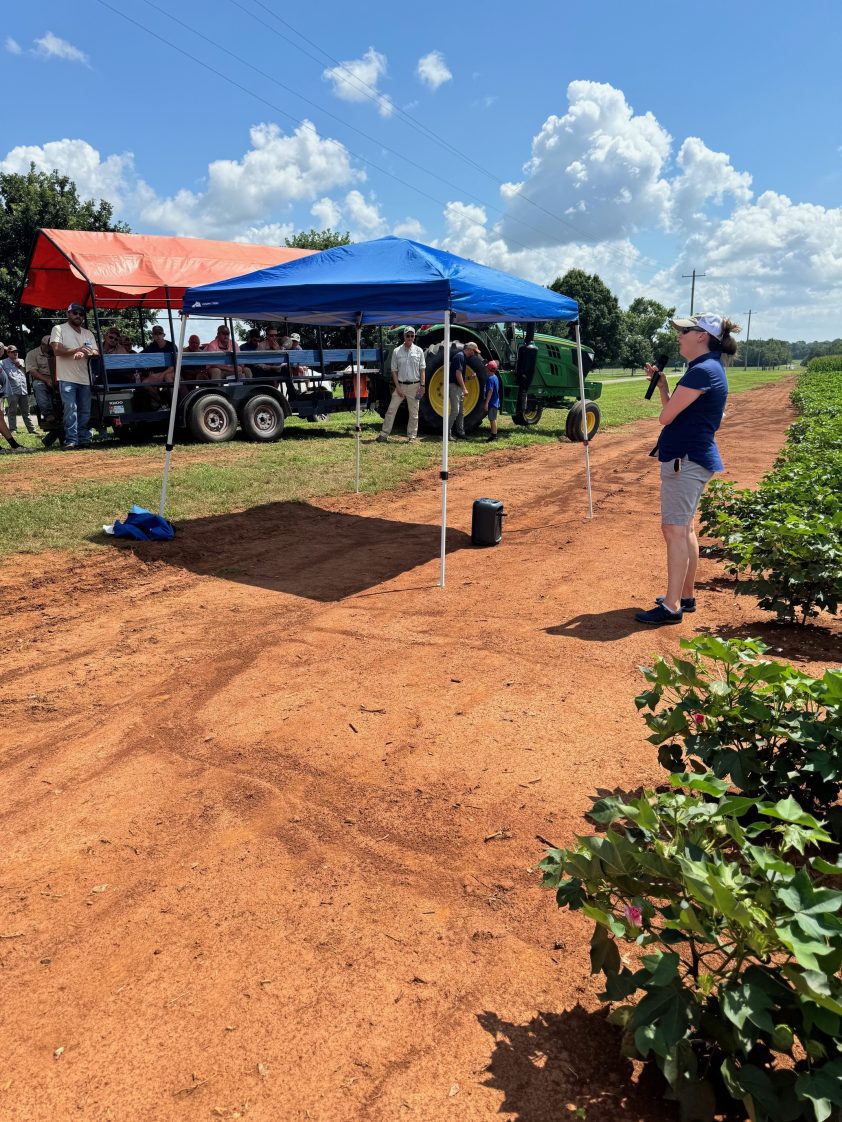
Figure 8. Amanda Strayer-Scherer speaks at a field day hosted at the Tennessee Valley Regional Research and Extension Center.
Project Leader: Amanda Strayer-Scherer
In Alabama and other parts of the United States, plant diseases play a major limiting role in agricultural production, including row crops, as they can potentially destroy parts or whole plants and negatively affect yield. In 2022, cotton, peanuts, and wheat represented three of Alabama’s top six agricultural crops valued at $575 million. Several foliar and soilborne diseases can cause yield losses of more than 50 percent in these crops if not controlled. Thus, the results from seventeen cotton, twenty peanut, and five small grain fungicides and variety trials were used to give stakeholders unbiased, economically feasible, and sustainable disease management strategies. In 2024, Extension programming on cotton, peanut, and small grain disease management was delivered to at least 1,775 stakeholders from twelve states across sixteen events, including an invited talk at the Thirty-third Milan No-Till Crop Production Field Day in Tennessee. Additional outputs included publishing a new Extension disease publication on areolate mildew (ANR-3101), six newsletter articles, an Auburn University College of Agriculture Research Highlights article, and updating the integrated pest management (IPM) guides for cotton, peanut, small grains, and grain sorghum. Due to low disease pressure and timely updates, cotton and peanut producers saved an average of $21.17 and $36.42 per acre, respectively, in fungicide application costs in 2024.
Alabama Crops Report Newsletter and Podcast
Project Leader: Amanda Strayer-Scherer
Extension programming must continuously evolve to address changing stakeholder needs effectively. This was especially evident in 2020 as COVID-19 effectively stopped traditional in-person Extension activities, which are a crucial way to deliver information to producers. To stay connected with growers, the Alabama Crops Report Newsletter and the Alabama Crops Report Podcast were created in 2020 and 2021, respectively. In 2024, the Agronomic Crops Team contributed to eight editions of the Alabama Crops Report Newsletter, which currently has 303 subscribers. Each edition has an average of nine articles per newsletter. The newsletter had an average open rate of 57.5 percent. The average open rate across all Mailchimp newsletters is 35.6 percent, and the average open rate for agriculture-based newsletters is 38.0 percent. In 2024, the Agronomic Crops Team also contributed to eight episodes of the Alabama Crops Report Podcast, which averaged 417 listeners per episode across multiple platforms. With the help of Alabama Extension Communications, Strategic Marketing, and Client Relations, episodes are released on aces.edu and four podcast platforms: Apple Podcasts, Google Podcasts, Spotify, and Stitcher. These numbers indicate that the Agronomic Crops Team is not only reaching our stakeholders but also delivering meaningful and impactful content. Recent estimates indicate that less than 2 percent of the US population is directly employed in agriculture. The Alabama Crops Report Newsletter and Podcast not only serve the 2 percent in a meaningful way but also educate the 98 percent about what goes on in their state to help feed and clothe the world.
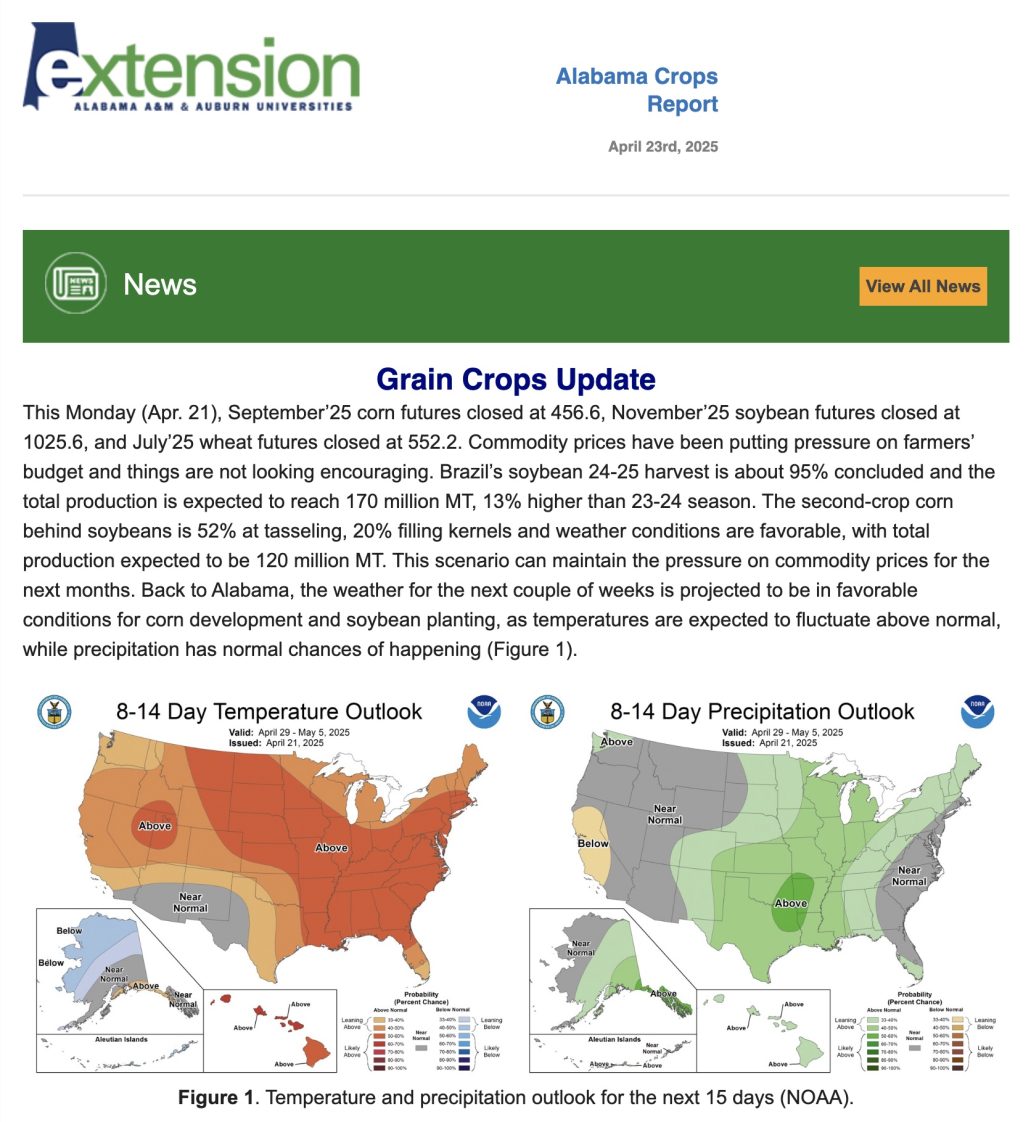
Figure 9. Screenshot of recent Alabama Crops Report Newsletter.
2024 Peanut Production Meetings
Project Leader: Kris Balkcom
The peanut team held eight production meetings across the state (Cullman, Society Hill, Selma, Headland, Hartford, Mobile, Baldwin, and Atmore) sharing their research through PowerPoint presentations with 220 producers last year. They also shared their research findings during a poster session at the Alabama-Florida Peanut Trade Show in Dothan, Alabama, where 430 producers could engage one-on-one with each member of the peanut team.
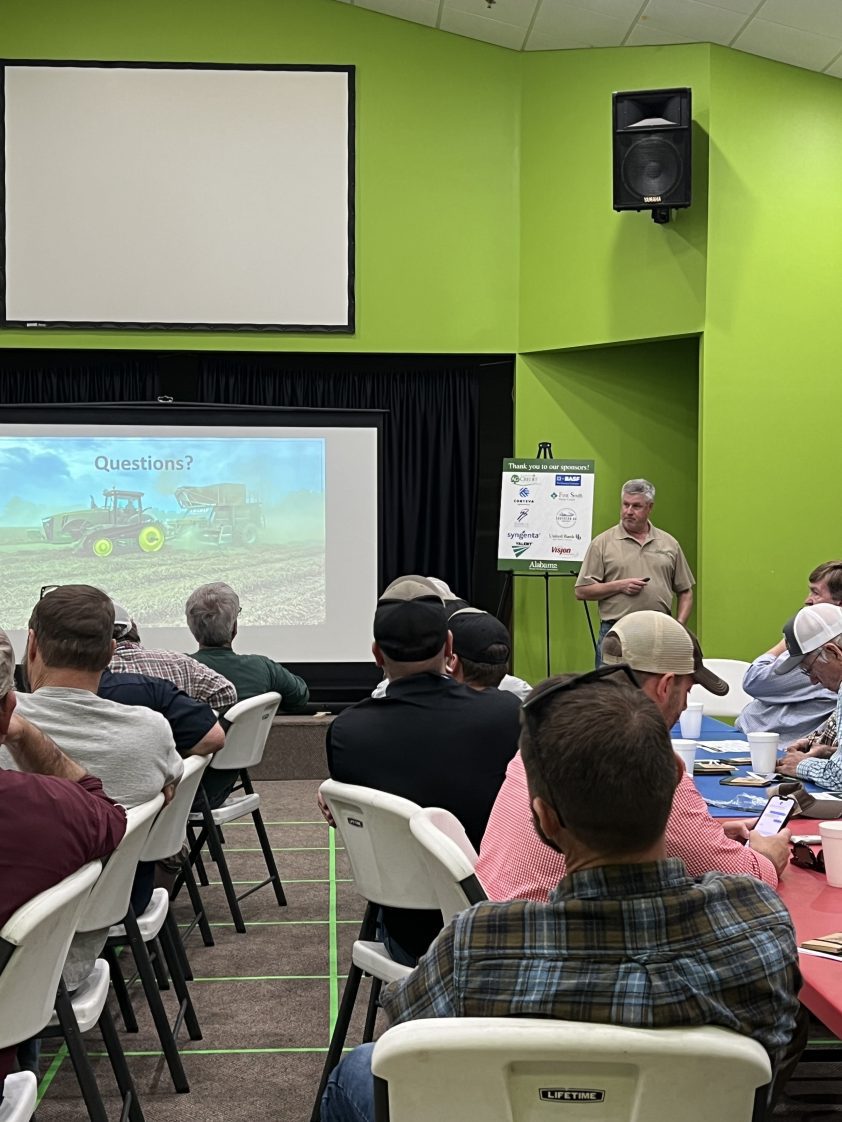
Figure 10. Kris Balkcom speaks to Alabama growers at peanut production meetings.
Wiregrass Cotton Expo 2024
Project Leaders: Jimmy Jones, Sedrick Mack, and Aaron Wells
The Wiregrass Cotton Expo 2024 was held on February 9 with 110 attendees being treated to a trade show with forty vendors and an educational program with Extension presenters from three universities. Growers represented 11,585 acres of cotton grown in the region, averaging 682 per grower.
A survey of cotton growers attending the expo indicated the value of information gleaned to be valued at $97.14 per acre. This represents a $1.125 million impact on the cotton growers’ bottom line.
Alabama Extension’s return on investment for the Wiregrass Cotton Expo 2024 is 157:1. Ten county Extension directors, five Wiregrass region Extension agents, and six specialists from Auburn University and Clemson University participated in this program.
Future of Farming
Figure 11. Rishi Prasad speaks to Alabama row crop growers at a field day presentation.
Project Leader: Rishi Prasad
The Future of Farming project employs a systems approach to showcase the combined benefits of cover crops and smart irrigation practices to Alabama row crop farmers. These practices aim to improve soil health, enhance water and nutrient-use efficiency, and conserve water and energy. Extension established three demonstration farms in north, central, and south Alabama to illustrate these benefits on soil health, nutrient losses, and water use efficiency. The project also used edge of field monitoring to measure the reduction in nutrient losses in runoff water due to the adoption of cover crops and smart irrigation systems. One component of Future of Farming, the Cover Crops Incentive Program, successfully enrolled 5,794 acres across 35 farms between 2021 and 2024. These farms received customized cover crop recommendations and payments of $50 per acre for up to 50 acres of cover crop planting. In 2024, nine educational and demonstration events were organized under the Future of Farming project to educate farmers and stakeholders on cover crop practices, irrigation scheduling, and nutrient management. A symposium on the Future of Farming was held September 13, attended by 62 participants, including farmers, crop advisers, Natural Resources Conservation Service personnel, stakeholders, Extension agents, university faculty members, and students. Participants reported increased knowledge in nutrient management, soil fertility, soil health, cover crops, and irrigation management and anticipated that the information shared would enhance their profitability.
Other educational programs included Certified Crop Adviser (CCA) training on December 9, 2024, attended by more than 35 crop advisers from across the state. Three on-farm trials were also established to demonstrate the benefits of subsurface phosphorus injection on corn yield. The study revealed that subsurface phosphorus injection increased phosphorus uptake in plants and yield.
Another study investigated nutrient losses due to stockpiling litter in open fields. It concluded that for every month of open storage, litter loses carbon, nitrogen, phosphorus, and potassium at rates of 4.4 percent, 5.5 percent, 3.8 percent, and 4.4 percent, respectively. Covering litter with a tarp reduces these losses and helps preserve the nutrient value of broiler litter.
DigitalAg@Farms
Project Leader: Brenda Ortiz
In 2024, the DigitalAG@Farms project organized numerous workshops, field days, and hands-on training across Alabama. Early in the year, more than 100 farmers, crop consultants, and Extension agents attended two irrigation workshops in northwest and southeast Alabama. Twenty in- and out-of-state speakers were invited to the workshops, covering topics including crop water use, irrigation scheduling methods, pumping systems, tile drainage systems, fertigation, drip irrigation for vegetables, and much more. Among the workshop attendees were crop consultants not only from Alabama but also from Mississippi, Tennessee, and Georgia. The workshops increased knowledge among participants on crop water use, the importance of irrigation rate and timing, and available tools (some free) for irrigation scheduling. Participants also showed interest in fertigation, and, as a result of the workshops, some decided to establish on-farm trials with the support of the Extension program.
A new project, Auburn University Testing Agricultural Performance Solutions (AU TAPS) was initiated in spring 2024 and raised a lot of interest among farmers, consultants, and private industry. The project’s main goal is to engage farmers and Extension personnel in demonstrating and evaluating crop management practices and technologies to increase input-use efficiency and profitability. The AU TAPS project is now part of a national TAPS program with seven other universities across the Midwest, the MidSouth, and the Southeast.
-
- Figure 12. Farmers attend the precision agriculture workshop hosted by Brenda Ortiz.
-
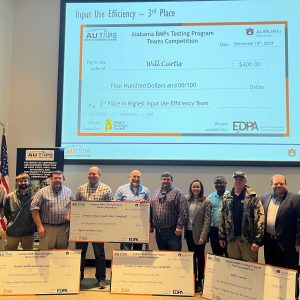
- Figure 13. Award ceremony for the AU TAPS Farmer Competition hosted by Brenda Ortiz.
The project was a competition among farmers who made corn management and economic decisions before planting and during the growing season. Six teams of farmers and one team of crop consultants were part of the TAPS project, which took place at the E. V. Smith Research Center. The teams represented six Alabama counties: Macon, Lee, Talladega, Autauga, Pike, and Dallas. The teams made decisions on the corn hybrid to plant, seeding rate, nitrogen rate, source and timing as well as irrigating rate and timing. Those teams also selected various irrigation scheduling tools to support their irrigation decisions. Crop insurance and the crop market were also included in the competition. The project has gained a lot of attention among farmers, who commented that it allows them to evaluate firsthand crop management decisions and technologies against other farmers’ decisions under the same conditions. They valued the peer-to-peer knowledge exchange and the learnings that resulted from the project. Extension specialists involved in this project are Brenda Ortiz, Eros Francisco, Adam Rabinowitz, and Wendiam Sawadgo. Two post-doctoral scientists assisted with the project: Emmanuel Abban-Baido and Sthefani Goncalves. The Farm Services Unit from the E. V. Smith Research Center provided support for the project. To learn more, access the 2024 report on the Auburn University College of Agriculture website.
Pod Blasting & Deer Damage Prevention
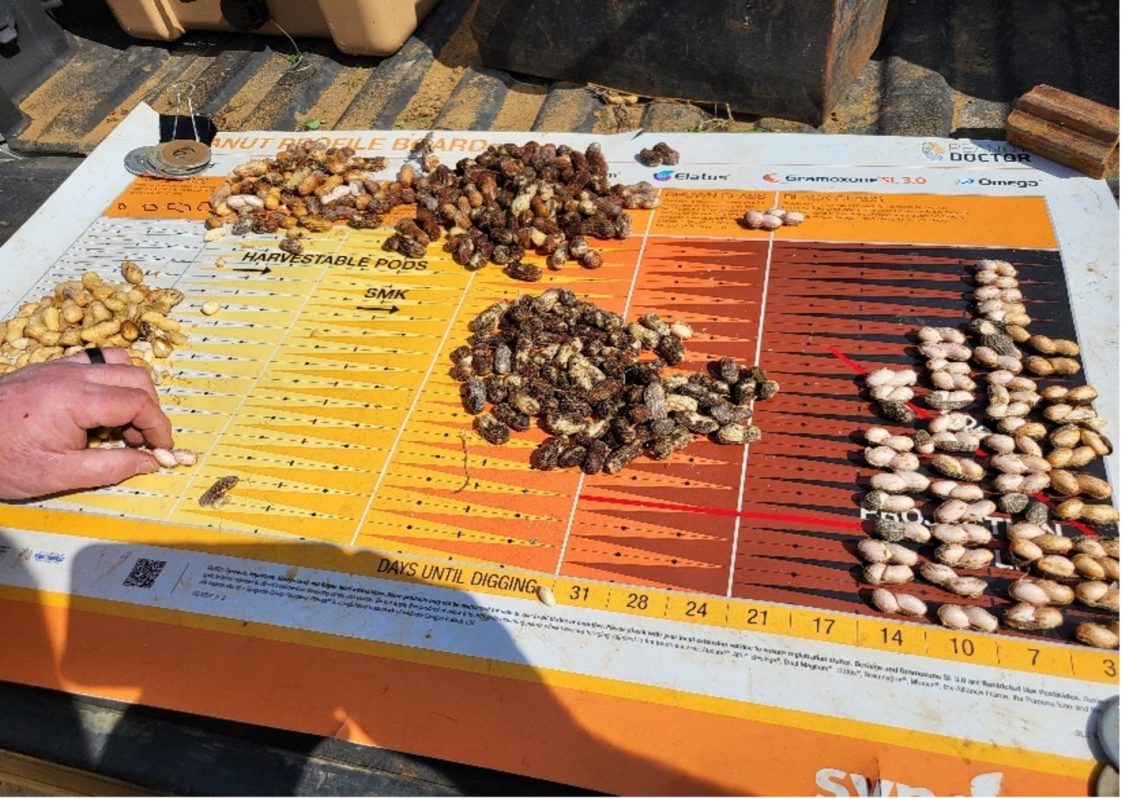
Figure 14. Members of the Agronomic Crops Team conduct pod blasting to assist peanut growers with digging timing.
Project Leader: Aaron Wells
Research has shown that initiating peanut digging (harvest) at optimal maturity can increase yields by up to 500 pounds per acre and grades by multiple points. To assist peanut growers in determining optimal maturity, Extension agents and some county Extension directors provided peanut pod blasting workshops across six southeast Alabama counties during harvest season. Extension provided this service to more than 130 farmers, covering more than 300 samples. These samples represented more than 12,000 acres and generated an estimated $1.6 million in added revenue through increased yield and grade by utilizing this service.
Deer damage is becoming a focal issue for row crop producers across Alabama due to crop and revenue losses from feeding. Houston County grower Dennis McCord reached out to Extension for potential solutions. Through efforts on social media, Extension personnel secured a new product designed to provide long-lasting protection for crops. McCord was willing to test the product on two of his peanut fields. One field received perimeter treatment, while the second was divided—half treated and half untreated—to evaluate the product’s effectiveness. In addition to assessing the repellent’s ability to reduce or eliminate deer damage, Extension personnel also explored ways to lower the overall cost of implementing such a program. Preliminary results have been promising, with deer feeding activity nearly eliminated. McCord was pleased with the study’s results and commented, “This was the first year we have had a crop in the entire field to harvest,” referring to the split-treatment field. McCord and some of his neighbors saw the results of the study and began putting the same program into practice in other fields. He expressed appreciation for Extension’s proactive efforts to address challenges and deliver solutions.
Spray Drone End User Conference
Project Leader: Steve Li
Alabama Extension provides leadership to the agricultural drone industry, consisting of drone pilots, farmers, chemical registrants, agribusiness, and regulatory agencies through unique perspectives and nonprofit positions. Extension weed scientist Steve Li frequently voices the needs and concerns of spray drone operators to agrochemical companies, government regulators, and congressional legislatures, becoming the bridge to facilitate communication among multiple groups. The most prominent of these efforts is the Spray Drone End User Conference. A total of 385 people from forty agricultural states, several Canadian provinces, and twenty-five countries across six continents attended (in person or virtually) the conference held in February 2024. Nearly all major spray drone manufacturers, the top three largest US drone dealers, regulators from the Environmental Protection Agency, the Federal Aviation Administration, the state Department of Agriculture and Industries, the CEO of the National Agricultural Aviation Association, representatives of Crop Life of America, the global spray drone taskforce (UAPASTF), major agrochemical companies, and several of the largest drone spraying companies in the United States attended and spoke in this conference. In-person attendees rated the conference at 4.73 out of 5 (n=78), and remote participants rated the conference at 4.36 out of 5 (n = 32). This event received numerous compliments from participants, many indicating that this was the most user-friendly and educational spray drone event in North America.
-
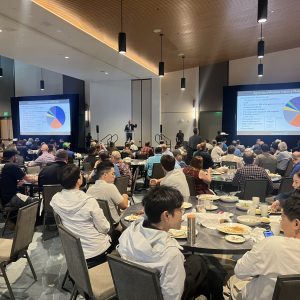
- Figure 15. Participants in the 2024 Spray Drone End User Conference
-
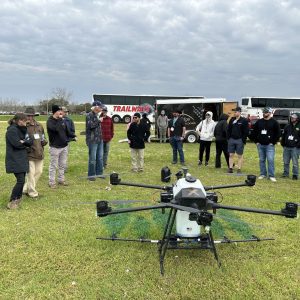
- Figure 16. Individuals from around the world participated in the 2024 Spray Drone End User Conference.
Steve Li, Associate Professor, Crop, Soil, and Environmental Sciences, Auburn University
New July 2025, 2024 Agronomic Crops Team Impact Report, ANR-3165
Past Reports
- Agronomic Crops Team Impact Report 2022
- Agronomic Crops Team Impact Report 2021
- Agronomic Crops Team Impact Report 2020
The Alabama Cooperative Extension System (Alabama A&M University and Auburn University) is an equal opportunity educator, employer, and provider. If you need a reasonable accommodation or language access services, contact Steve Li at xzl0004@aces.edu.