
Commercial Poultry

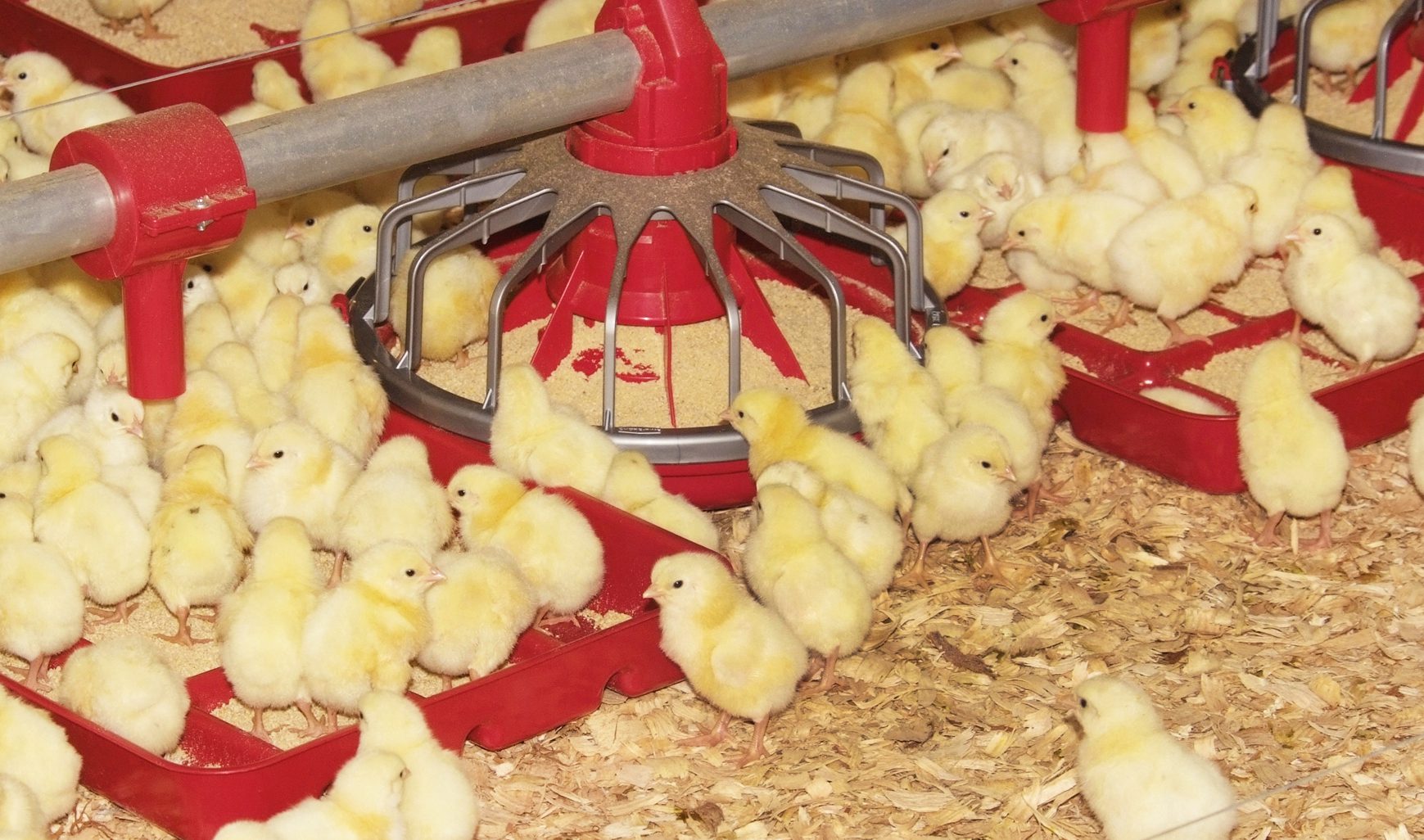
Before broiler chick placement, consider litter management best practices and apply litter amendment correctly to help reduce ammonia production. This publication provides useful guidance for live production managers, poultry service technicians, and contract growers.
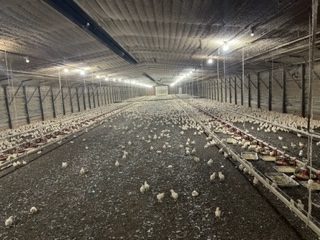 Good litter quality helps chicks get off to a good start. High ammonia concentrations in the broiler house can result in poor performance and negatively affect the welfare of the birds in the following ways:
- decreased body weight gain
- poor feed conversion, footpad lesions, and eye inflammation
- increased respiratory infections that result in condemnations
Ammonia results from microbial decomposition of nitrogenous compounds in the litter. Litter amendments are well known to be effective in controlling ammonia, particularly during the first week after chick placement. However, the efficacy of these ammonia-controlling products can be limited by improper litter management before the chicks arrive at the farm.
Ammonia
Ammonia is a colorless gas produced during broiler production. Ammonia occurs through the decomposition of nitrogenous compounds (uric acid) in the litter. Poultry feed is formulated to contain an adequate amount of protein via amino acids. The excess nitrogen from amino acids that the bird does not utilize for growth and other physiological functions must be removed via uric acid. Microbes in the litter produce an enzyme called urease. Urease converts uric acid into ammonia.
The bird’s trachea (or windpipe of the respiratory tract) contains hairlike projections called cilia. Cilia prevent dust and pathogens from entering the respiratory tract. High ammonia concentrations can damage cilia, leading to respiratory infections, morbidity, mortality, and potential condemnations of carcass parts in the processing plant. Ammonia can cause eye damage, typically characterized by corneal inflammation (the clear front layer of the eye). Signs of damage may include rubbing of the eyes or eyes becoming shut or light sensitive. Broilers may have difficulty locating feed and water. In addition to eye damage, low body weight gain, poor body weight uniformity, and decreased carcass yields have been noted with high ammonia concentrations.
High ammonia concentrations can occur due to improper litter management, incorrect application of litter amendments, and ventilation mismanagement (figures 1, 2, and 3). Some of the primary reasons could be not removing caked litter, decreased downtime, improper litter management procedures, and failure to purge the house to remove ammonia in the litter before applying a litter amendment.
-
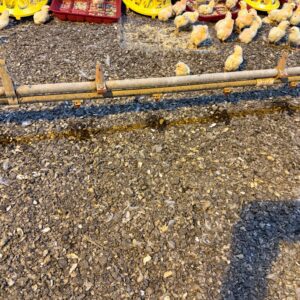
- Figure 1. Leaking nipple drinkers
-
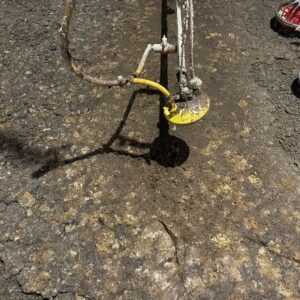
- Figure 2. Leaking regulators
-

- Figure 3. Condensation at the side and end walls, along with leaking nipple drinkers and regulators, can lead to caked litter, which can result in ammonia production during the grow-out.
When Should Litter Preparation Start?
Growers should start managing litter for the upcoming flock within 48 hours after the previous flock’s birds have been transported to the plant. The first step is to close the ends of the house and place it in minimum ventilation mode to help remove ammonia and moisture from the litter.
Litter Management
Good litter management can include decaking, tilling, or windrowing practices to prepare for the incoming flock. Decaking is the removal of the top layer of the moisturecaked litter. Caked, moisture-laden litter increases ammonia production if it is not removed from the house. After decaking, the remaining litter generally has a larger particle size and less surface area for ammonia production than tilling.
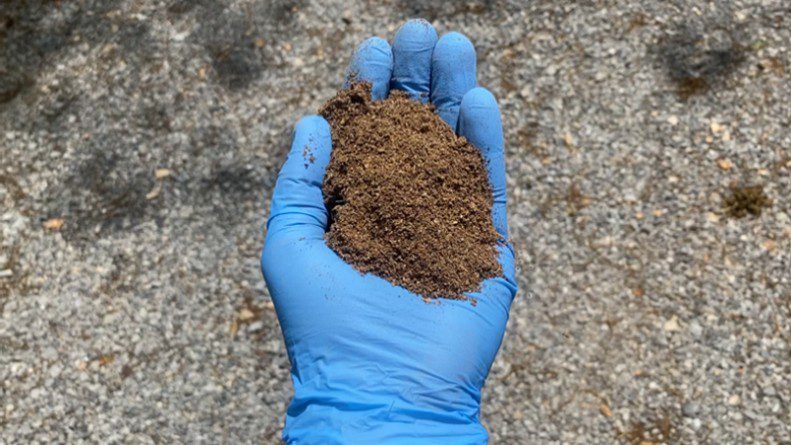
Figure 4. Fine litter with a large surface area will generate ammonia. Avoid tilling to a fine particle size (coffee grains). (Photo credit: Josh Payne, Poultry Guard)
Some growers practice tilling to break litter into small particles, mixing the caked, moisture-laden litter with the dryer litter beneath. The smaller particles (like coffee grains) have a larger surface area and will increase ammonia production if sufficient time is not allowed for ammonia removal (figure 4). The concept of liquid flowing through a material is called capillary action. Capillary action allows moisture to move through the litter between particles. In litter with small particles, the pores between the particles begin to swell, reducing moisture uptake and leading to moisture accumulation near the litter surface. The accumulation of surface moisture can increase ammonia production if not managed properly. Tilling should not be practiced during short downtimes or when moisture removal is difficult (cold, damp conditions).
The third litter management practice is windrowing. Windrowing reduces pathogen load in litter but can create challenges for ammonia and moisture removal. Moisture content needs to be in the 25 to 35 percent range to achieve appropriate temperatures during windrowing for pathogen reduction. After litter has been windrowed, the moisture content should be reduced from 30 percent to approximately 15 percent before chick placement. The practice of windrowing can be challenging during short downtimes or in cool, damp conditions. Once the litter is spread in the house after windrowing, it may require 7 to 10 days to achieve proper moisture removal (a minimum of 18 days of downtime is needed). A grower may need to consider longer preheating times to achieve proper moisture removal during the winter months, when litter has been windrowed.
Preparation for Applying Litter Amendments
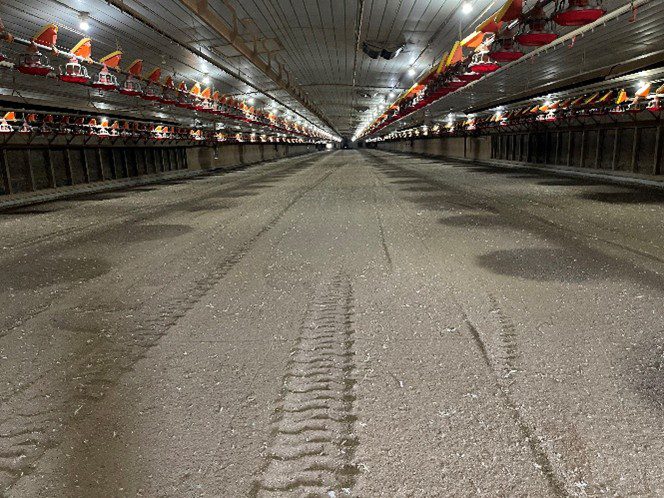
Figure 5. This house’s litter has been prepared early between flocks and is being left undisturbed for 3 days before application of a litter amendment.
The goal before applying litter amendments is to exhaust ammonia and increase moisture removal. If ammonia is not properly exhausted from the house, the existing ammonia will react with the litter amendment, severely reducing its benefit. Preheat the house to drive off the ammonia from the litter as concentrations may exceed 200 ppm (parts per million) during preheating. Then, exhaust ammonia from the house by opening the end doors or tunnel inlet and running two tunnel fans (40-foot × 500-foot house) for 10 to 15 minutes. An additional fan may be needed to exhaust ammonia from wider houses. The goal is to achieve an ammonia concentration of approximately 30 ppm or less. Then, close the house, run minimum ventilation, and set up for chick placement. The setup time depends on the type of litter amendment (dry or liquid). The litter should rest for at least 3 days to further remove ammonia and moisture before applying litter amendments while in minimum ventilation mode (figure 5). Liquid application should be 2 to 4 days before placement, with the equipment being raised. Dry application can be approximately 24 hours before bird placement.
Chemical Litter Treatments
Litter treatments have been effective for many years in reducing ammonia concentrations in broiler production with built-up litter. The expectation should be to obtain ammonia control (30 ppm or less) for the first week of age (figure 6). Chemical litter treatments consist of 3 to 4 products primarily used in the commercial broiler industry. These products are variations of chemical acids (low pH) and contain sulfates.
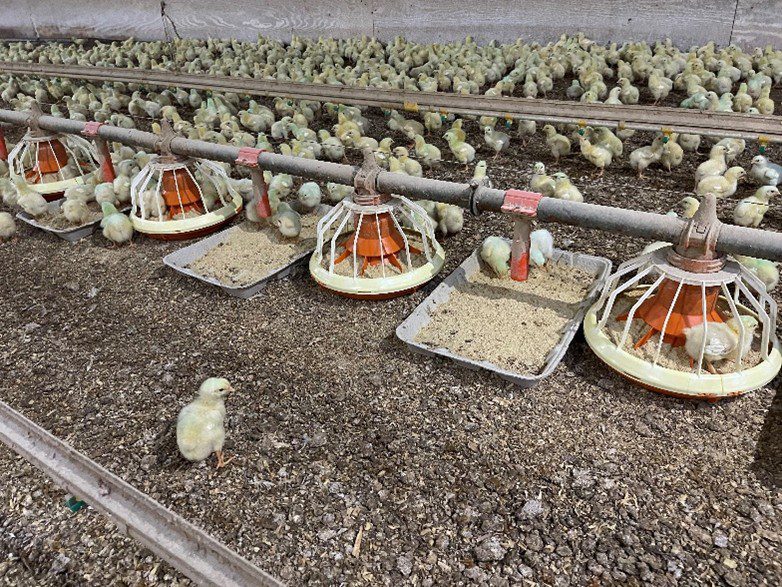
Figure 6. Ammonia production can lead to eye damage. Measure ammonia concentration with a gas detection tube to verify ammonia concentration in the house at chick height.
Built-up litter is typically basic (high pH), and when combined with high temperature and litter moisture (27 to 40 percent), the urease cycle previously outlined can result in ammonia production. Litter amendments are acid-based products that donate hydrogen ions that bind with ammonia. The resulting chemical reaction converts ammonia to ammonium. Ammonium will then bind with sulfate to create ammonium sulfate, preventing ammonia (gaseous state) from being released in the poultry house environment. Because the litter amendments are acidic-based products, they also decrease the pH of the litter.
Pathogen Reduction
Reducing the pH of the litter has the potential of reducing bacteria in the litter, but studies have shown inconsistent results in commercial broiler houses. Sampling procedure, duration of litter amendment efficacy, bacteria, and uniformity of litter amendment application can contribute to variation in the reduction of bacterial populations in built-up litter.
Collecting samples from the top 2 inches of litter treated with an amendment can yield different results than collecting samples from 4 inches deep within the litter. Shallow samplings can indicate a large reduction, but higher bacterial populations can remain deeper in the litter. Some Salmonella serovars (types of Salmonella) can still survive at a low pH of 3 (highly acidic). It is important to note that litter amendments are efficacious in reducing pH and ammonia for only 7 to 10 days. After 7 to 10 days, the pH in the litter will increase, allowing bacteria to proliferate at a higher rate. A higher application rate of litter amendments can be more effective in reducing litter pH and controlling ammonia during the first week of production, as integrators may use different application rates depending on the season, with lower rates in the summer. The higher application rate may have a more pronounced effect on pH reduction, but only for about a week.
Factors that Can Be Controlled
The goal should be to manage litter practices to minimize ammonia production at placement and throughout the growout. Several factors can influence ammonia production before placement. Focus on litter particle size, moisture, and the application rate of litter amendments. The grower and live production personnel can control these factors at the complex.
Litter can be overworked, producing smaller particles with a larger surface area and the potential for ammonia production, particularly if moisture is not properly managed. Reducing litter moisture to 15 to 20 percent takes time. Short out-times can make this difficult. Caked litter contains moisture and must be removed from the house to minimize ammonia production. After the litter has been worked and leveled, it is important to purge the house to remove existing ammonia and further reduce litter moisture through minimum ventilation.
Most broiler companies are either cost-sharing or paying for litter amendment applications. Hence, the application rate is typically determined by the poultry company, and a contract applicator will provide the application. Contractors are used to handle product regulations and ensure consistent application. The application rate should account for the litter condition between flocks. It is important to recognize that the higher the ammonia level present before application, the less amendment activity will be available to reduce ammonia after chick placement. It is good practice for the grower to verify the rate of the litter amendment that was applied in the houses.
Summary
- Litter moisture, litter particle size, and chemical amendment rates are the three factors that can be controlled to minimize ammonia production before chick placement.
- It is important to start the process of litter management within 48 hours of bird removal from the farm.
- Preheating the house to purge ammonia from the litter is an important step. Then, exhaust the high ammonia concentrations before applying a litter amendment. Exhausting ammonia is paramount to extending the amendment’s activity after bird placement.
- Leaving the litter dormant for 3 days before applying the litter amendment is important for removing ammonia and litter moisture.
 William A. Dozier, Extension Specialist, Professor, Poultry Science, Auburn University
New February 2026, Litter Management & Amendment Applications Before Broiler Chick Placement, ANR-3216