
Animals

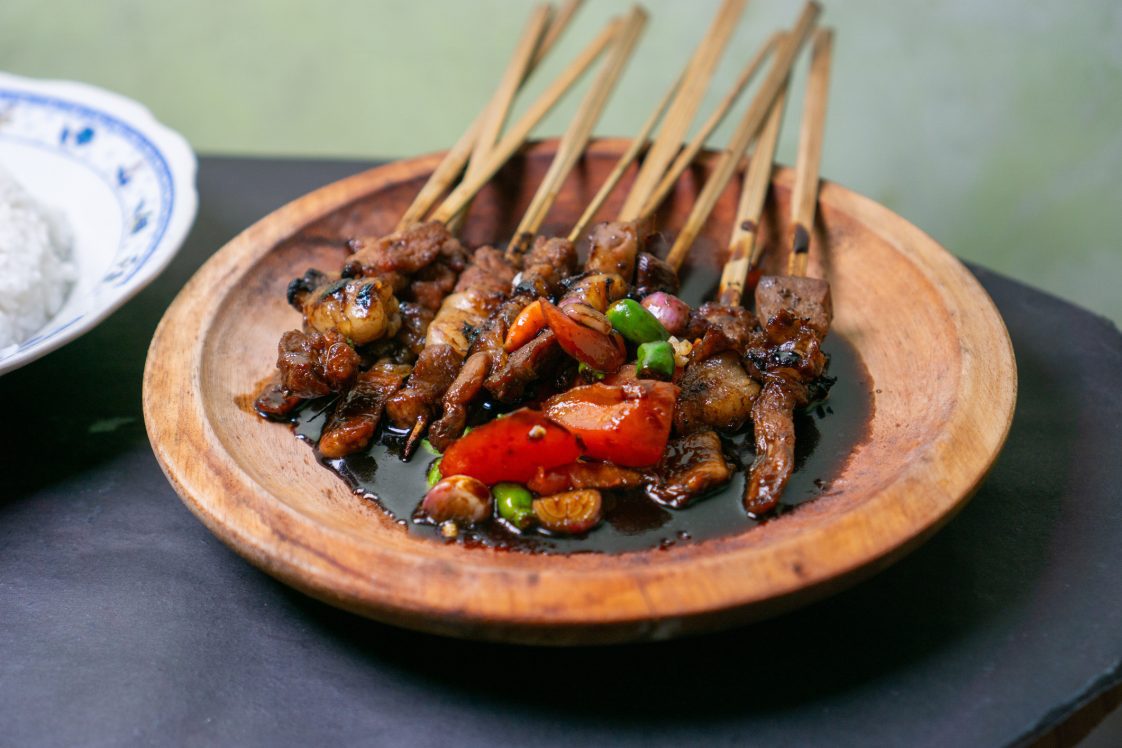
Goat meat is consumed worldwide, particularly in African, Greek, Hispanic, Jamaican, and Middle Eastern households. Its popularity is due to its distinct flavor, cooking versatility, and nutritional value. Although less common in the United States, goat meat is gaining popularity as a healthier meat alternative because it is leaner than beef or chicken. Goat meat has less fat and cholesterol and it contains nutrients and minerals like protein and iron, as well as vitamin B12. It also contains conjugated linoleic acid (CLA) that boosts the immune system and helps to reduce body fat.
Additionally, meat goats require less space, water, and feed than cattle. Goat meat is expected to become more popular in the United States as health and sustainability issues grow.
Myths About Goats & Goat Meat
Myths about goats and goat meat may hinder goat meat from becoming a household staple in this country. There are some common misconceptions.
- Goats eat everything, including trash. Goats are selective feeders that naturally browse for nutritional plant parts like leaves, shoots, and fruits. Their selective grazing behavior controls weeds and maintains pasture quality.
- Goat meat is tough and gamey. The idea that goat meat is tough and gamey is often due to improper cooking methods or using meat from older animals. Younger goats provide tender, mild-flavored meat. Goat meat benefits from slow cooking methods, like braising or stewing to enhance its tenderness and flavor.
- Goat meat is high in cholesterol and fat. Goat meat is lower in cholesterol and contains fewer calories than other meats. Myths about its negative health effects are often tied to high-sodium cooking methods, not the meat itself.
Other Myths
- Goats are only raised for dairy or petting zoos. Goats are raised for multiple purposes, including meat production. The meat goat industry is growing due to the increasing demand for healthy protein sources and sustainability, as goats require less space and forage than larger livestock.
- Goat meat is not widely available in the United States. Goat meat is becoming more available in the United States, especially among diverse populations. It can also be found at farmers’ markets, specialty butcher shops, and some grocery stores.
- Raising goats is environmentally harmful. Raising goats can be environmentally beneficial. Goats help manage invasive species and weeds, thus reducing the need for herbicides. Goats are also more efficient in converting feed into body mass. This makes them a sustainable choice for land with little agricultural or developmental value.
- Goat meat lacks culinary versatility. Goat meat is highly versatile and can be prepared in various ways, such as grilling, roasting, stewing, and braising. It is a staple in many global cuisines and can be used with different spices and herbs.
Nutritional Value of Goat Meat
Goat meat, also known as chevon or cabrito, is nutritious and a good meat alternative. For example, it is leaner and has more nutrients compared to chicken, beef, pork, and lamb. It is an outstanding choice for those seeking healthier red meat options.
Nutritional Benefits of Goat Meat
- Lower in calories and fat. A 3-ounce serving of goat meat contains only about 122 calories, compared to approximately 180 calories in pork, 162 in chicken, 179 in beef, and 175 in lamb. Goat meat also has less total fat, with around 2.6 grams per serving, compared to 8 grams in beef, 9 grams in pork, and 6.3 grams in lamb. This lower fat content makes goat meat an option for reducing overall fat intake, particularly saturated fats.
- Lower in cholesterol. Goat meat contains less cholesterol than other types of meat. A 3-ounce serving has about 63.8 milligrams (mg) of cholesterol, compared to 73.1 mg in beef, 76 mg in pork, and 78 mg in lamb.
- High in protein. Goat meat is a rich source of high-quality protein, providing approximately 23 grams of protein per 3-ounce serving. This is comparable to or slightly less than protein found in chicken, beef, and pork, which ranges from 23 to 27 grams per serving. The protein in goat meat includes all essential amino acids for muscle growth, tissue repair, and overall body maintenance.
- Rich in iron. Goat meat has a higher iron content than other types of meat. For example, it contains around 3.2 mg per 3-ounce serving, compared to 2.9 mg in beef, 1.1 mg in pork, and 1.5 mg in chicken. Goat meat is good for those who are iron deficient or anemic. Iron is crucial to transport oxygen and boost energy metabolism.
- High in potassium and low in sodium. Goat meat is also higher in potassium and lower in sodium than other meats. A 3-ounce serving provides around 400 mg of potassium, which is beneficial for cardiovascular health. In addition, it has a lower sodium content that aids in reducing blood pressure.
Nutrient Composition of Goat Meat Compared to Other Meats (per 3-ounce serving)
| Nutrient | Goat Meat | Chicken (Skinless) | Beef (Lean) | Pork (Lean) | Lamb |
|---|---|---|---|---|---|
| Calories | 122 | 162 | 179 | 180 | 175 |
| Total Fat (g) | 2.6 | 6.3 | 8 | 9 | 8 |
| Saturated Fat (g) | 0.8 | 1.7 | 3.1 | 3.3 | 3.0 |
| Cholesterol (mg) | 63.8 | 78 | 73.1 | 76 | 78 |
| Protein (g) | 23 | 25 | 26 | 24 | 25 |
| Iron (mg) | 3.2 | 1.5 | 2.9 | 1.1 | 1.6 |
| Potassium (mg) | 400 | 292 | 270 | 360 | 290 |
| Sodium (mg) | 82 | 70 | 75 | 82 | 70 |
Health Benefits of Goat Meat
- Heart health. Goat meat is heart-healthy due to its low fat, cholesterol, and high unsaturated fat content. It helps to maintain healthy cholesterol levels and reduces the risk of cardiovascular diseases.
- Weight management. Its lower calorie and fat content makes goat meat a strong choice for weight-conscious individuals. The high protein promotes fullness, thus leading to less caloric intake.
- Rich in iron and zinc. Goat meat is particularly beneficial for those at risk of anemia or with compromised immune systems, as it provides substantial amounts of iron and zinc.
- Metabolism and energy production. The B vitamins in goat meat are essential for converting food into energy that supports healthy metabolism and cognitive functions.
Common Cuts of Goat Meat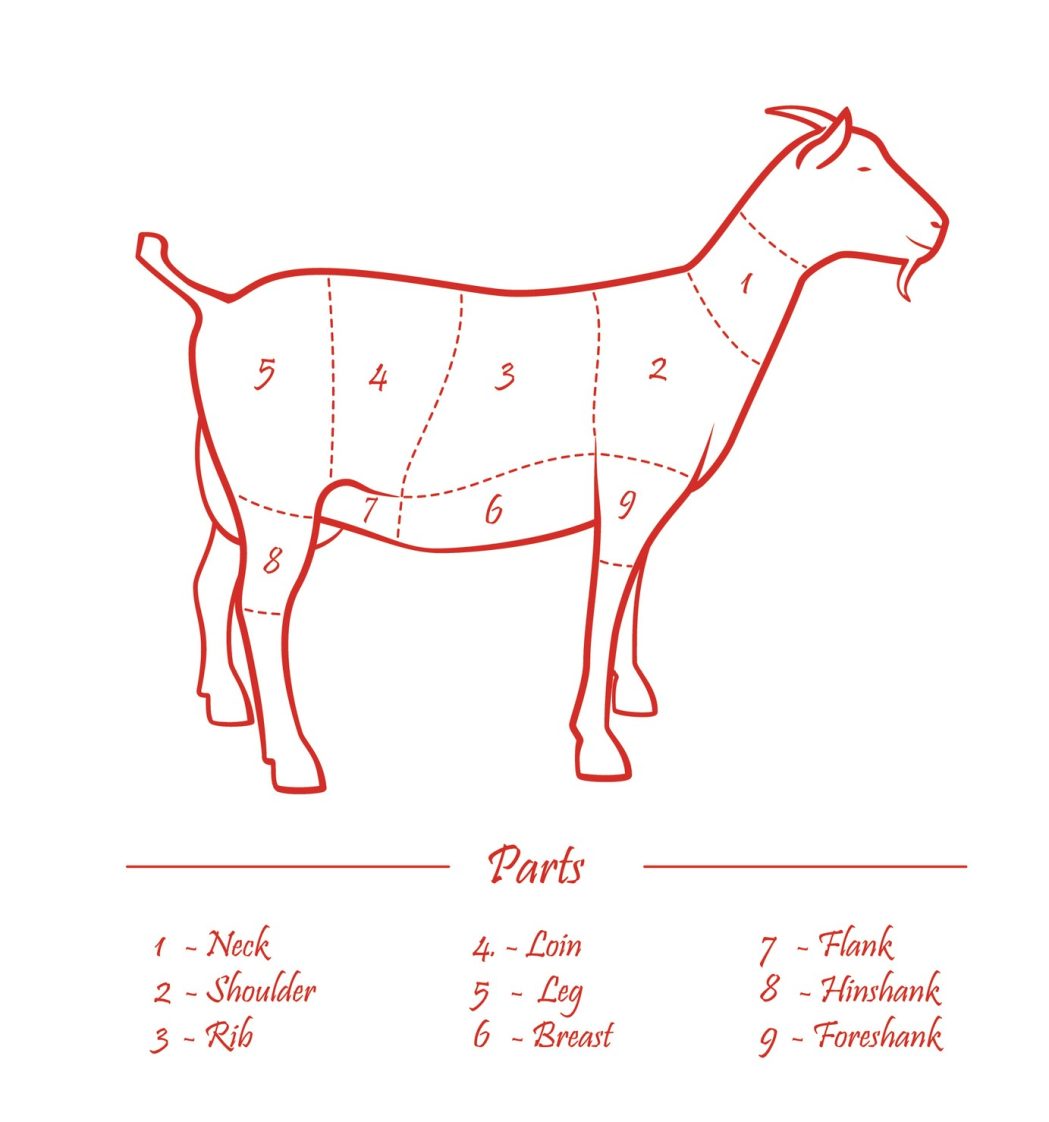
Like other meat, people can purchase pre-cut goat meat or have a goat carcass cut into different parts, depending on their preference.
Common cuts include:
- Ribs. These can be prepared as full racks or cut into individual cutlets, perfect for grilling, roasting, or frying. Goat ribs are flavorful and become tender with slow, low-heat cooking methods.
- Loins. The loin is a tender section of the goat, typically cut into chops or tenderloins. Goat loin chops are similar to lamb chops and are ideal for grilling, broiling, or pan-searing to retain their juiciness and flavor.
- Leg. This cut can be prepared bone-in or deboned and sliced into steaks. The leg of a goat is suited for roasting, slow cooking, or grilling. It can also be marinated and cooked whole or cut into smaller pieces for stew and curry dishes.
- Hindshank. The hindshank, which includes shanks or drumsticks, is a tougher cut that benefits from slow cooking methods like braising or roasting. Hindshanks are often used in soups and stews that require long and slow cooking methods.
- Shoulder. The shoulder cut is typically used for slow-cooking methods, such as braising or roasting. It is well-marbled with fat, making it ideal for dishes like curries, stews, and pulled goat meat recipes.
- Neck. Goat neck meat is flavorful and works well in stews, soups, and slow-cooked dishes. It is a cut that also benefits from long, slow cooking methods to break down the connective tissue and enhance tenderness.
Improving the Goat Industry
Cooperative Extension animal scientists and educators have worked to assist meat goat farmers in Alabama and across the county. The goals are to introduce sustainable management practices, decrease production costs, and increase goat inventory in the US, all with the hope of improving the meat goat industry in the country. These efforts have been fruitful. According to the National Agricultural Statistics Service, meat goats make up 78 percent of goats in America.
Visit www.aces.edu to learn more about goat production in the Southeast.