
Forestry & Wildlife

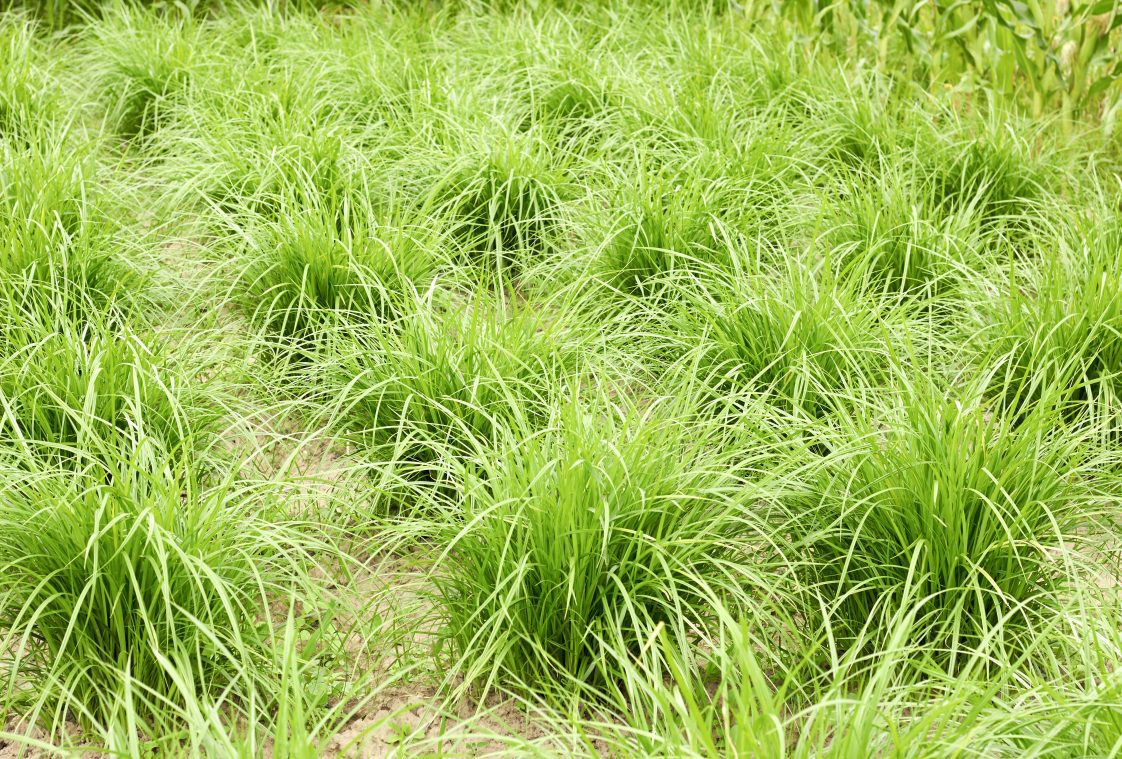
Chufa (Cyperus sp.) is a productive, perennial sedge planted widely as a supplemental fall and winter food for wild turkeys. Although native to Africa and southern Europe, chufa is broadly adapted to cultivation in all regions of Alabama.
Chufa (Cyperus esculentus var. sativus) is a warm-season perennial sedge native to Africa. Although this crop is a yellow nutsedge and some chufa varieties are considered weedy, the domesticated sativus variety is not invasive as it rarely flowers or produces viable seed and produces much shorter rhizomes. It grows rapidly, producing a yellowish main stem with bright green leaves that surround the base of the three-angled stem that grows 2 to 3 feet tall (figure 1). Turkeys and many other animals eat the mature tubers (¼ to ½ inches long) that are produced at the ends of slender rhizomes (figure 2). Individual plants mature at 90 to 100 days and produce an average of 40 tubers that provide a digestible source of approximately 7 percent protein, 25 percent fat, and 40 percent carbohydrate.
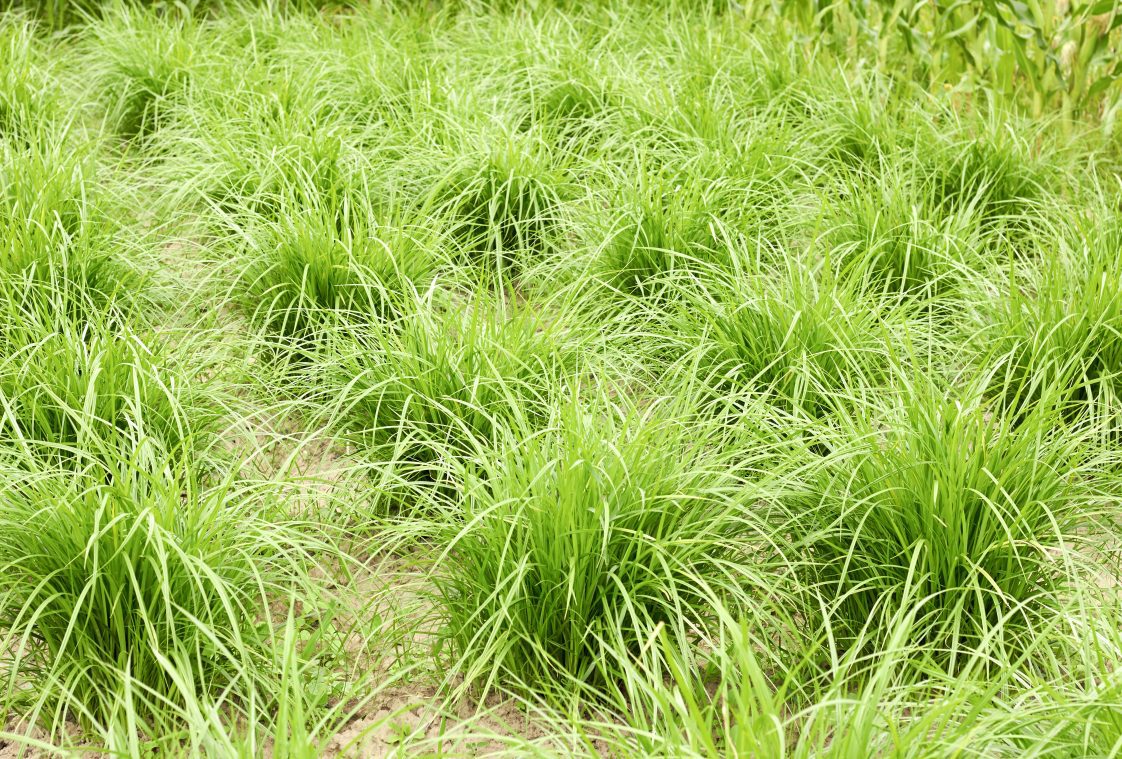
Figure 1. Chufa grows in clumps producing yellowish green leaves up to 3 feet tall.
Although tubers may be dug, stored, and planted the following year, small-scale collection is usually not cost effective. Tubers for planting are available commercially from most seed companies that specialize in wildlife plantings. Prices range around $3 per pound but can vary according to availability and quantity purchased.
Site Selection
Chufa is adapted to a wide range of soil types, but it is best grown on moist, silty, loamy, and sandy soils that are slightly acid to neutral (pH 5.0 to 7.5). Production is adequate on clay sites, but turkeys have difficulty scratching tubers from heavy clays, so avoid planting on these sites.
Chufa competes poorly among other vegetation and weeds. Forest clearings such as logging decks or wide, abandoned logging roads that receive full sunlight are excellent locations for chufa plots. Chufa planted on recently cultivated land should be drilled in rows and cultivated or sprayed to control weeds.
Plot Size
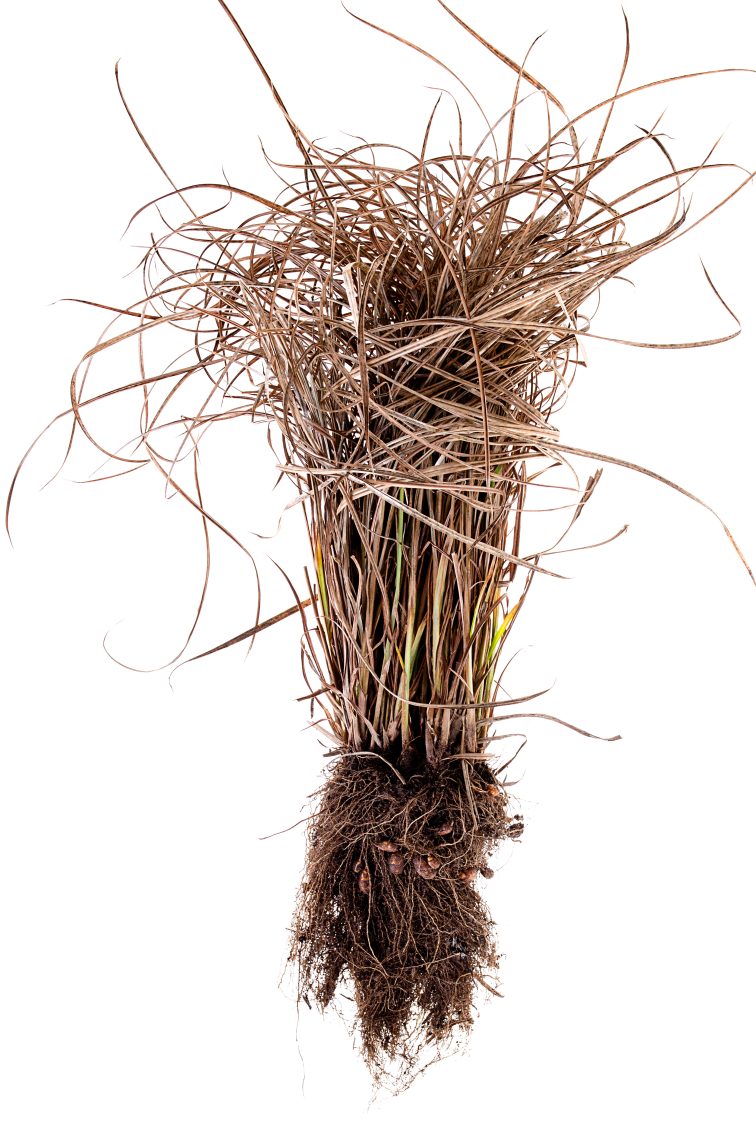
Figure 2. In the fall, chufa dies back with leaves turning brown and lying over. Tubers are produced below ground on rhizomes at the base of each plant.
Plots of 1 to 5 acres are necessary where wild turkey populations are high. Chufa tubers in plots of less than 1 acre may be rapidly depleted, particularly during years of poor acorn (mast) production.
The number of plots and their distribution may vary widely according to population levels of turkeys and other animals, location of plots, surrounding habitat quality, and mast production. Generally, 1 acre of chufa per 100 acres provides sufficient production of tubers for wild turkeys.
Establishment
Time of Planting. Plant chufa during late spring or early summer after all danger of frost is past and soil temperatures are above 60 degrees F. The best dates for planting in Alabama are generally April through June.
Soil Preparation. As with any crop, soils for chufa plots should be tested well in advance of planting. Disk plots thoroughly and lime and fertilize according to soil test recommendations, as the best tuber production comes from properly amended soils. Soil test boxes, forms, and instructions are available through county Extension offices. Plan to side or top dress with about 100 pounds of ammonium nitrate per acre when plants are 8 to 12 inches high.
Methods of Planting. Chufa plots are established by broadcasting or drilling the tubers. Evenly broadcasting works well on loosely textured soils with a well-prepared seedbed but requires greater planting rates of 50 pounds of tubers per acre. Lightly disk over scattered tubers, covering them with 1 to 2 inches of soil, then cultipack.
Drilling takes fewer tubers to establish a plot and lets you cultivate if weed competition occurs but does allow nuisance animals to easily feed on the rows of chufa, which can result in plot failure. Row plant 25 pounds of tubers per acre in rows 36 to 42 inches apart.
Maintenance
Protect chufa plots from being grazed and compacted by cattle or vehicles. Deer, hogs, raccoons, and squirrels often dig up seedlings and immature tubers.
Visual deterrents such as scarecrows, swinging pie plates, mylar tape, and other fright devices distributed throughout the field may reduce damage if this occurs during growing. If damage is expected, temporary, electric, polytape fencing is another tool that can be installed immediately after planting and removed when the plants mature. Feral pigs often decimate chufa plantings, so properties with feral pig populations should avoid planting chufa.
Chufa production can be extended each year with spring disking and fertilizing the previous year’s plots, but best yields come from replanting chufa plots. After 2 to 3 years on the same site, weeds and insect damage will reduce yields. Original plots should then be left fallow or converted to other warm- or cool-season wildlife plantings for several years while new chufa plots are established or rotated throughout the property.
Because of the height of chufa, mowing for weed control is rarely beneficial and better conducted through herbicide applications. However, chufa is susceptible to a wide range of herbicides, so care must be taken when selecting and applying herbicide. It is recommended to control grassy and broadleaf competition before planting. This can often be achieved with an application of 2 quarts of a 41 percent glyphosate product per acre in early spring or 2 weeks before planting. Additionally, preplant herbicides may be incorporated to reduce weed emergence, while some grassy and broadleaf weeds in established plots can be controlled with post emergence, foliar applications (table 1).
Table 1. Herbicides for Weed Control in Chufa,* ANR-0569
| Active Ingredient | Timing | Label Rate/Acre | Trade Names | Application Targets |
|---|---|---|---|---|
| Pendimethalin | Preplant | 16 to 32 ounces (Varies by soil texture.) | Framework, Prowl, Stealth, Others | Broadleaf and grass |
| Trifluralin | Preplant | 16 to 32 ounces (Varies by soil texture.) | Treflan, Trifluralin | Broadleaf and grass |
| 2,4-DB | Postemergence | 8 to 32 ounces | 2,4-DB 175, 2,4-DB 200, Butoxone, Butyrac 200 | Broadleaf |
| Clethodim | Postemergence | Rates vary by product concentration. | ArrestMax, Arrow, Clethodim 2 EC, Envoy, Select, SelectMax, Tapout | Grass |
| Fluazifop | Postemergence | Rates vary widely by pest. | Fusilade | Grass |
| Sethoxydim | Postemergence | 16 to 32 ounces | Poast, Poast Plus, Segment, Vantage | Grass |
Use of Chufa by Turkeys
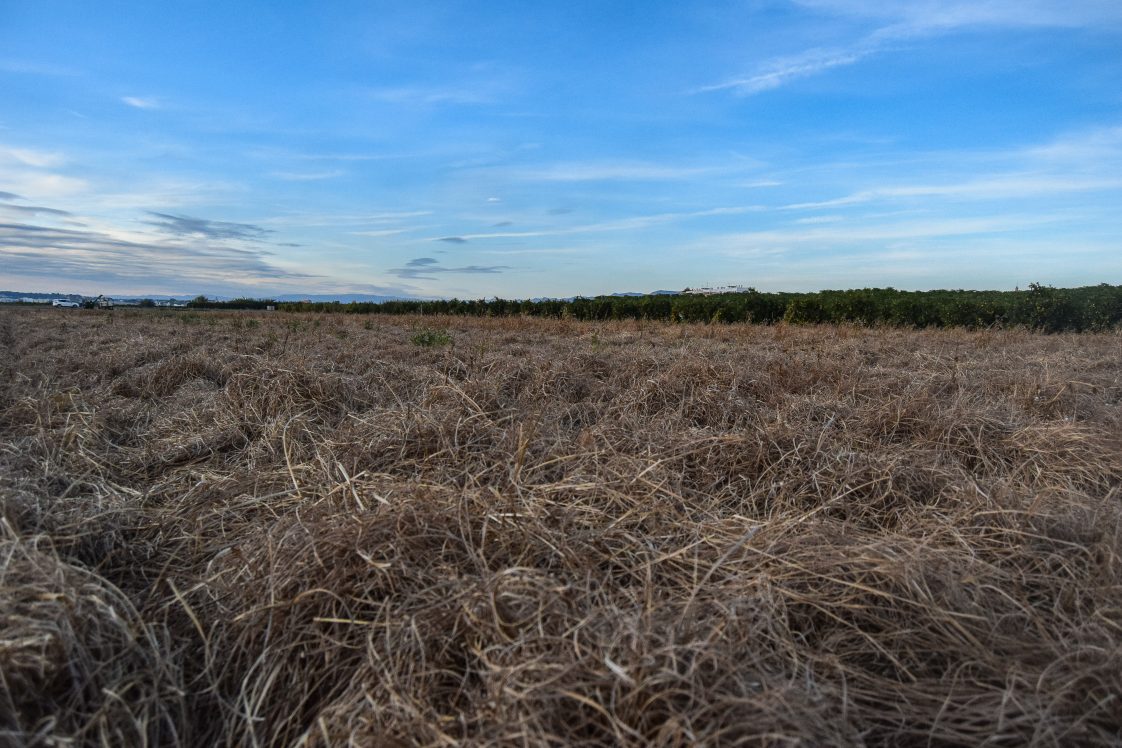
Figure 3. As chufa dies back in the fall, the dead leaves can blanket a field. This can help extend use of the plot as it makes finding tubers more difficult.
Chufa plot use is influenced by factors such as season, habitat characteristics, and the number of plots and their distribution. Turkey and many other wildlife species scratch and dig for tubers once the crop has died back in the fall. Chufa leaves often produce a large amount of debris that blankets a field (figure 3). This is beneficial because it can help harbor tubers for an extended period, extending the use of the plot as turkeys routinely visit to find and scratch for more chufa. At first, turkeys may ignore chufa because it is an unfamiliar food crop. If they do not use chufa plots during the first fall after planting, pull up or lightly disk several scattered areas to expose tubers buried in the soil. Fields, or a portion of them, may also be burned to encourage use. As turkeys discover the new food and acorns become less available, the use of chufa should increase.
Further Reading
- Alabama Extension publication “Soil Testing, Liming, and Fertilizing Wildlife Food Plots,” (FOR-2080) available at www.aces.edu.
- Alabama Extension publication “Plantings for Wildlife,” (ANR-0485) available at www.aces.edu.
- Alabama Extension publication “Wild Turkey Management in Alabama,” (ANR-0512) available at www.aces.edu.
 Revised by Norm Haley, Regional Extension Agent, Forestry, Wildlife, and Natural Resources. Originally prepared by Lee Stribling, former Extension Specialist, and Billy Sermons, Extension Assistant, all with Auburn University
Revised June 2025, Supplemental Food Plots: Growing Chufa for Wild Turkey, ANR-0569