
Alabama Cottage Food Law

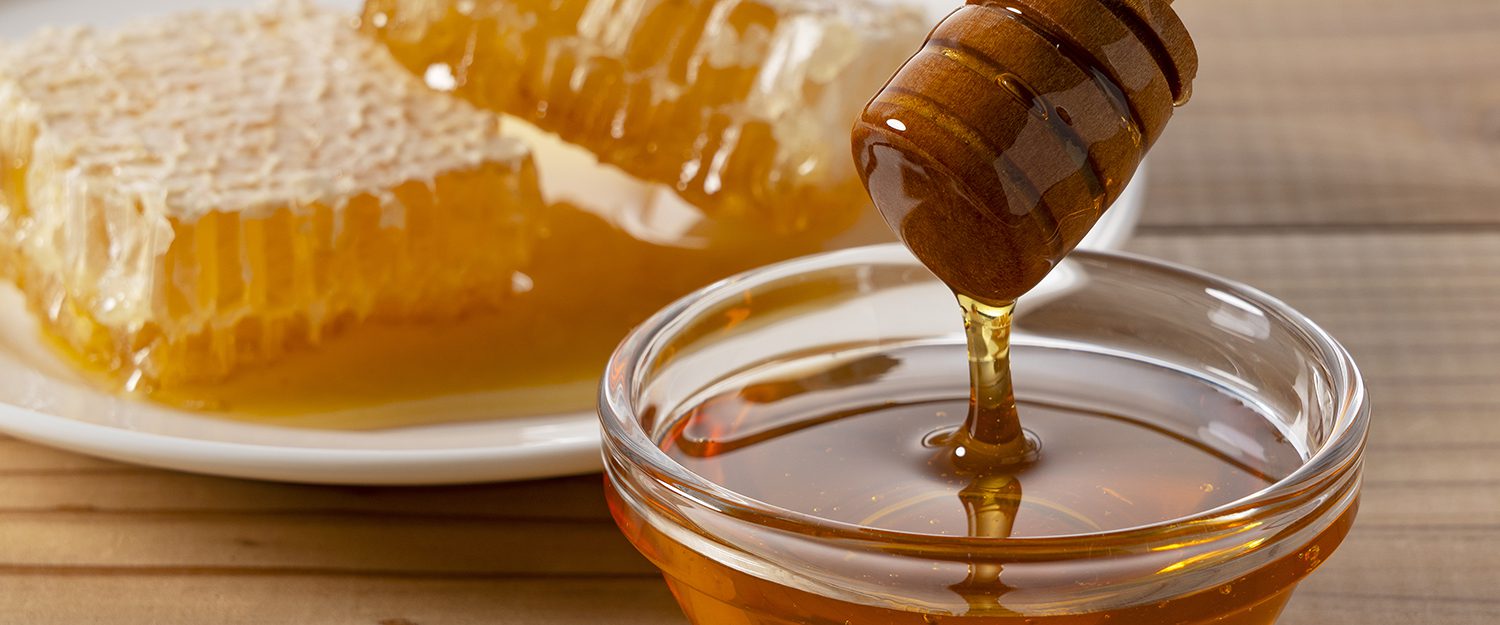
Learn to bottle honey safely, create proper labels, and follow federal and state regulations in this comprehensive resource for Alabama beekeepers.
Alabama Department of Agriculture and Industries
The Alabama Department of Agriculture and Industries (ADAI) adheres to the Code of Federal Regulations (CFR), which states that the terms “honey,” “liquid or extracted honey,” “strained honey,” or “pure honey” shall mean the nectar of plants that has been transformed by, and is the natural product of the honey bee, either in the honeycomb or taken from the honeycomb and marketed in a liquid, crystallized or granulated condition. (Alabama Code § 2-11-120)
Honey, pure honey, is considered an agricultural commodity. Think of honey like any other agricultural commodity, such as corn, tomatoes, etc. Products sold in Alabama as honey must be pure honey. (Alabama Code § 2-11-121) The word “imitation” may not be used in the name of the product that resembles honey, regardless of whether it contains any honey. (Alabama Code § 2-11-122) Raw honey can be sold at farmers markets—no Cottage Food Law Certificate is needed.
Do you need a label if you are giving honey to family and friends? According to the Food Safety Division of the Alabama Department of Agriculture and Industries, a product given to “family and friends” (not offered for sale) does not require a label.
Alabama Direct Farm Business Guide
According to the Alabama Direct Farm Business Guide on the National Agricultural Law Center website, honey is naturally antimicrobial due to its high sugar content and low water activity, making it a relatively low-risk food because it resists spoilage and microbial growth.
Honey may be pasteurized or unpasteurized. Pasteurized honey reduces moisture levels, destroys yeast cells, and delays crystallization. It improves shelf life but results in product deterioration affecting appearance, taste, and fragrance. Traditionally, pasteurized honey is heated to 145 degrees F for 30 minutes.
Some consumers believe that local raw honey will alleviate allergies. Due to US Food and Drug Administration regulations on health claims, producers should not include this claim on their labels or in advertising. The FDA must specifically approve all health claims before they are used, and it has never approved a claim linking honey to allergies.
Labels should not include any health claims connecting raw honey to allergy relief. Source: (21 CFR § 101.14) and (21 CFR § 101.70-.83)
Bottling Honey Safely Using Current Good Manufacturing Practices to Prevent Product Contamination
 Do not bottle honey while you and/or any of your workers are sick with symptoms such as diarrhea, vomiting, sore throat with a fever, jaundice (yellowing of the skin or eyes), or infected wounds. These symptoms indicate that you have an illness that could be contagious.
- Ensure that all employees follow proper handwashing procedures to keep the product safe. These procedures include scrubbing hands and wrists for 20 seconds, using soap and warm water, rinsing thoroughly in potable water, and drying hands with single-use paper towels.
- Require that restrooms have hot and cold running potable water and be fully stocked with toilet paper, paper towels, and soap. Restrooms must be clean and not a source of contamination.
- Maintain personal cleanliness, including covering sores with an impermeable cover and single glove, wearing clean clothes, keeping hair restrained and beard covered. Avoid wearing jewelry except for a smooth band ring. This includes watches, rings, necklaces, and earrings, etc. that could fall into the product.
- Do not eat food or candy, chew gum, drink beverages, or use tobacco products during the bottling of product.
- Prevent allergen cross contact by using good personal hygiene.
- Keep personal belongings (purse, jackets, phones, etc.) in a designated storage area away from bottling areas.
- Ensure that the water supply is a drinkable source.
- Use only equipment and utensils made of a material that is smooth, durable, and easily cleanable—usually stainless steel.
- Be sure that equipment, utensils, and all packaging materials are free of dirt, debris, and contamination. Packaging material must be food grade quality.
- Treat compressed air or other gases mechanically used to clean food contact surfaces or equipment in such a way as not to contaminate the food. Source: 21 CFR part 117.40
- Make sure that there is no evidence of pests. Grass within the immediate vicinity of the packing house should be cut to prevent a harborage area for pests.
Source: 21 CFR part 117 Subpart B
Clean and Sanitize the Work Area
Clean and sanitize food contact surfaces before starting work. Cleaning removes dirt and debris from the surface. Sanitizing reduces the number of pathogens on the surface to a safe level.
Sanitize using a bleach solution of 1 tablespoon of unscented 5% sodium hypochlorite bleach per 1 gallon of water. This meets federal regulations for food contact surfaces in food processing operations. Allow the surfaces to air dry.
See section 21 CFR 178.1010 Solutions (b)(37) Concentrations (c)(32)(i)
Proper Labeling of Honey and Honey Products: Guidance for Industry
Source: “Guidance for Industry: Proper Labeling of Honey and Honey Products” on the US Food & Drug Administration website.
Introduction
“Guidance Document” should be viewed as recommendations.
“Should” means something is recommended, not required.
“Shall” means something is required.
Regulation: Federal Food, Drug, and Cosmetic Act sections 402 and 403
21 US Code § 342—Adulterated food
21 US Code § 343—Misbranded food
Background
Adulteration: When is a food adulterated?
- A valuable constituent has been omitted in whole or part
- If any substance has been substituted in whole or part
-
If damaged or inferiority has been concealed in any manner
-
If a substance has been added to increase weight, reduce quality, or make it appear to be of greater value than it is
Misbranding: When is food misbranded?
When the label does not bear the following:
- The common or usual name of the food
- The common or usual name from two or more ingredients described in simple terms and not confusing
- Ingredients listed in descending order of predominance by weight
Questions and Answers
What Is Honey?
FDA defines honey as “a thick, sweet, syrupy substance that bees make as food from the nectar of plants or secretions of living parts of plants and store in honeycombs.”
How Shall I Name My Honey?
If the food contains only honey, the food must be named “honey,” which is the common or usual name. You can also include the floral source of the honey, such as “clover honey,” “orange blossom honey,” or “wildflower honey.” Claims to a floral source must be truthful and not misleading, and they must appear on the front of the package. Because honey is a single-ingredient food, you do not need to include an ingredient statement on the label.
Source: FDA Compliance Policy Guide, section 515.300 and Section 403(a)(1) of the FD&C Act
How Shall I Label Honey and a Sweetener, Such as Sugar or Corn Syrup?
You cannot label the product as “honey” because it is now a blend of ingredients and does not accurately identify or describe the food.
“Blend of honey and corn syrup” if the food has more honey than corn syrup.
“Blend of corn syrup and honey” if the food has more corn syrup than honey. (See section 403(i) of the FD&C Act, 21 CFR 101.3(b), and 21 CFR 102.5(a))
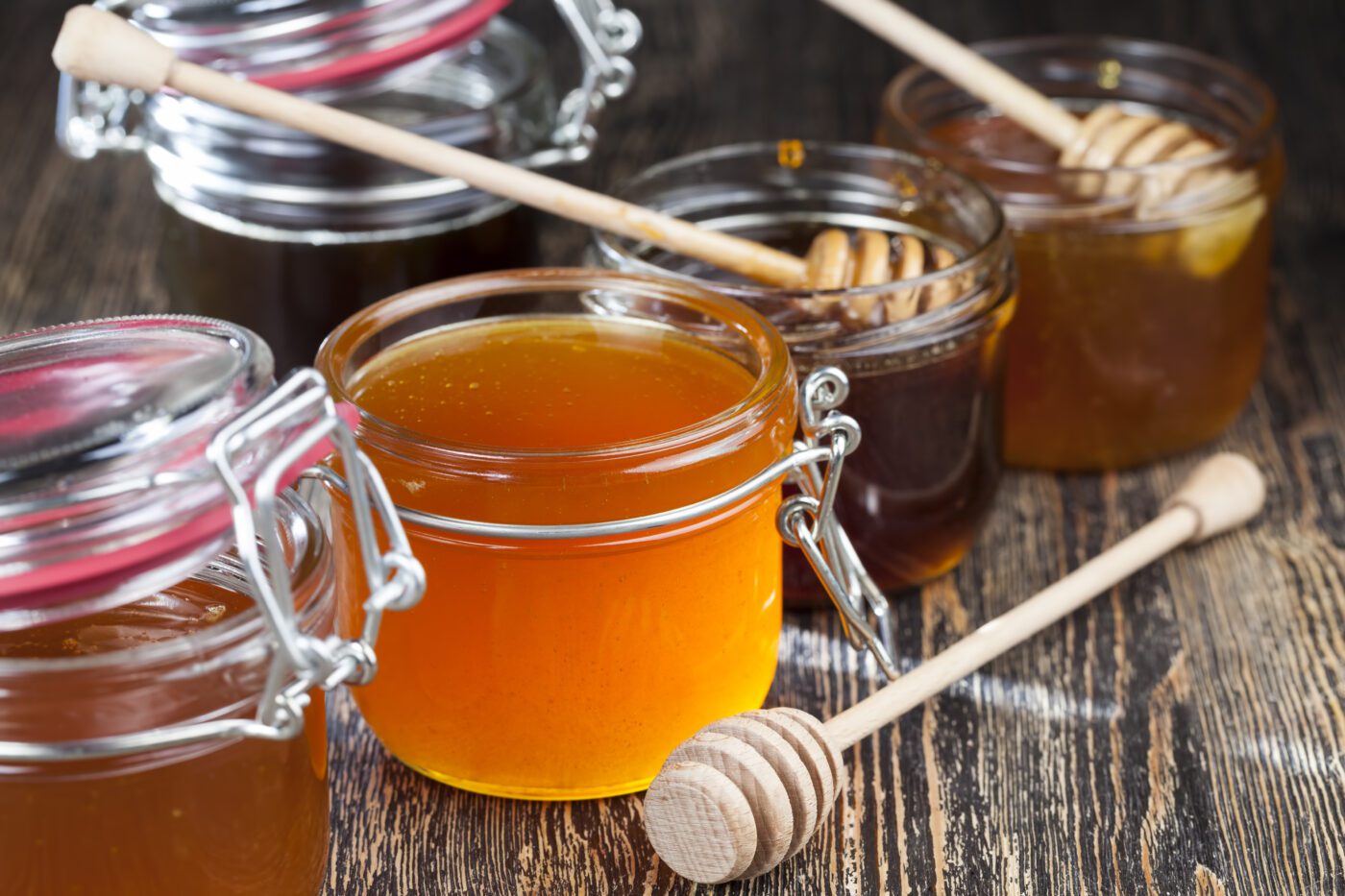 If a Food Consists of Honey and an Ingredient, Such as Natural Raspberry Flavor, What Are the Labeling Requirements?
If the product has a characterizing flavor, the flavor must be labeled, such as “raspberry-flavored honey.”
The label must contain the common name of each ingredient in descending order by weight. The ingredient statement would list honey and natural flavor.
With the addition of an ingredient, honey becomes a value-added product produced in a permitted facility and regulated by the Alabama Department of Public Health or the Food and Drug Administration, depending on where the product is sold (intrastate or interstate commerce). Honey with added ingredients can be sold in Alabama from a home kitchen directly to the end user under the Alabama Cottage Food Law if it meets the water activity requirement.
What Is the Net Weight Statement and How Is It Expressed?
It is the statement on the label that provides the amount of food in the container.
The net quantity statement is placed as a distinct item in the bottom 30 percent of the principal display panel. 21 CFR 101.7
Food labels should show content in both the metric and US Customary System.
The type size of the net weight statement is based on the space available for labeling on the principal display panel (PDP). Specifics for this information can be found in 21 CFR part 101.7
Country of Origin
Honey packers must include clearly visible, indelible labeling, in English, naming the country of origin of all packed honey bearing any official USDA mark or statement, and all imported products, regardless of whether the product labeling uses approved USDA marks or grade statements. The country or countries of origin should be preceded by the words “Product of” or similar meaning.
Source: Agricultural Marketing Service, USDA, Section 10402 of the 2008 Farm Bill; 7 CFR Part 52 (76 FR 251)
Required Contact Information
The label must let consumers know who puts the product on the market and how to contact that person.
The name and address of the manufacturer, packer, or distributor of a packaged food product are required to appear on the label of the packaged food. The statement of the place of business shall include the street address, city, state, and zip code. The street address may be omitted if it is shown in a current city directory or telephone directory. 21 CFR part 101.5
The information must be in a type size that is at least 1/16 inch tall.
Small Business Nutrition Labeling Exemption
The Code of Federal Regulations, specifically 21 CFR 101.9, outlines the requirements for a small business nutrition labeling exemption for foods. Although you may qualify for a small-business nutritional labeling exemption, it may be a condition of doing business with some retail stores.
One type of exemption applies to retailers with annual gross sales of not more than $500,000, or with annual gross sales of foods to consumers of not more than $50,000. For these exemptions, a notice does not need to be filed with the Food and Drug Administration (FDA).
Universal Product Code (UPC)
UPCs are industry standards, not FDA requirements.
 Risk of Infant Botulism
The Centers for Disease Control and Prevention (CDC), the American Academy of Pediatrics (AAP), and the National Honey Board (NHB) recommend that you not give honey in any form to infants under the age of 12 months. Raw honey is a potential source of Clostridium botulinum spores. Honey should not be added to water, food, or formula fed to an infant. This includes a pacifier dipped in honey.
Recommended Statement: Do not feed honey to infants under 1 year of age.
Clostridium botulinum spores are in air, soil, water, and plants. In the absence of oxygen, the spores germinate and produce toxins. Infant botulism is a rare disease that causes constipation, weakness, drooling, head control loss, respiratory problems, and varying degrees of paralysis. Medical treatment and early diagnosis are needed to prevent serious complications. Children over age 1 and healthy adults have the mature digestive systems necessary to prevent botulism spores from thriving.
Note: Botulism is not transmitted in breast milk.
Sources: “ENY-128/AA142: Infant Botulism and Honey,” University of Florida Ask IFAS
What’s the buzz?—Infants and Honey (September 2025), University of California Agriculture and Natural Resources
Cottage Law and Honey
Natural honey is considered a raw, agricultural commodity and would not be covered under the Alabama Cottage Food Law. However, honey with added ingredients, such as cinnamon or flavorings, would be regulated by the Alabama Department of Public Health and covered under the Alabama Cottage Food Law when sold in Alabama directly to the end user. The product would need to meet water activity requirements per the health department, which may require testing. Contact your local Alabama Extension food safety agent for more information about becoming a Cottage Law producer.
Decision Tree for Pure Honey
- Beekeeper gives pure honey to family and friends from home
- Regulatory authority: ADAI
- Requirements: No labeling required
- Beekeeper sells pure honey to family and friends from home
- Regulatory authority: ADAI
- Requirements: Proper labeling
- Beekeeper sells pure honey at the farmers market or roadside stand
- Regulatory authority: ADAI
- Requirements: Proper labeling
- Beekeeper sells pure honey for retail sale or wholesale such as to grocery stores or specialty stores
- Regulatory authority: ADAI
- Requirements: Proper labeling
- Beekeeper sells pure honey in interstate commerce (outside the state of Alabama)
- Regulatory authority: ADAI, FDA
- Requirements: Proper labeling
Decision Tree for Honey with Added Ingredients or Changed from Natural State Decision Tree
Examples of change from natural state: creamed honey, whipped honey, etc. Examples of honey with added ingredients: cinnamon honey, hot honey, infused honey, etc.
- Beekeeper sells honey with added ingredients or changed from natural state from home kitchen to Alabama consumers
- Regulatory authority: ADPH
- Requirements: Alabama Cottage Food Producer registration
- Beekeeper sells honey with added ingredients or changed from natural state from home kitchen through farmers markets
- Regulatory authority: ADPH, ADPH
- Requirements: Check with the farmers market manager
- Beekeeper sells honey with added ingredients or changed from natural state for retail sale or wholesale, such as to grocery stores and specialty stores in Alabama
- Regulatory authority: ADPH
- Requirements: permitted facility, proper labeling
- Beekeeper sells honey with added ingredients or changed from natural state in interstate commerce (outside the state of Alabama)
- Regulatory authority: ADPH, FDA
- Requirements: permitted facility, proper labeling

Alice Moore and Dani Reams, both Extension Agents, Food Safety and Quality, Auburn University
New September 2026, Alabama Beekeepers’ Guide to Safe Honey Bottling & Correct Labeling, ANR-3251
For more information, contact your county Extension office. Visit aces.edu/directory.
Trade and brand names used in this publication are given for information purposes only. No guarantee, endorsement, or discrimination among comparable products is intended or implied by the Alabama Cooperative Extension System.