
Crop Production

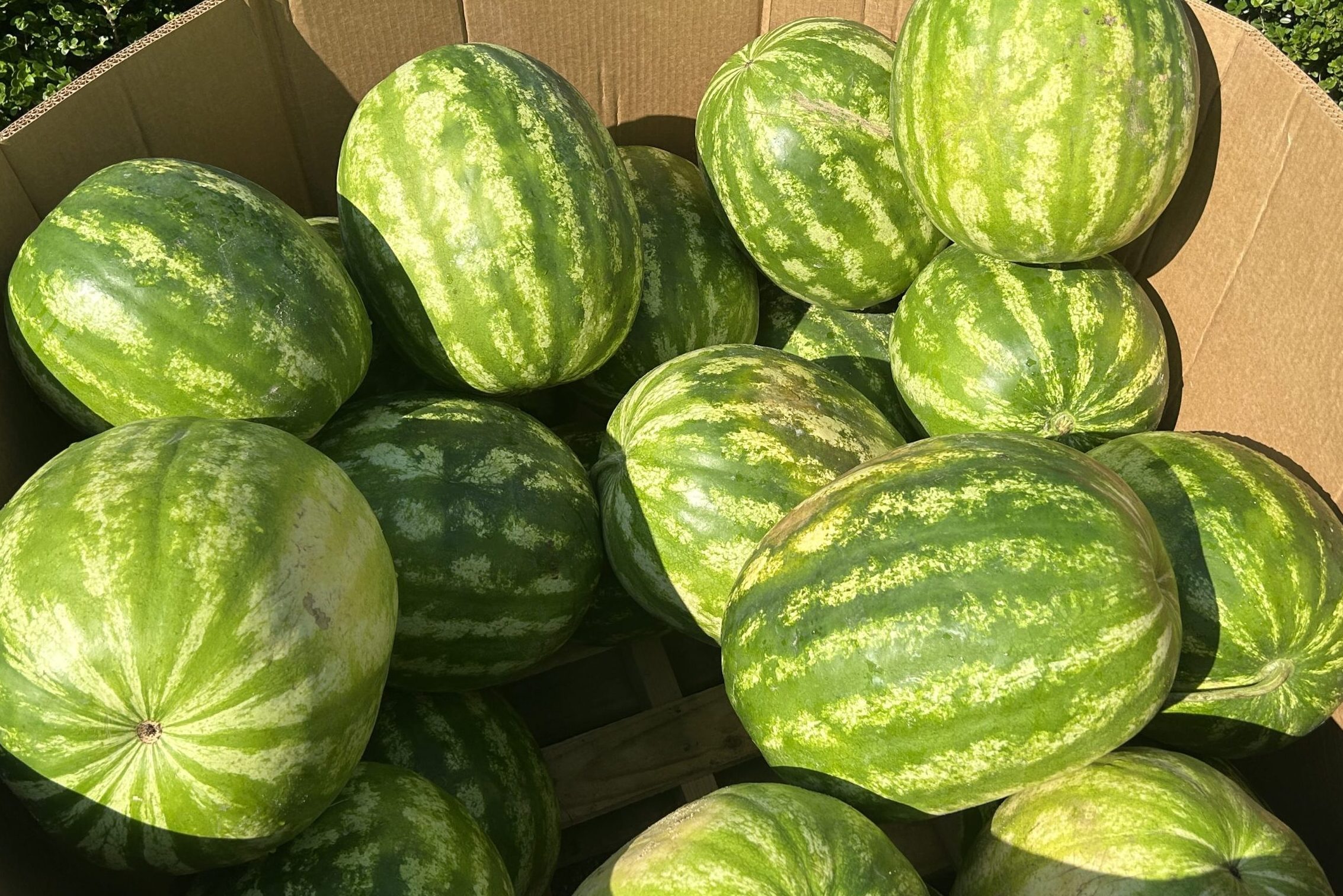
AUBURN UNIVERSITY, Ala. — For Southerners, watermelon wisdom is passed down through generations. While some suggestions for picking the perfect melon are rooted in fact, others are just old wives’ tales. Experts with the Alabama Cooperative Extension System can help consumers decipher the difference so they can always pick a good watermelon, making for the perfect sweet treat this summer.
Defining a Good Watermelon
Good watermelon production begins with farmers providing great care to ensure a successful harvest. Chip East, a commercial horticulture agent with Alabama Extension at Auburn University, said farmers accomplish this through soil testing, proper fertilization and picking the melons at the appropriate time.
“Harvesting at the right state of maturity and keeping it in a cool place out of the sun ensures quality,” East said. “A farmer may define good watermelons by disease resistance, productivity or their size.”
For consumers, size, rind thickness and amount of sugar often define a melon’s quality. When it comes to taste, East said, a watermelon should be at least 10 percent sugar. Some watermelon varieties can reach sugar content as high as 14 percent. While this can be measured with different tools, East said nothing can replace taste-testing watermelons, as sweetness can be a personal preference.
Overall, ripe watermelons make good watermelons. Knowledge of the harvest date can help determine maturity, but consumers often do not have that option. Without the ability to taste before purchasing, consumers have developed numerous methods of selecting this summer fruit. However, many of these methods are based on myths because they rely on physical characteristics that are not actually reliable indicators of sweetness. Instead, these traits reflect differences in watermelon varieties.
Watermelon Myths and Facts
Myth: Thumping or knocking on a watermelon can determine if it is sweet.
Fact: Thumping or knocking on a watermelon showcases rind thickness. Some smaller watermelons will sound dense, while bigger watermelons might sound more hollow because of the thickness of the rind. This is determined by the variety of the watermelon.
Myth: Stripes on melons help to determine sweetness.
Fact: The stripes on a watermelon are also based on the variety. While some varieties are slightly sweeter than others, the stripe thickness has nothing to do with the amount of sugar in the melon.
Myth: Presence of a spot on the bloom end of the melon indicates sweetness.
Fact: This does not help to determine the sweetness but is also an indicator of the variety of watermelon.
What Really Works
To know if a watermelon is ripe, East suggested looking at the belly, also known as the field spot, which is where the melon was resting on the ground.
“You’re looking for a yellowish, creamy color on the belly to tell you if it’s ripe,” East said. “If the melon’s belly is green or really white, it might not be ready yet.”
Additionally, consumers can determine a watermelon’s ripeness by asking farmers at a local farmers market or farm stand. Extension home horticulture or commercial horticulture agents can also answer questions about different varieties of watermelon and which ones are sweeter to help pick a good watermelon.
More Information
More information about watermelon varieties and producing a successful watermelon can be found in East’s Extension Brief, “Considerations for Successful Watermelon Production.” This publication and other relevant information can be accessed on the Alabama Extension website at aces.edu.