
Farming

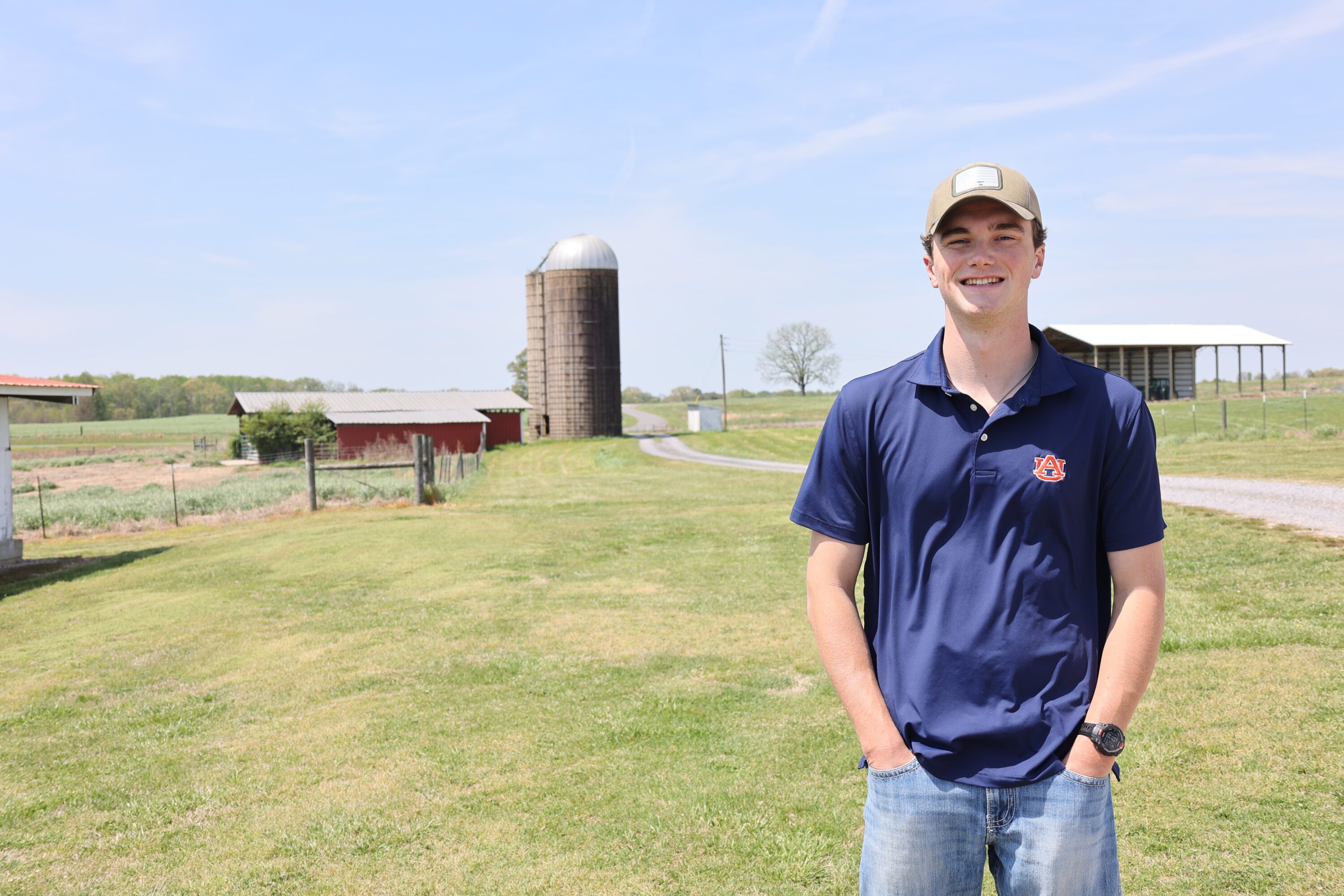
AUBURN UNIVERSITY, Ala. — The agricultural industry is a people business. That was a major factor in Duncan McSorley’s decision to pursue a future career in Cooperative Extension.
As a graduate student studying ruminant nutrition and forages at Auburn University, McSorley is already getting his feet wet. Currently, he works alongside the Alabama Cooperative Extension System’s animal sciences and forages team to provide research-based solutions to Alabama cattle producers.
Solutions for Producers in Real Time
McSorley is gaining valuable experience as he helps the animal sciences and forages Extension team research alternative forages for cattle that can fill nutritional gaps caused by seasonal or economic factors. He is tracking how supplemental nutrition through alternative forages can benefit cattle performance and improve farmers’ bottom lines.
“We are looking to see how we can grow the plants, if the cattle want to eat them and how the animal performs after,” McSorley said. “The goal is to confidently recommend plant species that will benefit producers in many ways. We want them to see improved animal and soil health at a lower cost.”
McSorley’s thesis research project focuses on growing and sampling forbs that have not yet been used for supplemental nutrition. Forbs are broadleaf plants that are not classified as grasses but can be grown in pastures, including clover and alfalfa.
McSorley looks at how well various forbs establish in Alabama fields, how the cattle perform and if the forbs can be incorporated into growing systems. Identifying new species of plants that work well can provide producers with more options that benefit their herds.
Advancing Extension Outreach
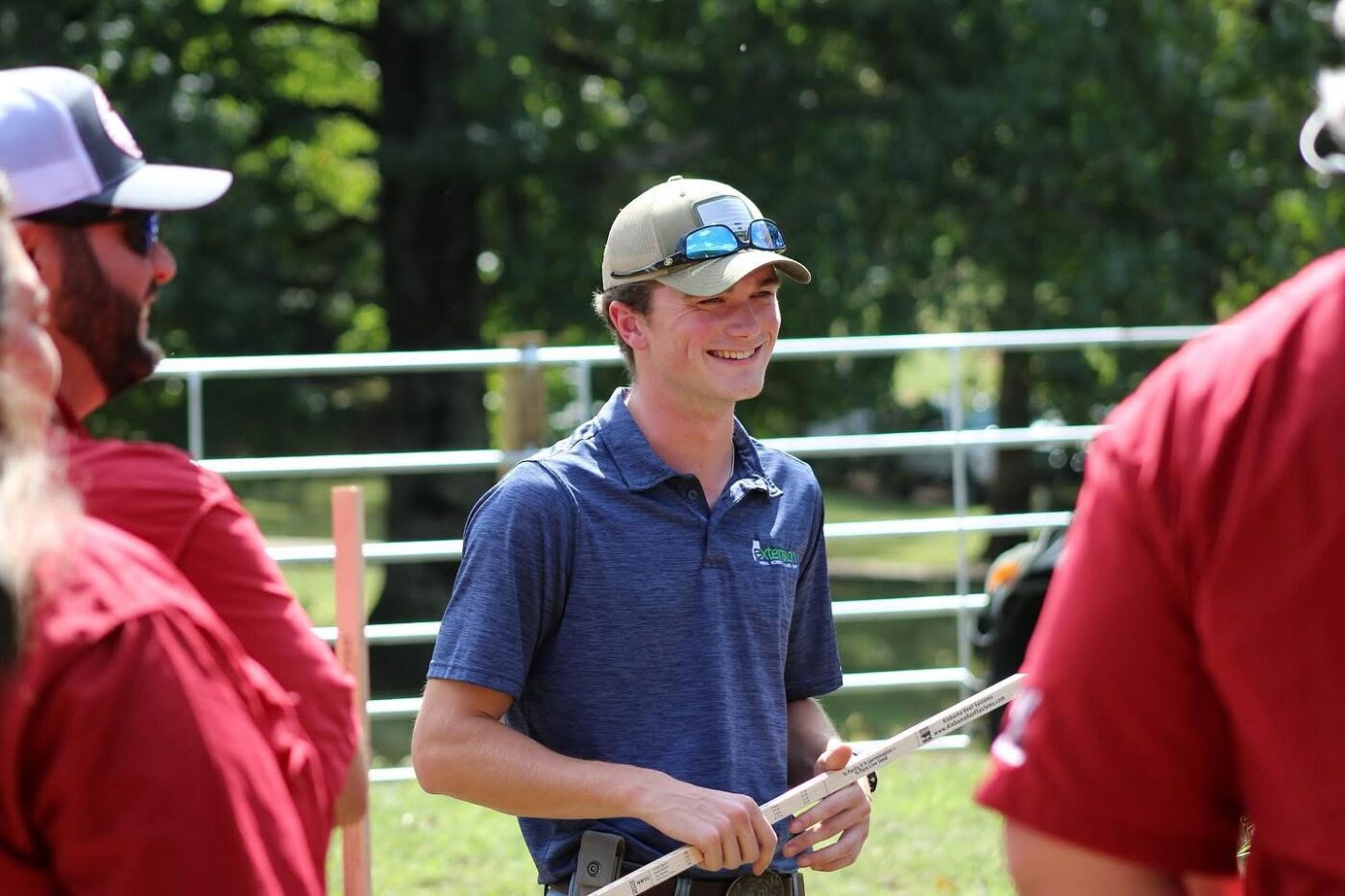
McSorley presenting at the Alabama Grazing Academy
Leanne Dillard, an Extension specialist and program coordinator for the animal sciences and forages team, is a champion of graduate-level research. She said this kind of work supports Extension’s efforts to relay up-to-date information to producers and consumers.
“The research conducted by graduate students fuels the recommendations Alabama Extension makes to producers,” Dillard said. “These young researchers are putting in the work to discover the answers to management questions that producers from across the state have been asking.”
In addition to conducting research and completing class work, graduate students help Extension agents deliver programs. This includes coordinating field day demonstrations and presenting research updates at meetings.
Fields of Forage
McSorley is conducting his research at the Sand Mountain Research and Extension Center in Crossville. This is one of 13 outlying units of the Alabama Agricultural Experiment Station at Auburn University. Unit locations range from the Tennessee Valley to Alabama’s coast.
“Having research stations all over the state is critical to our work because they reflect the rich biodiversity of the state,” McSorley said. “Working with different climates, soil types and weather patterns allows us to deliver better results.”
In Crossville, McSorley stays busy planting new forbs species, taking forage samples and studying cattle grazing and performance. His thesis project is one of many supported by the Alabama Agricultural Experiment Station. Additionally, researchers at each station study the development and application of new resources and technologies.
A Dynamic Career
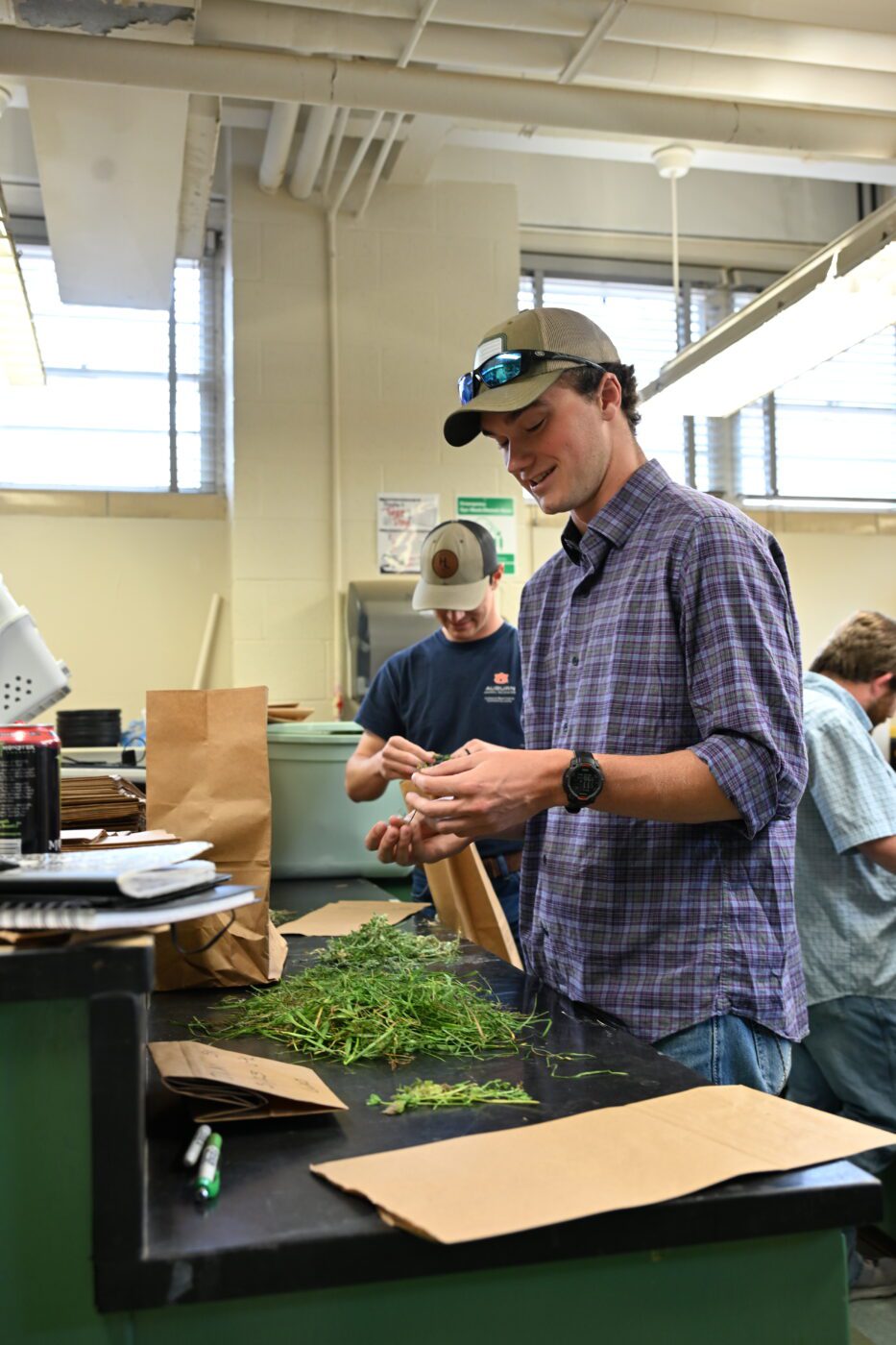 As the grandson of former Cooperative Extension agents, McSorley was familiar with the organization. However, he began his own path with Extension during his undergraduate program.
While studying crop and soil science at North Carolina State University, McSorley interned at a county Extension office. He gained an inside look at different Extension careers as he learned from agents and specialists in different program areas.
“I was really drawn to the specialist role because it incorporates research into Extension’s public service,” McSorley said. “The dynamic career of doing something different every day while helping people was really appealing to me.”
Excited about a career in agriculture, McSorley jumped at new opportunities that would expand his knowledge of the industry. He decided to research forage systems at Auburn because it includes all aspects of agriculture that he’s passionate about — plants, animals, soil and the environment.
“His growing knowledge of all things agronomy, forage and cattle production is going to set him up to be successful in any role he fills in the future,” Dillard said. “But he’s truly driven by opportunities to make a difference and that is what the land-grant mission is all about.”
Upon graduating from Auburn with his master’s degree this August, McSorley will begin a Ph.D. program with the goal of becoming an Extension specialist in forage systems at a land-grant institution.
The Future of Extension
McSorley said the opportunity to meet producers where they are with forage research that can improve their operations gives purpose to his work and keeps him motivated.
“Success in Extension is measured by the strength of relationships with the people we serve,” McSorley said. “At its core, it is a public service that provides concrete and timely resources that help communities.”
Dillard said graduate students like McSorley help her feel confident the future of Cooperative Extension is in good hands. She said she hopes to continue seeing students who are passionate about and excited by the opportunity to make a difference through bringing research to new audiences.
“It’s a fun career path to set out on,” Dillard said. “Every day is different, and most days you go home knowing you made an impact. That is extremely rewarding.”
This news story is one of five published for Alabama Extension Week. To learn more, visit aces.edu/go/ALExtensionWeek.