
Home & Family

AUBURN UNIVERSITY, Ala. — Life can hit like a ton of bricks. One moment all the bills are paid, and things are rocking along smoothly. Then, BAM…the water heater explodes. Life is good at throwing those unexpected curveballs. The key to adulting is learning how to prepare for unexpected financial moments, good or bad, before they happen. For eighth-grade students across the state, this is where the Alabama Cooperative Extension System can step in to help. Through the “Your Money, Your Life” program, students get a glimpse into all the financial fun that life offers.
Hands-On Decision-Making
 “Your Money, Your Life” is not a financial workshop; it is a real-life simulation of the ups and downs that come with managing finances. At the beginning, students are assigned careers and a monthly salary. Knowing where they stand, the students stop at different booths to choose and pay monthly expenses, such as housing, food and transportation.
At each booth, students are given options to choose from. Do they rent an apartment or buy a four-bedroom house? Do they cook every meal or go out to eat a lot? It is completely up to them. The students also have the option to buy luxury items like streaming services, haircuts and concert tickets. Their goal is to make it through the month with the bills paid and some money left over.
“They go through those decisions — budgeting along the way — to see if they have enough money to live the lifestyle that they want to live,” said Alayna Jackson, an Alabama Extension 4-H agent in St. Clair County. “We try to make the prices comparable to the costs of things today. Some of the students are surprised at just how much things actually cost.”
Starting as a local Extension program in Shelby County, “Your Money, Your Life” went statewide in 2004. At the time, the program was known as “Reality Check.” Lee Ann Clark, now an Alabama Extension assistant director of field operations, was the financial management Extension agent who helped launch the program to Alabama students. She said the hands-on elements are what set this program apart from other financial workshops.
“Nobody really wants to sit down and just hear you talk about finances or budgeting,” Clark said. “The beauty of this program is that the students get to choose their careers and see those financial concepts in action.”
Life Happens

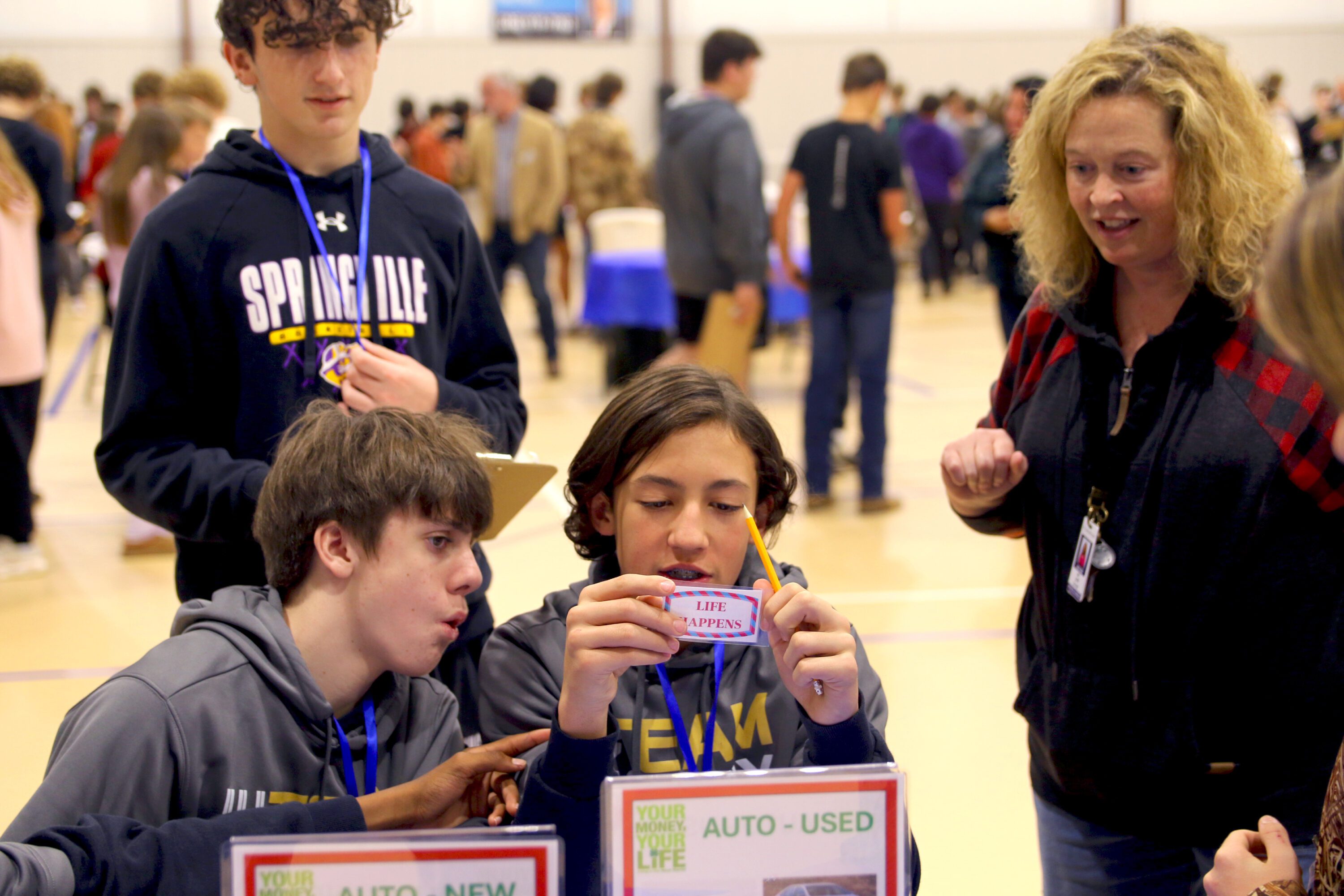
The Life Happens cards issued during the event often get some comical reactions from the students.
Each year, St. Clair County Extension hosts a county-wide event, where eighth graders from local schools travel to participate in the program. With the help of local volunteers, hundreds of students make their way through the different booths to make their financial decisions. To simulate life’s unexpected costs, volunteers will randomly issue Life Happens cards. These include real-life financial scenarios like buying sport’s equipment for a child, paying to have the car repaired or getting a bonus at work.
“Life is hard, but rewarding, and money can go a long way if you do it right,” said Avery Cooper, a student at Springville Middle School. “My favorite thing was walking around and getting to know people better, because their decisions kind of reflect who they are as a person.”
For the Extension staff, witnessing interactions among students is a favorite part of the event. It can even turn into a competition among friends to see who can best manage their money.
“You can see them laughing and sharing stories about the things that they were spending their money on and those real-life decisions that they are going to have to make,” Jackson said.
Some of the more comical moments occur when the Life Happens cards are given to a student. Staff and volunteers can tell how good or bad the scenario is based on the student’s or their friend’s reaction.
Install the Brakes Now
Candy Blackmon is a career coach for St. Clair County schools. She said “Your Money, Your Life” is invaluable to her students and ties well into the county’s career coach program.
“Our motto is, it’s never too early to start considering your future,” Blackmon said. “’Your Money, Your Life’ really helps students visualize what their futures will look like with the careers that they’re already considering.”
Ages 13 and 14 may seem too young to start talking about finances. After all, these adult decisions are years away, right? While that may be true, the mission of “Your Money, Your Life” is to help students prevent financial problems. Waiting to teach these concepts only after problems happen is like trying to install brakes on a car that is already rolling downhill.
“Our mission is to improve the quality of life of our citizens, and why not start when the kids are young?” Clark said. “A lot of times, people say this is more of an adult problem. But if you start young, we can maybe head that off and get them to think about what they want to do in life — whether it be a trade or going to college — and what those careers pay.”
Moments of Reflection

From left: Springville Middle School students Brandt Bates and Crossden Duffin, Extension 4-H Agent Alayna Jackson and Springville Middle School students Avery Cooper and Elsiekay Dudley.
From childcare to interest on a loan, “Your Money, Your Life” shows students the true costs of being an adult.
“My favorite part was seeing what being in a parent’s shoes would be like — to see what the world would be like at an older age,” said Brandt Bates, a Springville Middle School student.
The program’s main goal is to get students thinking about their own futures. However, Brandt is not the only student to see things through the eyes of a parent or guardian. Jakson said the students always end up making the connection back to their own parents or guardians.
“You hear the kids say, ‘I really need to thank my parents,’” Jackson said. “They’re getting a look into what adult decisions we have to make every day. It gives them a moment to reflect and be thankful for the things they do have, because those things cost a lot of money.”
For information on scheduling a “Your Money, Your Life” event in your county, contact your county Extension office at aces.edu/Counties. This news story is one of five published for Alabama Extension Week, celebrated April 12-18, 2026. To learn more about Alabama Extension Week, visit aces.edu/go/ALExtensionWeek.