
Farming

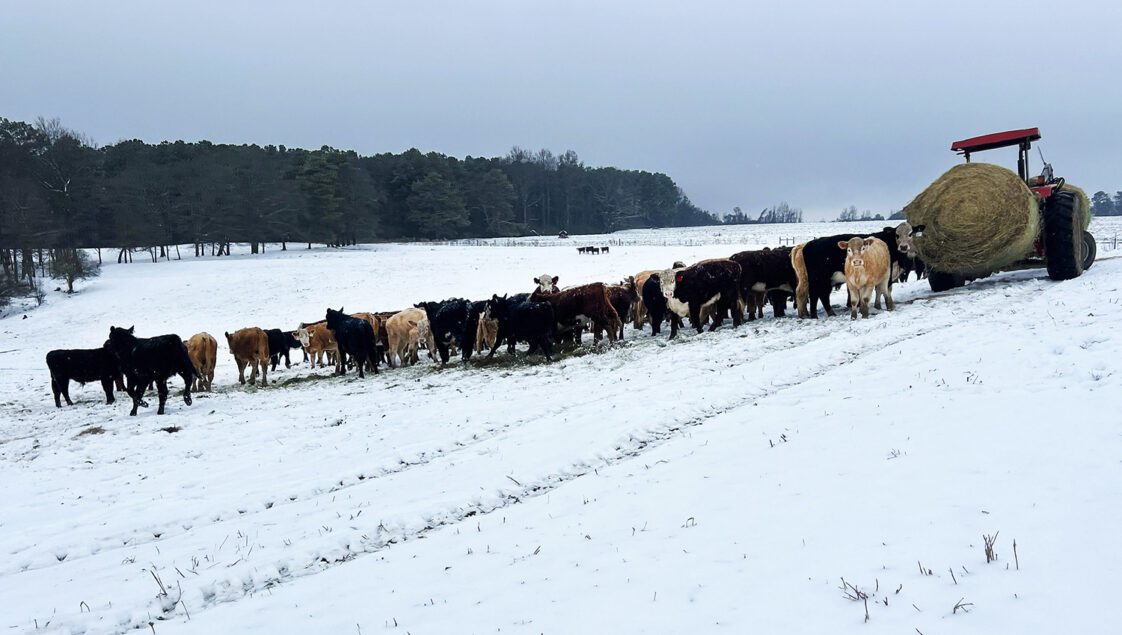
AUBURN UNIVERSITY, Ala. — Significantly cold temperatures and wintry precipitation are forecasted to impact parts of Alabama this weekend (Jan. 23–25). Experts with Alabama Extension at Auburn University encourage cattle farmers to prepare their herds for this potentially harmful bout of weather.
As of Jan. 20, Jim Stefkovich, a meteorologist with the Alabama Emergency Management Agency, said freezing rain is most likely for the northern half of Alabama, especially near and north of Interstate 20. However, there could also be areas of sleet and snow. Stefkovich said the southern half of the state is expected to experience mostly cold rain. However, temperatures may drop below 32 degrees Fahrenheit Saturday night into Sunday morning, which could cause standing water to freeze.
Maggie Justice, an Alabama Extension beef systems specialist, said it is important for farmers to think about how their livestock’s needs may change in the coming days.
“Winter management doesn’t have to be complicated, but it does need to be intentional,” Justice said. “By being mindful of changing conditions and providing the right nutritional support, farmers can help their cattle withstand these winter conditions.”
Increased Energy Needs
As temperatures lower, cattle’s energy requirements start to increase. When conditions reach the critical temperature, cattle will physically begin to shiver to keep warm. Justice said the critical temperature can vary significantly based on moisture.
“A cow with a dry winter coat doesn’t start to shiver to keep warm until the temperature reaches 32 degrees Fahrenheit,” Justice said. “However, under wet, wintry conditions, this critical temperature increases all the way up to 59 degrees Fahrenheit. Under conditions like the ones that are forecasted for this upcoming weekend, cattle will increase their forage intake, possibly by as much as 30%.”
Depending on the weather conditions and quality of hay, farmers may also need to feed a high-energy supplement to overcome energy losses. The supplement’s energy value needs to be more than 65% total digestible nutrients. Farmers should feed this supplement along with a good quality forage during the bout of cold weather and for three to five days after. Commonly used supplements in Alabama include soyhulls, corn and whole cottonseed. There is also a commercial blend product with soyhulls and corn as the primary ingredients.
“It is nearly impossible to overcome a large energy loss at once,” Justice said. “Diet changes should be made gradually to help prevent digestive problems. Also, continue providing plenty of clean, fresh water during the colder weather. Check water sources consistently to avoid freezing that might prevent the animals’ access.”
More Information
Farmers can find helpful winter management information in the Extension Briefs, “Coping with Winter Feeding Needs” and “Quick Tips for Wintering Beef Cattle in Alabama.” They can also contact the animal science and forages Extension agent in their area for more information. Contact information can be find in the online directory at aces.edu.