
Food Safety

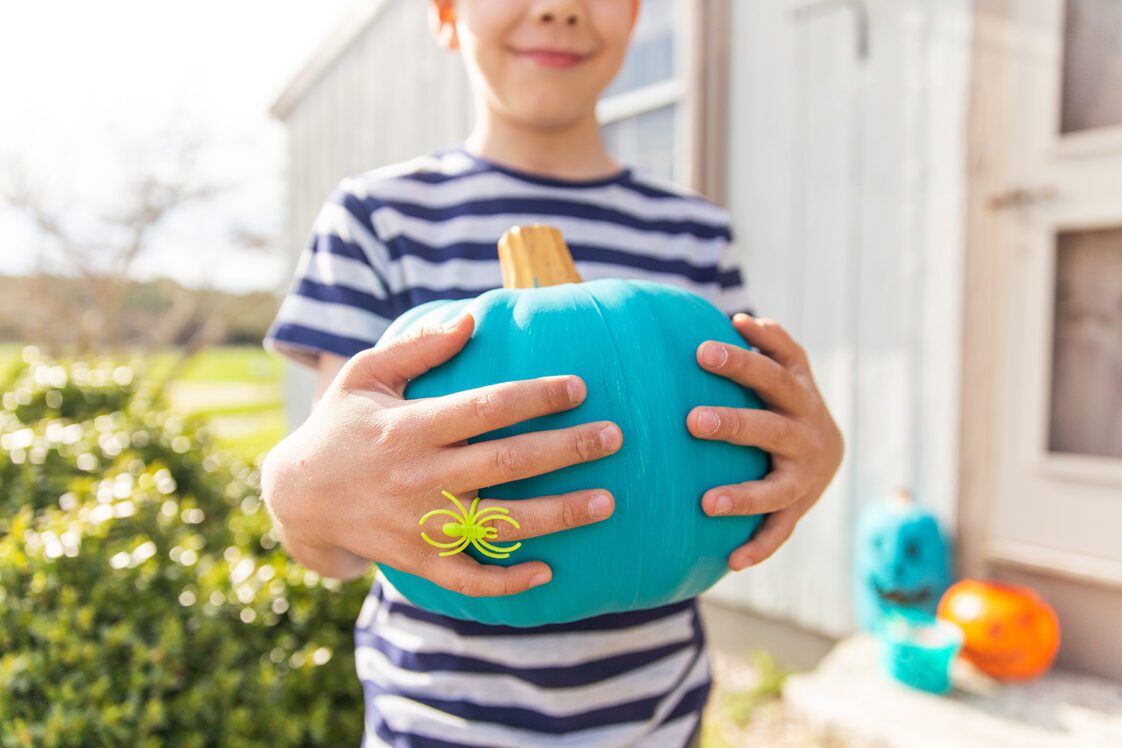
If you spy a teal pumpkin on Halloween, do you know what it means? Teal pumpkins are used to promote food allergy awareness during Halloween.
Food allergies affect one in thirteen children in the United States, or about two children per classroom. According to the Centers for Disease Control and Prevention, there is no current cure for food allergies. The only way to avoid a reaction is to stay vigilant of known allergens. Many common Halloween candies contain allergens such as peanuts, tree nuts, milk, eggs, soy, and wheat. Even some items like candy corn or face paint can contain these allergens. If you see a teal pumpkin on someone’s porch—or a picture of one at an event—it often signals that they have nonfood treats available for trick-or-treaters who have food allergies. These safe alternative treats often include items such as glow sticks, stickers, small toys, bubbles, pencils/erasers, or temporary tattoos. This initiative is part of the Teal Pumpkin Project, created by FARE (Food Allergy Research and Education) to help ensure every child can safely enjoy Halloween.
Tips for a Safer Halloween
- Display a teal pumpkin to show that you offer nonfood treats.
- Wash your hands before handling both food and nonfood items.
- Use separate containers: one for allergen-safe treats and one for traditional candy.
- If possible, clearly label the containers or offer children the choice of an allergen-safe treat.
For more information on the Teal Pumpkin Project, visit www.foodallergy.org. There, you can also add your house to their map of allergy-safe homes.