
Forestry & Wildlife

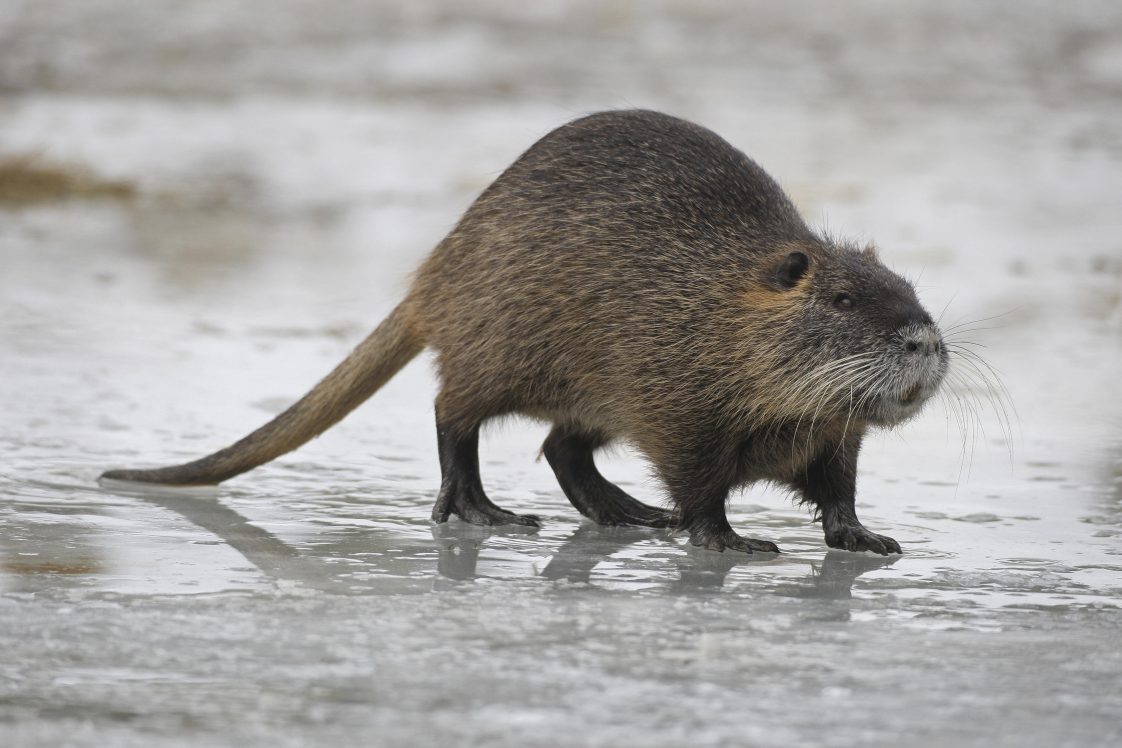
Nutrias (Myocastor coypus) are not a new face among the many exotic species that are present in Alabama. These are large rodents that have large appetites and a rodent’s capacity for reproduction. They were brought to the Gulf Coast in the 1930s and 40s as a source of fur and have since thrived. They can now be found across parts of Texas, Louisiana, Mississippi, Alabama, and Florida. In Alabama, they are found from the Mobile-Tensaw River Delta well into the Alabama and Tombigbee River systems. While they are far from the worst of the invasive species present in Alabama, it is important that residents are aware of the risks they pose and how to identify and manage this troublesome creature.
Causing Problems
The nutria, or coypu, may pose a number of problems for landowners and the local ecology. They dig extensive burrows to avoid predators and inclement weather, damaging levees, banks of ponds or creeks, and similar areas. They are herbivores and enjoy a wide range of plants, potentially stripping away plant cover from bank systems and causing further erosion. They also gnaw the bark of ornamental and fruiting trees near water in a similar manner to rabbits. Given their similar ecological niche but much larger size, they will displace native muskrats in infested areas. In ideal conditions they can have two litters each year with an average of five babies per litter, so their numbers may grow rapidly for an animal this size.
Identification
Nutrias resemble other similar semiaquatic rodents, such as the muskrat and beaver, but they can be readily distinguished by a number of characteristics.
Size. Nutria are significantly larger than any muskrat, while being smaller than a beaver. Nutrias range from 9 to 20 pounds, while muskrats range from 1.25 to 4.5 pounds and beavers from 24 to 44 pounds or more.
Tail shape. Nutrias have a conventionally round, scaly tail, similar to many rats. Nutrias also have short hair over the base of the tail. Muskrats have a long, laterally compressed tail that swishes from side to side. Beavers have a large, paddle-shaped tail.
Head shape. Nutrias have a large and blocky snout with long whiskers, white fur, and visible orange teeth. Muskrats have a small and rounded snout with a mostly furred nose. Beavers have a similar head shape to muskrats but with more obvious teeth and a larger bare nose.
-
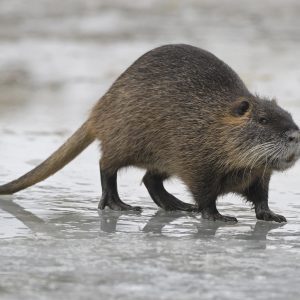
- Nutria (Myocastor coypus)
-
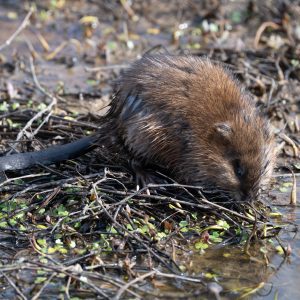
- Muskrat (Ondatra zibethicus
-
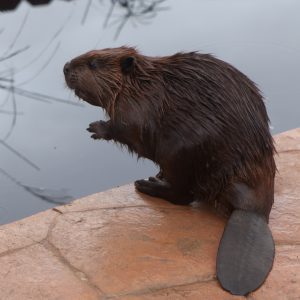
- North American beaver (Castor canadensis)
Action Steps
Nutria have not yet spread to many parts of Alabama and may be eliminated or controlled with good management. Their meat is considered good to eat, and their fur may be processed for a variety of applications.
Trapping. Nutrias may be trapped with similar body-grip traps that are used for beavers. They also may occasionally be trapped live in box-type traps but then must be dispatched within the trap.
Shooting. Nutrias are susceptible to spotlighting and shooting or shooting during daylight where visible. Make sure to follow appropriate regulations and firearm safety practices.
Native predators. If ecological management is the goal, allowing nutria predators, like the American alligator, to persist at larger sizes can limit the growth of local nutria populations.