
Forestry & Wildlife

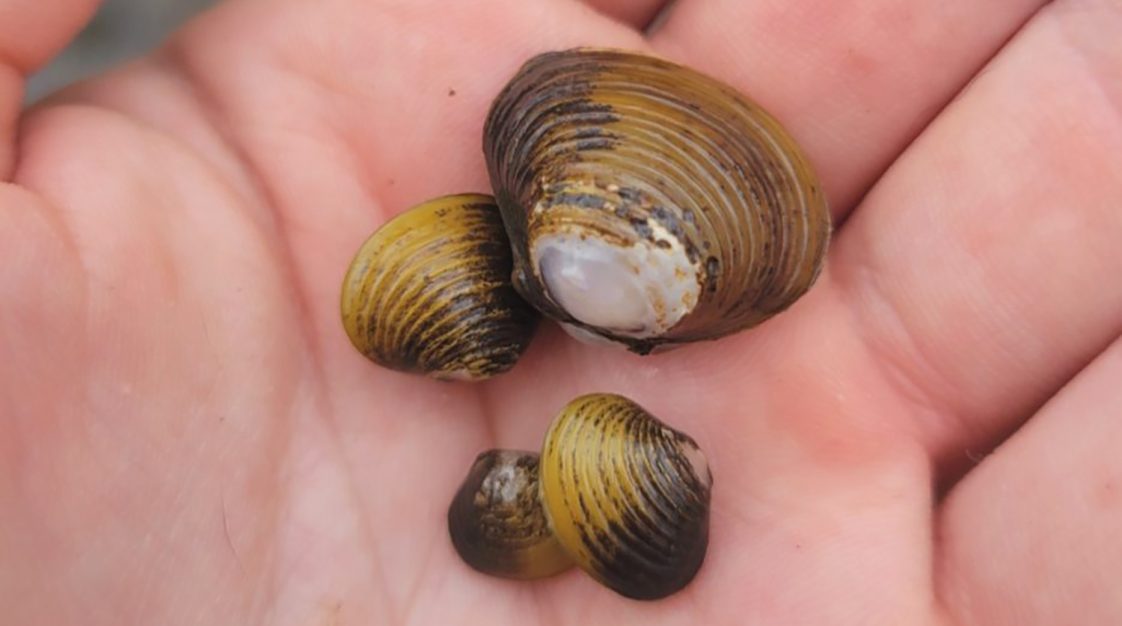
Alabama has a great diversity of native mussels and is the most species-rich region in the world for these animals. Unfortunately, many native species are threatened by habitat loss, pollution, and overharvesting. In much of the state, it is now far more common to see an invasive freshwater bivalve: the Asian clam (Corbicula fluminea). Also known as the golden clam, this exotic species has been present in the United States since the 1930s and may now be found across much of the country.
Causing Problems
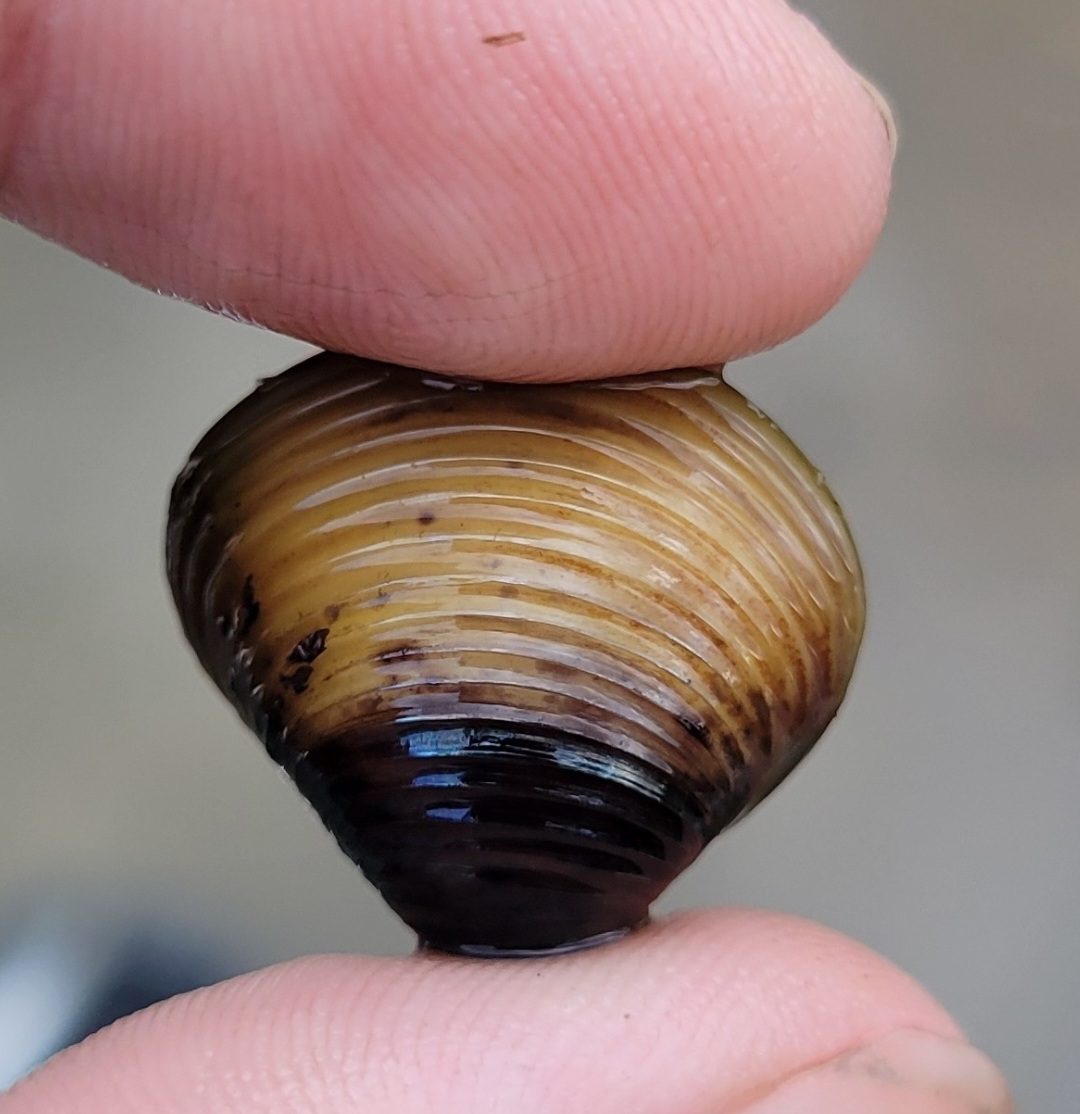 The Asian clam may cause a variety of ecological issues. It can occur at incredible densities, depleting food sources for native mussels and other animals. Large shell piles occurring in otherwise sandy or muddy bottom areas can create a minor hazard for recreational swimmers. The large numbers of clams churning sediment for food and hiding spaces can reduce water quality and create harmful algal blooms, especially in water that is already overburdened with nutrients. These clams are hermaphrodites and only a small handful of introductions can quickly balloon into infestations.
Identification
Asian clams are small, generally only 2 inches across, even as large adults. The growing edge of the shell is often dull yellow, giving them their name. The rest of the shell may be yellow but it can also be dark brown to black toward the base. Compared to most native mussels, the Asian clam’s shell is rounded and the ridged valves are distinct.
Action Steps
Because of the widespread and highly prolific nature of Asian clams in many Alabama watersheds, total eradication is not feasible. Within the realm of management there are a few possible options:
- Empty bilge water and sanitize vessels before moving to another body of water.
- Do not carry bait buckets with water or organisms from one watershed to another. This can reduce the spread to otherwise noninfested areas.
- Encourage and protect native turtles. Species like musk and map turtles will consume Asian clams prolifically where native mussels are less available.
- Follow best management practices around riparian areas. Cleaner water and intact riverbeds can encourage native mussel populations.