
Farming

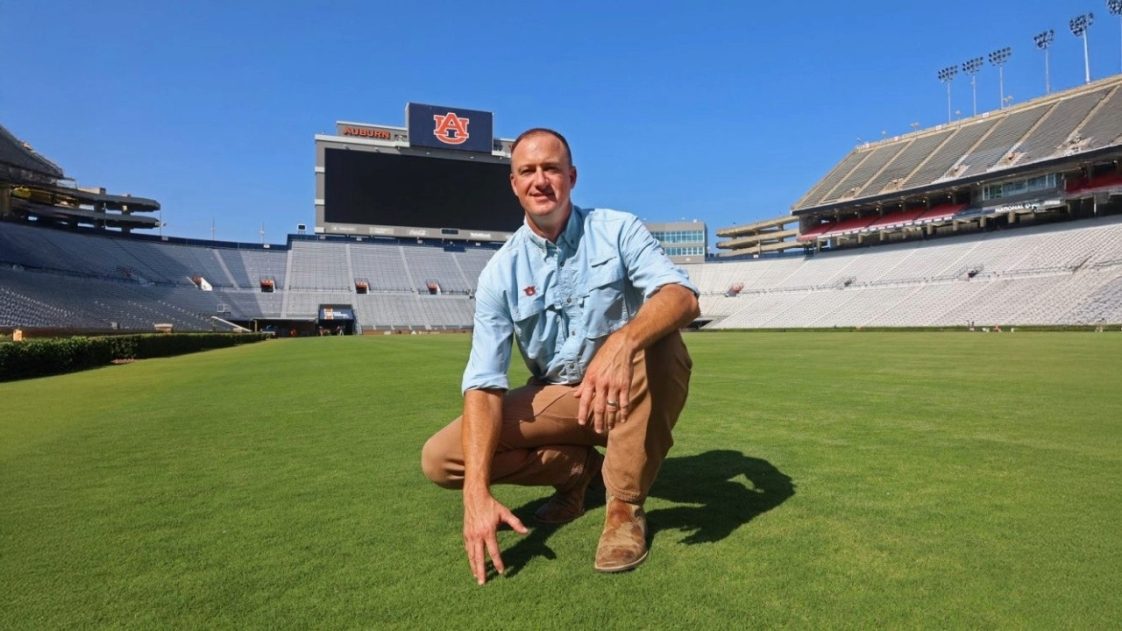
AUBURN UNIVERSITY, Ala. — When Bo Jackson went over the top or Chris Davis ran the missed field goal back, odds are that no one stopped to say, “Man, that turfgrass sure is looking good tonight.”
Week in and week out, Pat Dye Field and countless others across the country see a lot of playing time. Even after enduring the stress and beatings of the game, these fields are always raring and ready to go the next week. While some may say there is magic in Jordan-Hare Stadium, magic has nothing to do with getting the field back in shape. Armed with science-based information, a team of turfgrass managers execute their game plan year-round to make sure Pat Dye Field is one of the best in the country.
“The expectations that people at Auburn have instilled in the turf management program are top of the line,” said David Lawrence, an Alabama Extension at Auburn University commercial horticulture agent. “When people come through Jordan-Hare and they see this field being associated with Auburn University, they expect pristine conditions every week.”
A New Pat Dye Field
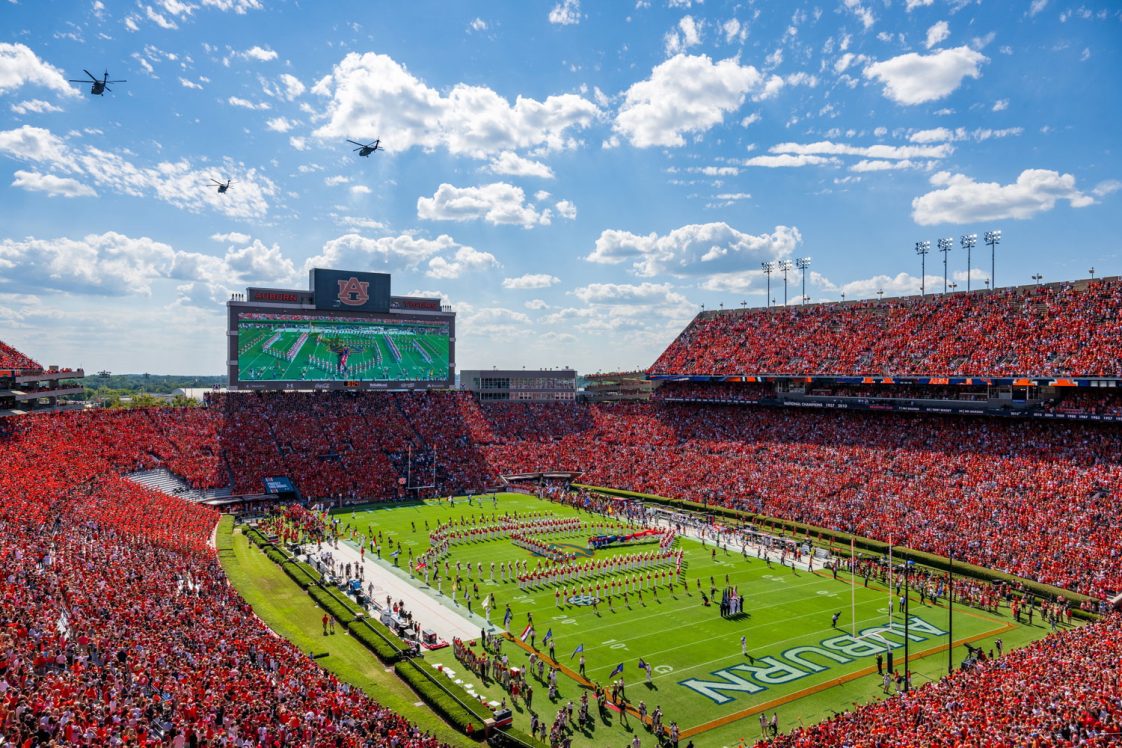
For the 2025 season, Pat Dye Field debuted a new turfgrass cultivar, NorthBridge Bermudagrass. (Photo credit: Auburn University Photographic Services)
In the Southeast, bermudagrass is the grass of choice for almost all playing surfaces. There are some sports, such as golf, that use other grasses in certain areas. Lawrence said there are several bermudagrass cultivars used, with Tifway 419 being the most common. However, for the 2025 football season, Auburn debuted a new cultivar on the field.
“For many years, Tifway 419 was the preferred grass used on Pat Dye Field,” Lawrence said. “Recently, the field was renovated with NorthBridge Bermudagrass, which is a new cultivar. It looks fantastic, and from what I’ve been told, it handles the wear tolerance and the springtime transition very well.”
While it is an excellent choice, bermudagrass is a species that naturally goes dormant in the wintertime. When days start getting shorter and nights get cooler, the grass growth slows and goes into dormancy when frost hits. To compensate for this, the management team overseeds the field with a cool-season grass.
“You may notice in late November, when you turn on an Auburn football game, the field is bright green, just like summertime,” Lawrence said. “The reason for that is because this field gets overseeded with perennial ryegrass, which thrives in cooler temperatures.”
This ryegrass carries the team through the end of the season into spring. In March or April, once the bermudagrass starts waking back up, field managers will spray a herbicide to kill the ryegrass to open up the canopy and give the bermudagrass room to reemerge. This grass carries the team throughout the summer until late fall, when the cycle starts over again. This management tactic is not specific to Auburn. Lawrence said a lot of field managers, especially in the Southeast, rely on overseeding.
Management Challenges

Traffic from the Auburn University Marching Band is just one of the challenges that Pat Dye Field managers face. (Photo credit: Auburn University Photographic Services)
While the damage that players cause during the game is certainly an impact to manage, there are other impacts that management teams must also consider.
“The one good thing about athlete traffic is they’re kind of ripping and tearing the grass,” said Eric Kleypas, the Auburn director of athletic turf and grounds. “The field can recover quicker from that athlete traffic than it can from a cheerleader or a marching band member stomping in place or from fans rushing the field.”
There are other challenges that turfgrass managers face both before and during football season. These include heavy rainfall, pressures from pests and diseases and even the facilities that surround the field. In a stadium like Jordan-Hare, there is not much air movement on the field level. If not properly managed, that could be a condition that allows diseases to thrive. Also, as both environmental and physical situations change, such as new additions to a stadium, turfgrass teams have to adjust their management tactics.
“Auburn has a big scoreboard on the southeast end of the stadium, which is where a lot of our sun comes from, especially in the fall and spring,” Lawrence said. “That end of the field is going to deal with a lot of shade issues. So, they have to manage it a little bit differently than they do an area that gets full sun.”
Help from Extension
While Auburn has an entire team to manage their playing surfaces, not everyone across the state has such a luxury. That is why many turfgrass managers lean on Alabama Extension experts for help.
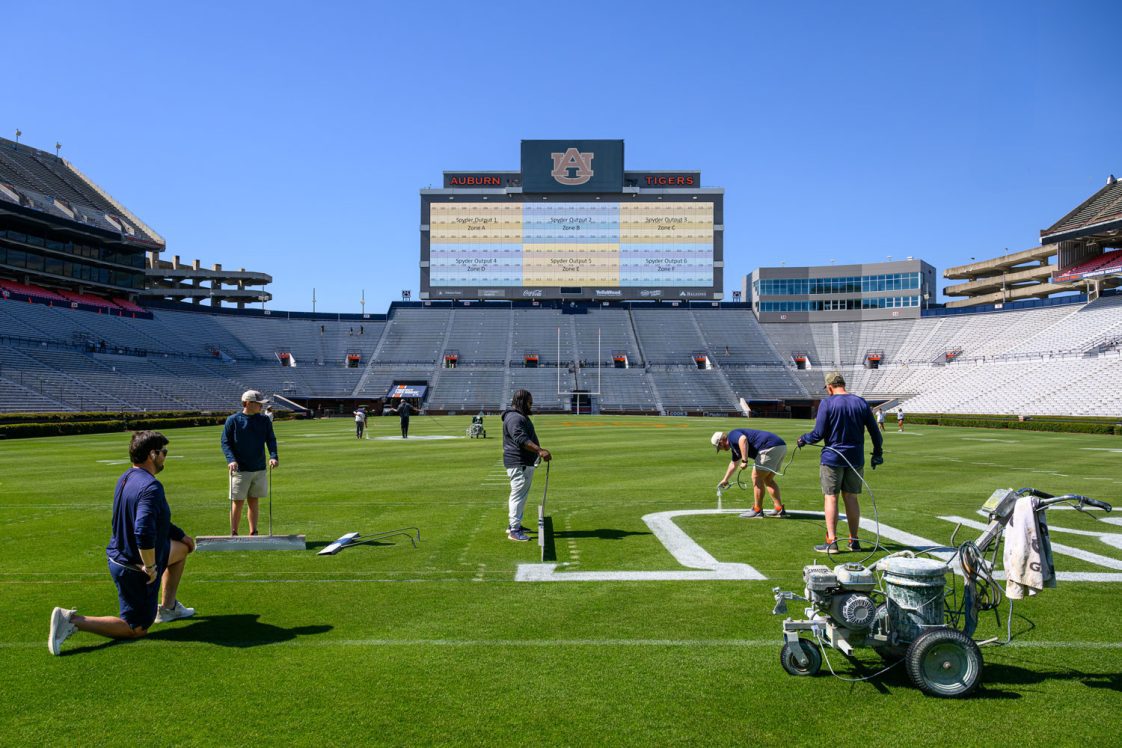
When they have questions, Auburn’s turfgrass managers turn to Extension and the College of Agriculture for answers. (Photo credit: Auburn University Photographic Services)
“A lot of times we’ll get phone calls from athletic turf managers about a problem on their field,” Lawrence said. “Most of the time, it is not a pristine field like you find here at Auburn. So, we’ll do one-on-one consultations, identifying what weeds and diseases they may have and break down a yearly program for them to help with those situations.”
However, even the largest commercial operation or turfgrass management team needs help from Extension experts at times. Kleypas said their team relies heavily on David Han, an Extension turf specialist, and other researchers and professionals in the Auburn College of Agriculture.
“If there’s a question we want answered, we’ll answer it through research,” Kleypas said. “We’re calling Dr. Han to see what he’s seeing around the state. We’re trying to get a head start to know what’s coming before it hits us.”
Alabama Extension also offers turfgrass managers opportunities for continuing their education. Lawrence and other Extension experts host field days and workshops where people can learn about new turfgrass trends and other management details. Approved events can also count toward educational requirements for certain permits that managers must have, such as pesticide applicator permits.
“I love when somebody calls me with an issue and I can give them an answer,” Lawrence said. “We literally change people’s lives. They rely on us to help with their livelihood. And so, I love being able to help people. It’s just what keeps me going and drives me to work with Extension.”