
Home & Family

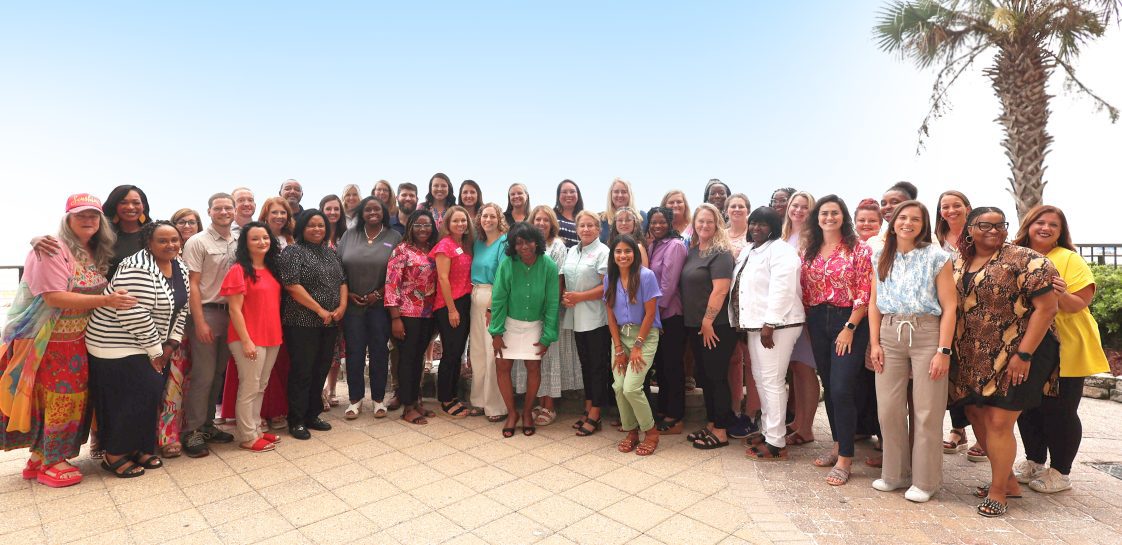
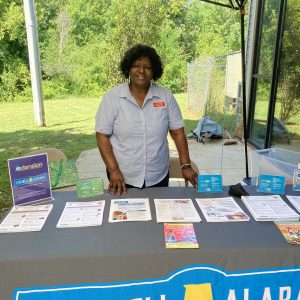
AUBURN UNIVERSITY, Ala. — Twenty years, six months and two days. Debbie Beverly is counting each precious day she has spent with children and families as a Supplemental Nutrition Assistance Program-Education agent assistant in Conecuh County. She holds close the memories from her more than two decades of service as she prepares to watch SNAP-Ed, the program she loves, sunset after 30 years.
Beverly said sunsets have always been her favorite thing, but when the term was used to describe the end of SNAP-Ed, she had to shift her perspective. For Beverly, it has been her joy to serve. That is why she chooses to count all of her days of service rather than lament the end of her beloved program.
The recent passage of the One Big, Beautiful Bill ends SNAP-Ed programs nationwide Sept. 30, including Alabama SNAP-Ed — also known as Live Well Alabama. Mike Phillips, director of the Alabama Cooperative Extension System said the work of Alabama SNAP-Ed has changed lives and habits in Alabama for the better.
“For three decades, the SNAP-Ed program has been a cornerstone of life-changing service across Alabama, reaching children and families with education, compassion and hope,” Phillips said. “As we mark the end of this extraordinary chapter, we do so with deep gratitude for the educators whose dedication and heart have shaped healthier futures for so many.”
Eve Brantley, associate director of Alabama Extension at Auburn University, said the work of the Alabama SNAP-Ed team has not been in vain.
“Our Extension SNAP-Ed educators have 30 years of accomplishments in their communities, helping families make healthier choices and improve their quality of life,” Brantley said. “Their legacy will continue and their success is an inspiration.”

SNAP-Ed Makes a Difference
Katie Funderburk, Alabama Extension’s assistant director for federal nutrition programs, said SNAP-Ed has always been about meeting people where they are.
“For several years, our educators were meeting people and providing educational materials in food assistance and DHR offices,” Funderburk said. “As foot traffic changed, we adapted our delivery and made the shift to community-based education.”
Beverly is living proof of the effectiveness of that shift.
“I’ve spent 20 years pouring into families and children and building relationships in my community,” Beverly said. “It is wonderful to see their excitement in a classroom, but there is so much joy in running into my students in the grocery store and having the opportunity to reinforce what we learned together.”
Alabama SNAP-Ed is where many of the educators have built a life doing the work they love. Dominguez Hurry, a SNAP-Ed educator in Macon County, said he was working as a chef 20 years ago when he saw his former 4-H leader in town and asked him if he had a job available with Extension.
“The rest was history,” Hurry said. “I fell in love with the nutrition aspect of SNAP-Ed. Having the ability to teach children and families habits that improve their health and their lives was so rewarding to me.”


A Lasting Legacy
Educators were gearing up to celebrate SNAP-Ed’s 30th anniversary this fall. Alabama first received funding for SNAP-Ed programming in the summer of 1995. The staff included 12 educators, and the first program was held in October 1995. What started as an application for a short-term grant turned into three decades of helping families and children build better habits through community and classroom outreach.
Barb Struempler, former assistant director for federal nutrition programs, was there when Alabama SNAP-Ed first began. She said she has always been inspired by the steadfast way SNAP-Ed agents worked in their communities.
“SNAP-Ed is one of the best Extension programs,” Struempler said. “We followed the laws very carefully and hired excellent people. I am always amazed by how well-trained the SNAP-Ed agents are. They have everything, from the friendly smile to the handshake, to get them in the door.”
The program’s direction has always driven by research and environment but dictated by federal legislation. By working on federal directives at a local level, educators over the years have partnered with communities to make the healthy choice the easy choice.
SNAP-Ed Program Coordinator Erin Reznicek began her work with SNAP-Ed as a community educator, continued as a state specialist and has served as the program coordinator for the past year. She said in order to be an effective SNAP-Ed agent, people have to have a passion for their work.
“It was so rewarding to be able to work in a rural community where I could spend time physically showing community members how to make better choices and be leaders for change in their communities,” Reznicek said.
Cultivating Community Change
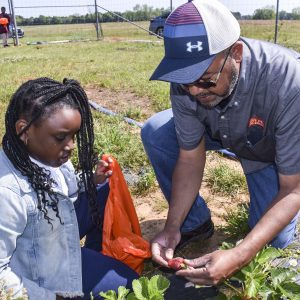
Hurry is most proud of the lives he has impacted during his time with SNAP-Ed. A great example of his work is the therapeutic garden that he and other partners created at the Tuskegee VA hospital. This garden served as an outlet for veterans going through post-traumatic-stress-disorder and substance-abuse-treatment programs. While their participation wasn’t required, Hurry said the veterans came anyway, planting strawberries, collard greens, carrots, squash and pumpkins. They also hosted a pumpkin-picking party for local children.
“I was privileged to work with both adults and youth, but I spent a lot of time with young people,” Hurry said. “I will miss working with the youth in our school gardens the most.”


Nurturing a Better Tomorrow
Beverly said if her work mattered to just one family, that is enough for her. In reality, though, Beverly touched thousands of lives during her SNAP-Ed tenure. The same is true for her longtime colleagues, Hurry and Carolyn Rothschild.
Rothschild, the SNAP-Ed educator in Wilcox County, has been with Alabama SNAP-Ed for 25 of its 30 years. Rothschild said she’s now teaching children of her former students.
“Over the years, what stands out to me is the strength of our team,” Rothschild said. “One person’s problem was everyone’s problem. We all worked together for the good of our communities.”
Sondra Parmer, a recent retiree and former assistant director of federal nutrition programs, said she is grateful for the wonderful years of SNAP-Ed.
“I am so proud to have been part of the program and proud of the success we’ve had — both locally and nationally,” Parmer said. “I’m also grateful to the hundreds — if not thousands — of community partners who have helped us tackle weighty issues in our communities.”
Most of all, Parmer said she is grateful for the state staff and educators who served those around them with compassion and conviction.
As current and former employees all prepare for Alabama SNAP-Ed to sunset, the impact they made on the people of Alabama will be felt for generations. Funderburk said the SNAP-Ed team is unique because of their heart for service.
“I truly believe that this is not the end for our SNAP-Ed educators,” Funderburk said. “They are driving forces for community change, and their heart has always been for the children and families they serve. The reality is that they will continue teaching and loving their communities, even though it will not be through Alabama SNAP-Ed.”