
Forestry & Wildlife

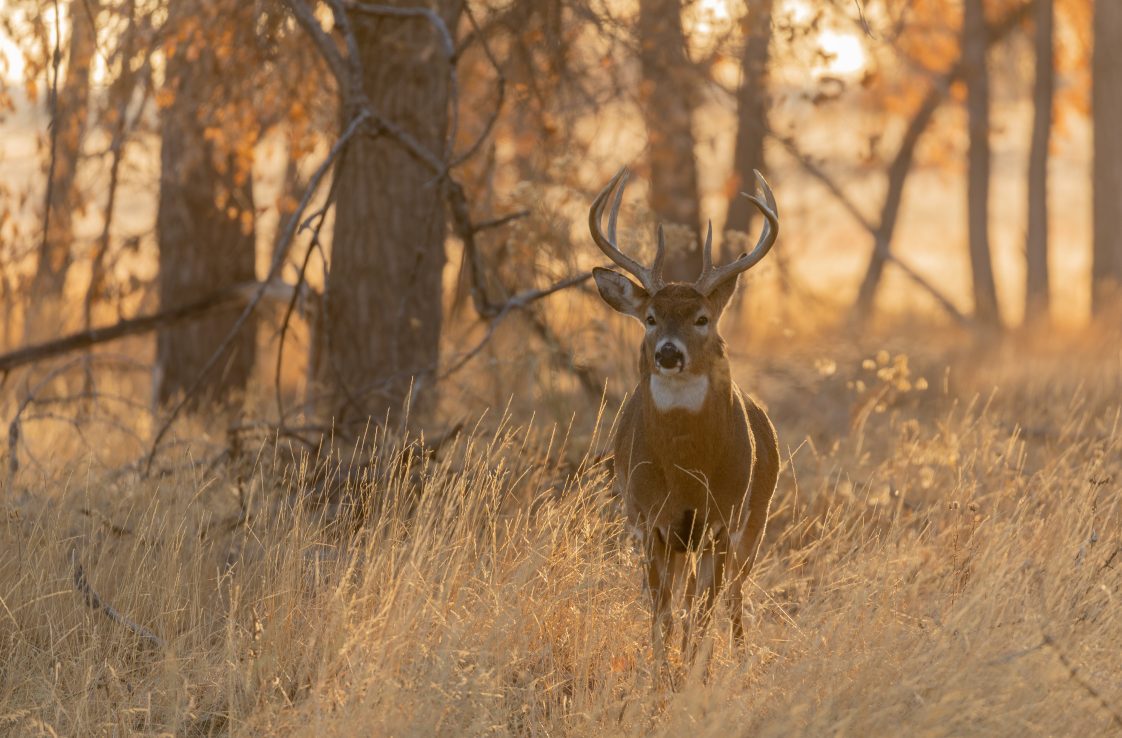
AUBURN UNIVERSITY, Ala. — Deer season in Alabama is months away, but it’s still possible to make management decisions now that can help ensure a rewarding hunt. Today, trail cameras make it easier than ever to gather data that can inform and improve land and herd management plans.
“Used correctly, trail cameras can be a very effective tool,” said Mark Smith, a forestry and wildlife specialist with Alabama Extension at Auburn University. “Whether you’re a hunter, landowner or nature lover, the information that can be gathered from trail cameras can help you get more engaged in wildlife management and awareness.”
Smith said, while not fail-proof, trail camera images may provide a glimpse into deer herd health and predator issues. Hunters can also use cameras to make more informed decisions about harvest management.
Capabilities for Harvest Management
Hunters must make split-second decisions in the moment. By analyzing images from trail cameras taken before hunting season, it’s possible to see some of the deer that may cross their path while on a hunt. This can then lead to better decision-making about when to pull the trigger and when to let a buck go.
“People want to know what bucks they have out there,” Smith said. “Getting bucks on camera allows you time to decide whether they meet your harvest criteria. So, when you get in the treestand, you’re not surprised to see him and you can choose to let him mature a year or two, if you want.”
Using trail cameras for this purpose is a great way to manage deer herds for trophy bucks.
“You only get large antlered deer through age,” Smith said. “There aren’t a lot of facts in this world, but one of them is that a dead 2-year-old buck is never going to be a 3-year-old. Around 4 to 6 years of age, a buck will be at its peak in body maturity and antler development. You don’t want to harvest young bucks if trophy antlers are your goal.”
Once a camera captures an image of a harvest-ready buck, it’s easy to take note of the time of day that animal normally visits a certain feeding area or scrape line. Using that information could lead to a more successful hunt.
Capabilities for Herd Health and Predators
Additionally, analyzing trail camera images may provide information on overall herd health.
“You can see the general body condition of the deer, and with repeated images over months or even years, you will be able to monitor the health of deer on your property,” Smith said. “In extreme cases, emaciated deer could be an indicator of severe overpopulation or possibly a disease issue.”
If herd health is a concern, it may be time to increase food availability or to reduce the number of deer on the property through harvesting does.
Sound habitat management of forests along with open areas on a property can substantially increase nutrition, especially during spring and summer. That’s when good forage protein is necessary as female deer nurse their fawns and bucks grow their antlers. Thinning hardwood or pine forests, using prescribed fire where appropriate and plowing old fields every few years will stimulate new plant growth.
Along with nutrition provided through food plots or feeders, it’s important to provide good cover for potential protection from predators. Trail cameras are especially helpful with identifying the issue of fawn predation.
“As fawns grow up, they should start accompanying the does to food plots and feeders by September or October,” Smith said. “If you frequently see fawns, it’s unlikely you have predator problems. However, if you rarely see fawns, you might have a predation issue.”
Beginning a predator management program is a complex decision. Before trying to tackle that task, talk with a local professional wildlife biologist.
Camera Options and Setup
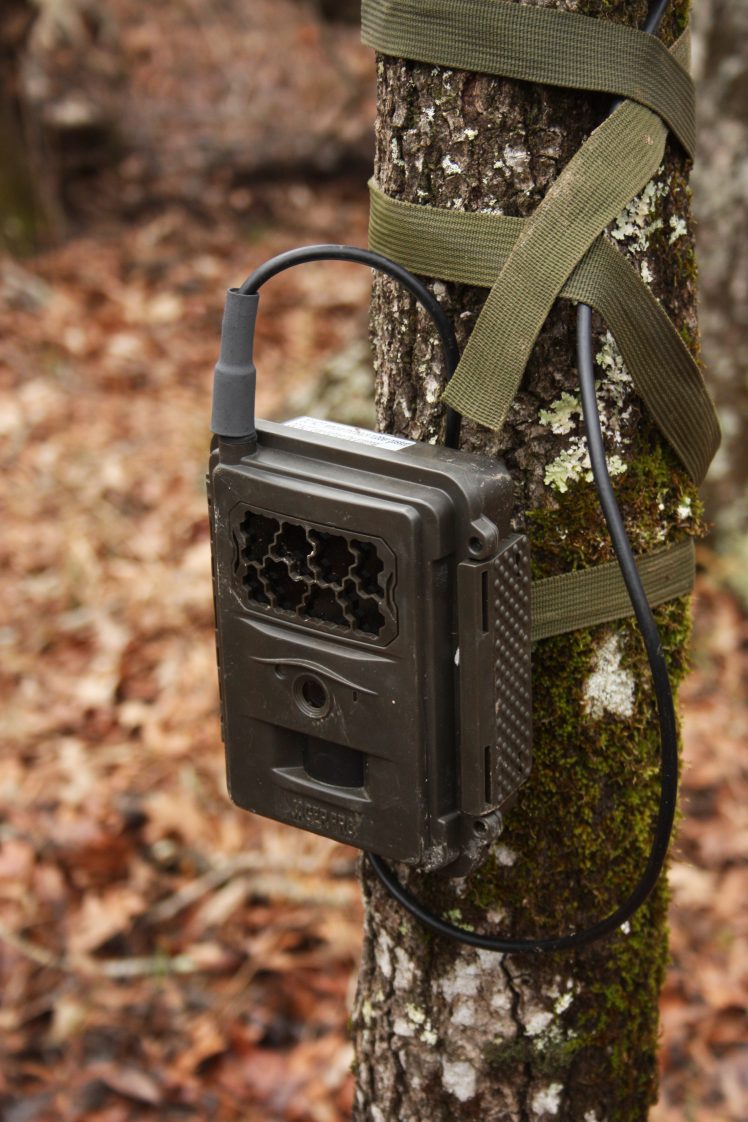 Options abound for trail cameras. When purchasing, consider attributes like battery life, memory and picture resolution. Generally, a resolution between 3 and 6 megapixels is appropriate. Also, ensure the camera can be programmed to include the date and time stamp on each image. Two additional camera attributes are the triggering mechanism and flash.
Camera Triggering Mechanisms
Active and passive systems use infrared capabilities in different ways to trigger the camera when an animal is detected nearby. In contrast, time-lapse cameras can be set to take pictures at specific intervals.
“Both trigger types have their place,” Smith said. “For instance, on trails you might want to use infrared to make sure you capture an image at just the right time. However, time-lapse might be preferred for cameras placed at feeders that are popular with the herd. That would reduce the number of repeat images of the same animals.”
Flash Options
The two main types of flash are visible and infrared. While visible flash can produce color images during day and night, it also can be disruptive to animals. Conversely, infrared flash is not detected by animals. However, it produces night images that are black and white with lower resolution.
Camera Placement
Once purchased and programmed, cameras must be placed strategically. Feeders and food plots are logical locations, but don’t forget about scrapes and water sources.
“Attaching your camera to a tree that’s at least 6 inches in diameter or more will hopefully help lessen the number of false triggers that can happen when a tree moves in the wind,” Smith said. “You can also mount cameras on a 6-foot T-post. Place them 3 feet or more above the ground along a north-south axis to avoid direct sun.”
Also, remove vegetation, such as low-hanging branches or long blades of grass, from the camera’s detection zone. For bait, ensure it is used 8 to 10 feet away from the camera.
Understanding Limitations
When using trail cameras, it’s important to understand their limitations and set realistic expectations.
“You are not going to be able to estimate the number of deer or the number of predators on your property through these images,” Smith said. “Unless you hunt a high-fenced area, deer and predators both move in and out of property lines constantly. If the images don’t show any identifiable, differentiating marks on the animals, it’s impossible to know if the camera is capturing the same animal time and time again.”
Gaining more detailed population information requires more sophisticated equipment and more structured parameters. If estimating total deer population desired, talk with your local Extension wildlife specialist or state wildlife agency biologist. They can provide details about options like camera surveys, spotlight counts or pellet counts.
Additionally, images are no match for hard data that can be collected after harvest.
“Even though the technology behind trail cameras continues to improve, they will never replace the amount of information we can garner from deer harvest,” he said. “Harvest data is the only way we can know the exact weight and age of animals. Then, that information can be used along with the trail camera images to develop stronger herd and land management recommendations.”
For more information on conducting a camera survey, read the publication “Managing White-tailed Deer: Camera Surveys.” Find additional wildlife management resources online at aces.edu.