
Home & Family


The Challenge of Being a Parent
The Principles of Parenting series introduces knowledge about child development and provides tips to support positive parenting and family relations.
Of all the jobs in the world, being a parent may be the trickiest. Children are often hard to understand. They seem impossible to control. Sometimes, no matter how hard parents try, everything they do seems wrong.
No one can make parenting easy, but the Principles of Parenting series can help parents learn more about children and their needs and find ways to be more effective. Talk with other parents who can give you good ideas about how to meet challenges.
Surprise! There Is No Manual
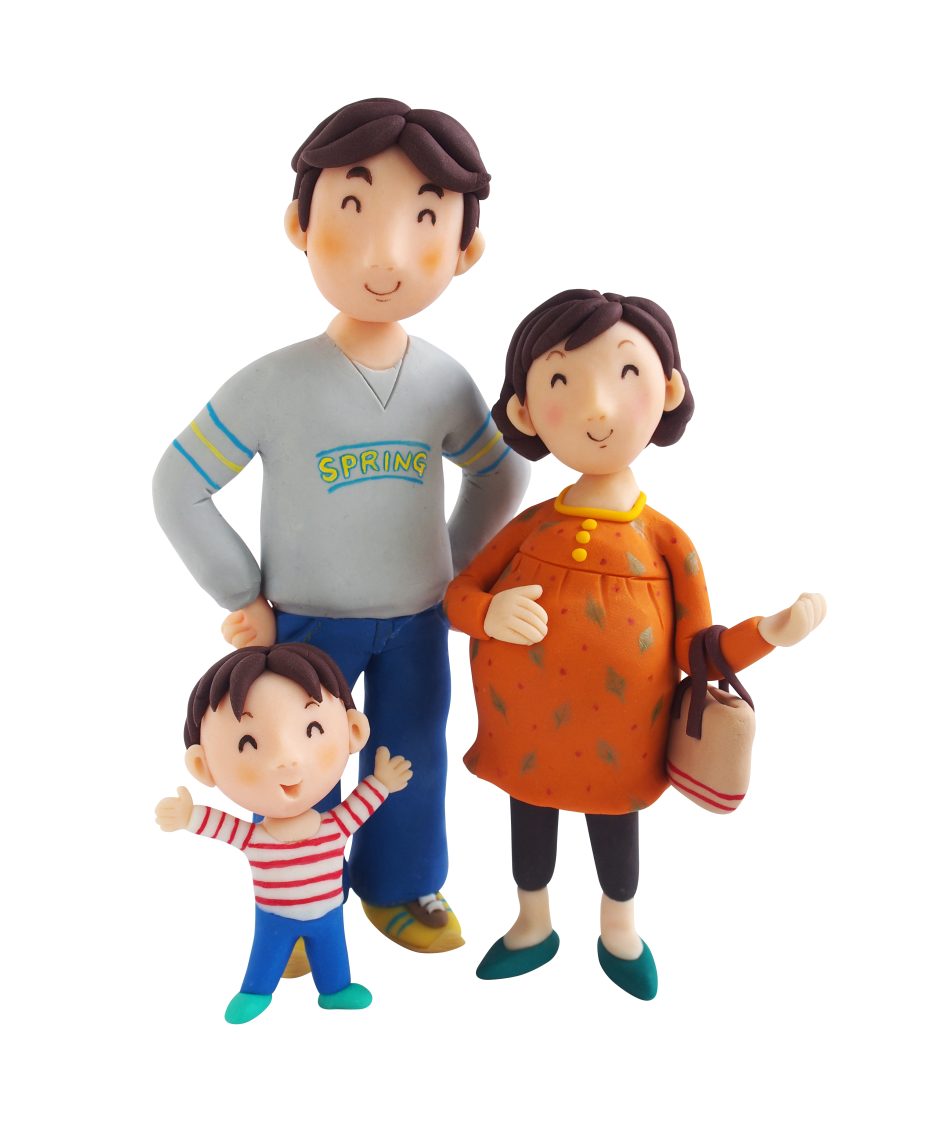 What are the most important things parents can do for their children? You may have many questions, like, how can you tell when you are a successful parent?
Although it may be the opposite of what you feel in the moment, the key to raising good children is love.
Your actions may be guided by the qualities you most want your children to develop. One child psychologist suggested that two qualities are most important for children—and all people—to develop.
The first quality is to grow strong through confidence-building activities.
- Over time, children can learn to make decisions, to be responsible, and to be trustworthy. As they grow, they should learn how to deal with difficult situations. This journey begins when you give them small choices suited to their age.
The second quality is to be caring.
- Children can learn to love and be loved, to care about people, to show respect, and to be close with their families and others. This begins when you show them (or model) loving and caring behaviors.
Developing both confidence and caring for others is not automatic, however.
This publication and the Principles of Parenting series will give you some ideas about how to help your children develop both qualities.
Playtime Story
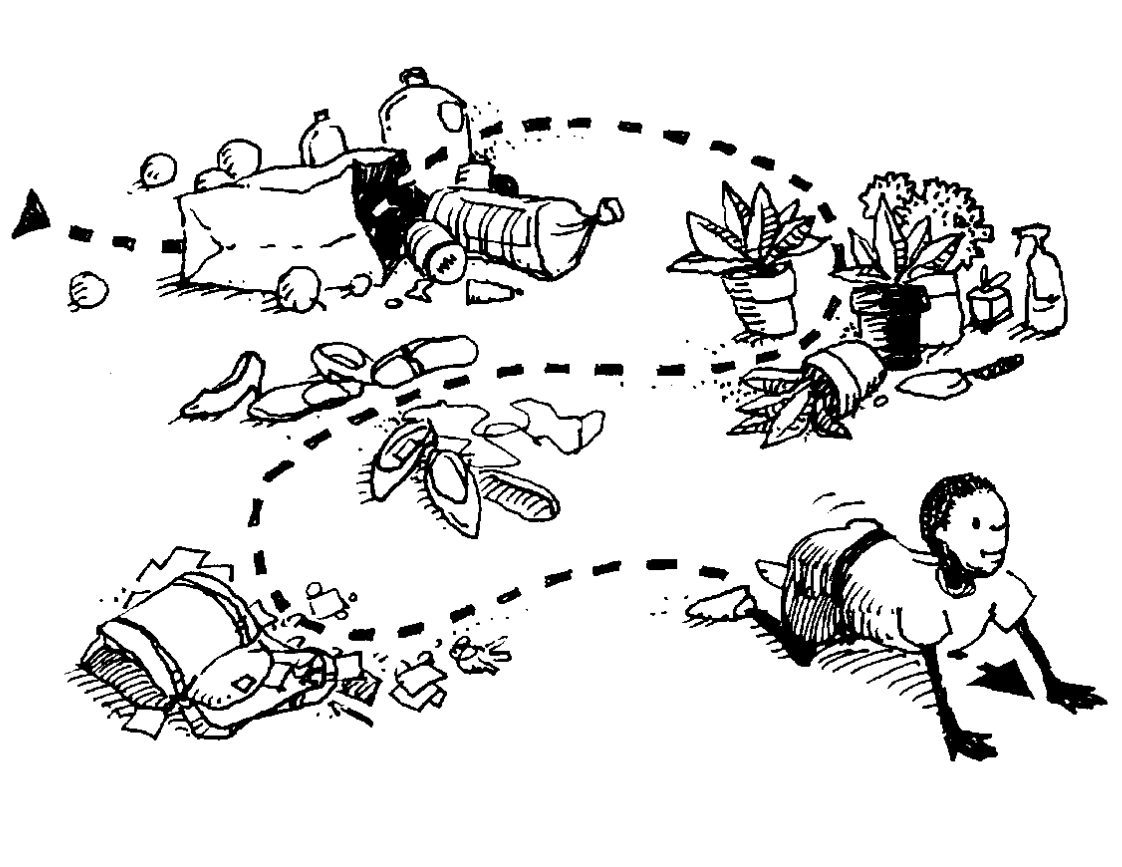 Leon loved to explore and play with things. But his mother did not like to let him touch her things. She would take things away from him, yell at him, and slap his hands.
Develop Strong, Confident Children
What experiences do you think will help children become strong, capable people?
Do you think Leon’s mother was teaching him to be strong? Or do you think Leon was learning that his mother is sometimes not safe for him?
If Leon is to become a strong, capable person, he needs to see his world as a safe and predictable place. In the beginning, a child’s world is their parents.
Imagine that you are a child—your child. Do you think that you would see your home as a safe and predictable place? Close your eyes and imagine a day at your house as a child. Are you given many opportunities to explore? Are rules easy to understand and reasonable? Are they enforced kindly and consistently?
To learn that his world is safe, Leon needs to be able to explore in a way that encourages him to experiment so he can learn. He needs to explore within safe limits without experiencing real injury or fear. If Leon is to learn, he needs his world to be predictably safe. Leon should be able to trust the important people in his life to be consistent and treat him with personal respect as he makes the mistakes we all make when we learn.
If it seems that people are often unkind or too controlling in your home, you might want to make some changes. Can you move unsafe toys out of the children’s way? Can you provide fun and safe things for the children to play with instead?
When your child is playing with something unsafe can you kindly redirect him or her toward some other toy or activity?
Other Principles of Parenting publications that may help you set boundaries and create environments that feel safe to children include the following.
- “Meeting Children’s Needs,” HE-0685*
- “Communication: Building A Strong Bridge Between You and Your Children” HE-0686*
*These are scheduled for revision, but you may enjoy the content, which is still valid.
Showing Kindness but Setting Firm & Consistent Boundaries
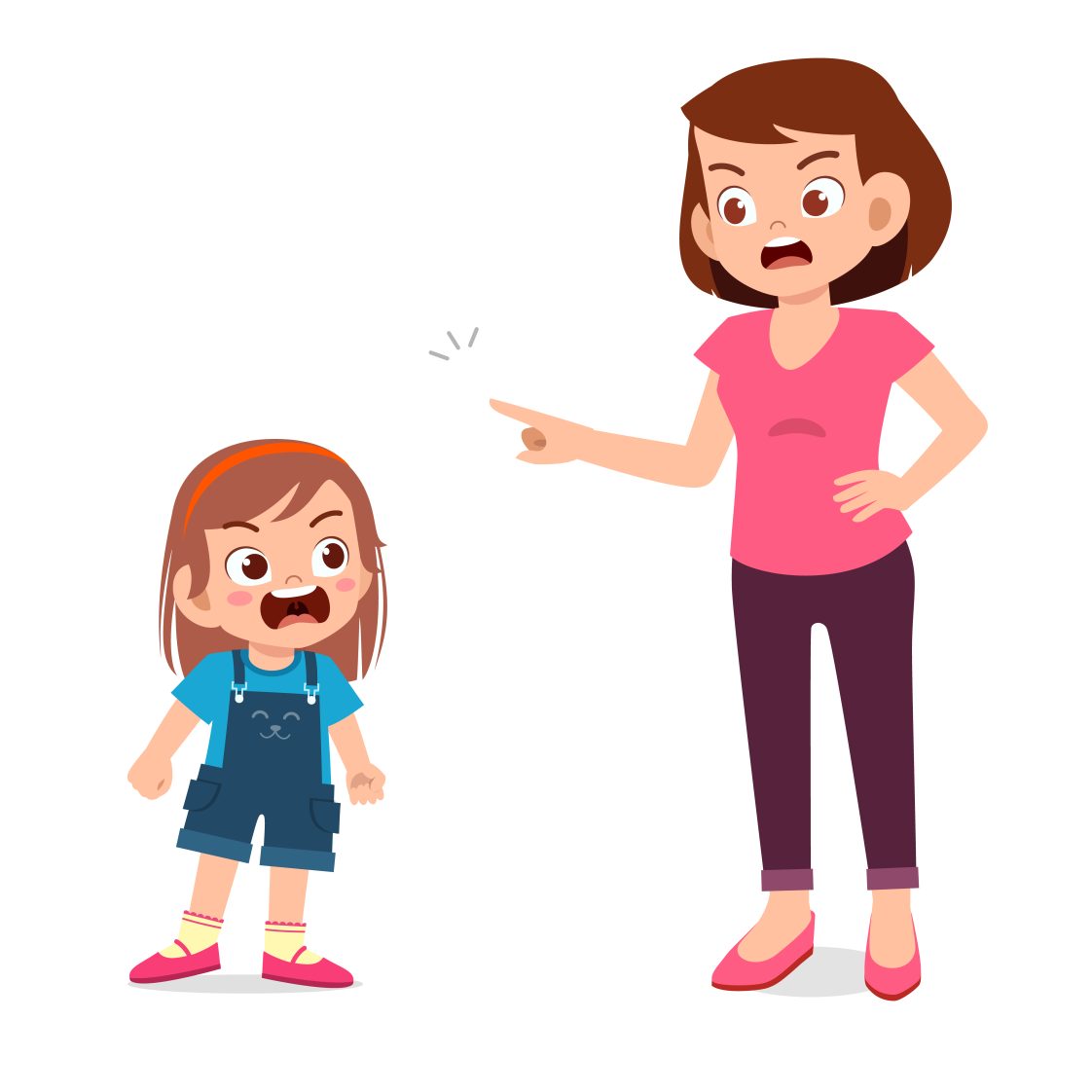 You may not yet be sure how to help your child become a strong and well-rounded person. For example, here is a common story:
- Brianna really loved her daughter, but she yelled at her daughter and spanked her a lot. Brianna was often stressed out or tired.
If a child is to become a caring, loving person, she needs to see her world as a loving place that is aware of her needs. When parents take time to understand and respond to a child’s needs, they help the child to feel safe, secure, and loved. This does not mean that a parent accepts all of her daughter’s behaviors.
Even though Brianna really loved her child, her child probably did not feel a sense of safety and love from her parent at that moment.
Questions
- What messages do you think the child was getting from her mother?
- What experiences do you think will help children become caring, loving people?
- Do you think Brianna’s child was learning how to be a caring loving person?
Read more about how to manage behavior and develop healthy family habits in these Principles of Parenting publications on the Alabama Extension website at www.aces.edu:
- “Something Better Than Punishment,” HE-0687
- “Helping Young Children Behave,” HE-0719
A Child’s Point of View
Once again, imagine that you are your own child. From that point of view, ask yourself some questions:
- Is your home a caring and loving place?
- Do people take time to understand your feelings or other people’s feelings?
- Do they express their love?
- Do they show that they love each other?
- When they make mistakes, do they try to find better ways to help?
These questions focus on emotional and social intelligence. Emotional intelligence means we can get along with others and deal with our own and others’ feelings. Children need to learn skills in these areas as they grow. You are their best teacher.
If it seems that people are often unloving or unkind at your home, you will want to make some changes. What is the source of unloving actions? Are you stressed out? Or is it a habit?
Several publications in the Principles of Parenting series may help you think about how to show love and care for children:
- “Enjoying Each Child as an Individual,” HE-0681.*
- “Being Understanding: A Key to Developing Healthy Children,” HE-0682.*
- “Building a Positive Relationship with your Child,” HE-0684.*
*These are under revision, but you may enjoy the content, which is still valid.
Ask Yourself
As you already know, parenting does not have a manual. You may not yet be sure how to help your child become a caring person. However, when we review how we are doing as parents, we can ask ourselves a few basic questions:
- Am I helping my child develop into a strong person by setting reasonable rules? Am I consistent when I enforce rules?
- Am I helping my child develop into a caring person by modeling being loving and understanding?
Supportive Parenting Pays Off
You work at becoming a good parent so your children will become confident and caring adults. But what are the benefits for you? Does being a supportive parent take too much work and leave you worn out? Why go to all the trouble?
Supportive parenting is more effective in the long run than yelling. Effective parenting is like a good car repair. When a repair is done by someone who understands the car’s issue, they will use the right tools and take the time to do the repair correctly. In the end, the car will run well with fewer issues in the future. When a car is repaired by someone looking for a quick fix or using the wrong tools, the car is likely to develop a bigger problem or simply have the same problem come back.
Remember
Parenting that aims for a quick fix, like yelling, slapping, or demanding obedience tends to develop children who are obedient but also moody and angry. Over time, they may become resistant and disobedient. They also may be less mature and lower in social ability. Why?
Effective parenting helps children develop into people who are happy, capable, responsible, and enjoyable.
Which kind of children do you prefer to live with?
Becoming an Effective Parent
You can change your parenting a little bit at a time to be more effective. Good ways to begin change start with finding support. You can read about parenting, take evidence-based classes, find or join parenting groups, or share activities with other parents.
You might enjoy exchanging challenges and celebrations with an online peer group. If you need to find information about child development or learning, check a range of sources. Finding other parents who share your values, plus trusted information sources, will help you in your parenting journey. For parents of children under 5, Extension’s Just in Time Parenting at www.jitp.info provides easy-to-read regular updates.
Do not expect to change in a day. It takes effort to learn about children and to be a good parent. It takes time to think about children’s problems, learn to set easy-to-follow rules, and follow up consistently with the rules that you set. But over time, it makes life more pleasant. Your children will learn that while you do not always let them have their way, you understand their frustrations. Learning to be gentle but firm helps you raise children you will be proud of as they grow.
Remember the following key points as you move ahead in your parenting journey:
Each parent is different.
 Each parent has different strengths and weaknesses. You and any coparents will probably approach problems differently. You might also be learning. If you are working to show you are a caring parent in a new way, you may find that at first, you spend a lot of time learning how to balance being loving with setting appropriate boundaries. If you struggle with this, you might find it useful to practice being more understanding and sending messages of love. Remember, though, that the most important thing is that your child feels safe and loved.
Each child is different.
Just as with parents, each child has different strengths and weaknesses. You may have one child who craves excitement and change or one who loves to be cuddled and secure. The differences between children make parenting challenging. Parents have to work at understanding each child and his or her individual abilities and needs.
Parents deserve help too.
A happy parent is an effective parent. Therefore, it is important to strengthen you, the parent. For that reason, the Principles of Parenting series also includes a publication to help you deal with stress:
- “Taking Care of the Parent: Replacing Stress with Peace,” HE-0674*
*This publication is under revision.
Many good programs in Alabama may also help you deal with your challenges as a parent. You might want to check Alabama’s Family Resource Centers. Two that were developed by Extension are as follows:
- The Alabama Healthy Marriage and Relationship Education courses
- Alabama Youth Relationship Education
You might also find parenting tips for school readiness in these Extension publications:
- “School Readiness Series: Overview,” FCS-2556.
- “School Readiness: Parents Get Ready!” FCS-2557.
- “School Readiness: Children Get Ready!” FCS-2558.
- Just in Time Parenting—national Extension digital resource
Parenting is hard. But as you develop confidence in your parenting skills and see your children develop into well-rounded people, you will know it was worth all the effort.
 Revised by Silvia Vilches, Extension Specialist, Associate Professor, Family and Child Development, Auburn University. Originally developed by W. Goddard, former Extension Specialist, Auburn University.
Revised July 2025, Principles of Parenting: The Challenge of Being a Parent, HE-0673