
Forestry

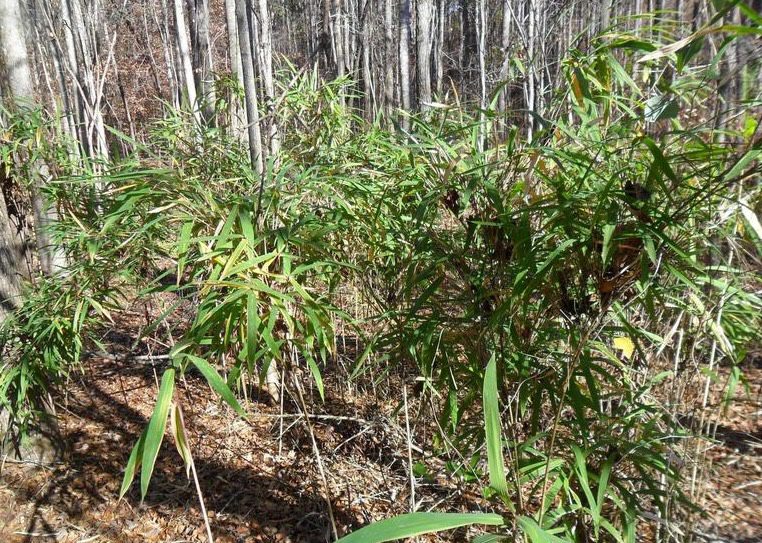
While the common view of bamboo in the southern United States is now dominated by exotic invasive species, historically much of the southern landscape was covered by native stands of rivercane (Arundinaria gigantea), along with smaller relatives like A. tecta and A. appalachiana.
These canebrakes once encompassed up to 10 million acres of southern lowlands. Growing in fertile river valleys and sustained through regular fire and disturbance, canebrakes were rich ecosystems occupied by dozens of species. The canebrake rattlesnake is one of many such animals to take its name from this landscape. Unfortunately, as with many southern ecosystems, much of this habitat has been lost.
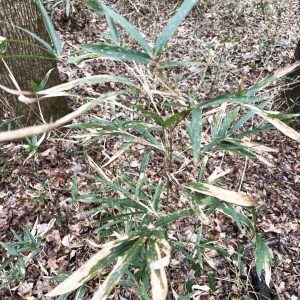
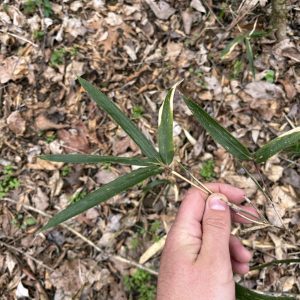
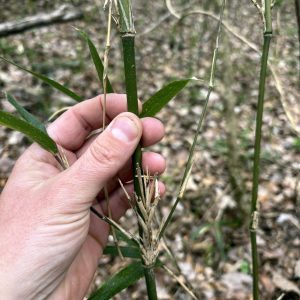
Loss of Rivercane
Rivercane declined due to overgrazing, the conversion of forest to field, and the exclusion of fire. These issues are compounded by the fact that even a large stand of cane may contain only a small number of individual plants. This means that the actual population within a given area can be small and genetically isolated. Flowering rarely and often only once before death, these isolated individuals may be lost without contributing to the wider region.
While tragic, the loss of rivercane in the South has drawn little attention compared to other plant losses. It is possible that some inhabitants of canebrakes, such as the Bachman’s warbler, have been lost entirely along with them. So too, once-common cultural practices have declined. Native Americans used rivercane extensively. It could be woven into baskets and mats, used for spear and arrow shafts, or cut for cane fishing poles. Without the once-extensive cane stands, many of these crafts are no longer widely possible.
Conservation Efforts
Luckily, rivercane conservation efforts have gained more attention recently. While assailed on all fronts, positives of rivercane include classic bamboo durability, easy propagation from rhizome cuttings, and ability to thrive. Its dense rhizomes provide excellent erosion control for degraded stream banks. It is also good forage for various wildlife and livestock, and many species use the dense stands as cover.
Also, it is possible to return this plant to its native areas. Cane responds readily to fire, growing more vigorously and expanding after prescribed burns. This allows for sustainable canebrake management, where such tools may be used. With developing interest at both a government and grassroots level, hopefully more landowners and land managers will make efforts to restore this valuable native.
Additionally, citizen science initiatives can be valuable tools in management and restoration. Marking and identifying cane on apps like iNaturalist can help with understanding local populations and may provide material for further propagation. Extension personnel are working with local Native American organizations to learn more about protecting and restoring cane patches as well as ways to manage competing species of invasive bamboo in wild areas.
Featured image by David Stephens, Bugwood.org