
Animals


Newborn farm animals experience three crucial phases for immune system development within the first two months of life: receiving colostrum (the initial milk), consuming regular milk, and eating solid food. The care provided during these stages significantly influences their growth and development. Colostrum, the first milk a mother sheep or goat produces immediately after birth, is thick, yellow, and packed with essential nutrients.
Composition of Colostrum
Colostrum consists of several vital components:
- Proteins, notably antibodies like immunoglobulin A (IgA), immunoglobulin G (IgG), and immunoglobulin M (IgM)
- Fats, including essential fatty acids and saturated fats, are crucial for providing energy and aiding the growth and development of newborn lambs and kids
- Carbohydrates, such as lactose, oligosaccharides, and glycoproteins, enhance the nutritional value of young animals
- Vitamins, especially vitamin A
- Minerals, including calcium, potassium, and sodium
Colostrum antibody makeup is based on the antigens the mother was exposed to through disease or vaccination. Ewes and does should be vaccinated for certain diseases such as overeating disease (Clostridium perfringens type C & D) and tetanus (Clostridium tetani) during late pregnancy. This will allow them to protect their offspring, via colostrum, against these diseases. Pregnant females should be housed in their lambing or kidding facility no less than 14 days before lambing or kidding. The time permits them to develop environment-specific antibodies.
Why is colostrum important?
- Laxative effect: Colostrum naturally has a laxative effect, which clears meconium (the newborn’s first stool) from the intestines.
- Immune system support: Colostrum is full of antibodies that act as small soldiers in the fight against germs and infections. Newborn lambs and kids have underdeveloped immune systems, so these antibodies are critical to maintaining good health. Top-quality colostrum should have at least 50 milligrams of IgG. The immunoglobulin concentration in colostrum diminishes quickly after birth. Therefore, lambs and kids should nurse immediately after birth.
- Nutrient-dense: Colostrum contains more protein, vitamins, and minerals than regular milk which helps newborns grow up healthy and strong. Lambs have low stores of vitamin A at birth; generally, colostrum contains an abundance of it to help replenish and build up reserves in newborns. Colostrum is the initial source of vitamin E for lambs or kids. It has ten to seventeen times more iron content than regular milk.
- Energy: The high-fat content in colostrum gives lambs and kids a boost of energy to get them up and moving, mobile, and curious about their new world. Newborn lambs and kids have low energy and must get up and drink colostrum immediately to maintain body temperature and survive, especially in cold weather.
- Growth factors: Colostrum provides stimulatory signals for the gut and the growth of other organs in newborn kids and lambs.
How much colostrum is needed?
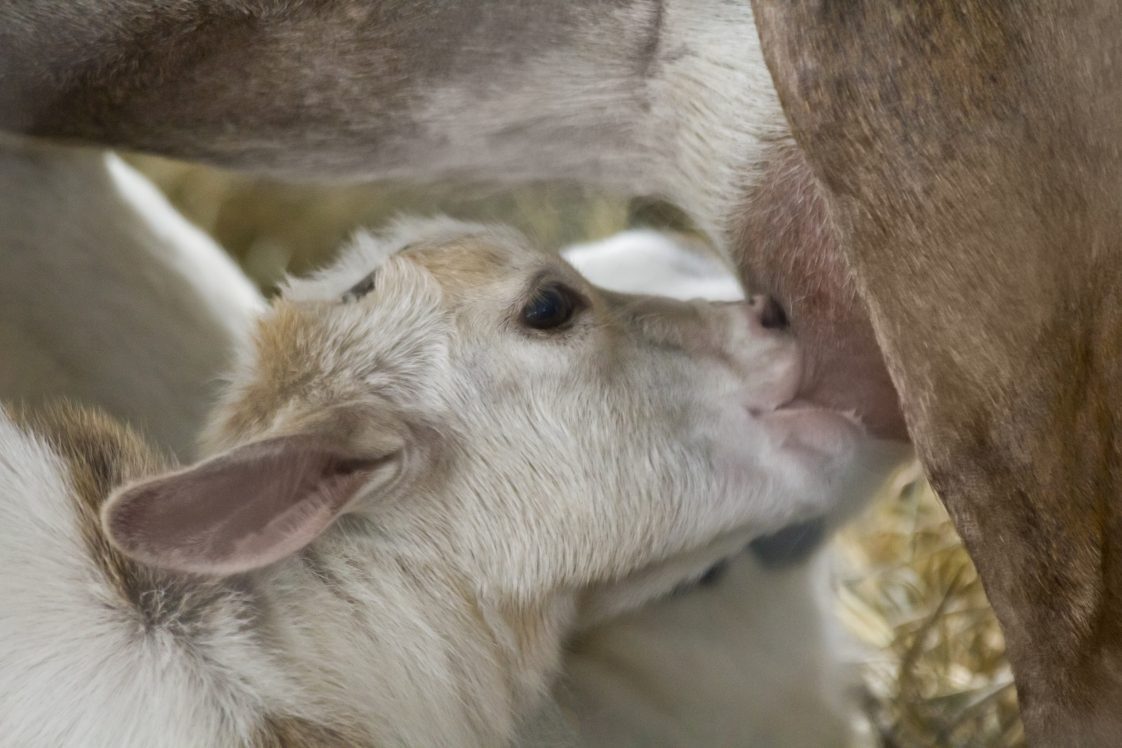
Adorable baby goat feeds from mother goat
Newborn lambs and kids should ingest colostrum during the first few hours after birth. Their ability to absorb antibodies decreases immediately after they are born. Ideally, they should get colostrum within the first 2 hours, but definitely within the first 12 hours.
Colostrum intake should equal approximately 10 percent of birth weight within the first 24 hours of a newborn’s life. Assuming an average birth weight of 10 pounds, a lamb or kid should ingest approximately 1 pound, or about 16 ounces on its first day.
Sources of Colostrum
Adequate colostrum intake is essential for the health and survival of newborn lambs and kids. Colostrum provides necessary antibodies, nutrients, and important growth factors during the first few hours of life.
The following are the primary sources of colostrum and considerations for each:
Colostrum from the dam: The best source of colostrum is from a newborn’s mother. Colostrum is made for that offspring and contains the highest concentration of antibodies and nutrients. The following should be done to ensure that newborns receive ample colostrum:
- Dam health: Ensure that ewes or does are healthy, well-fed, and vaccinated because their colostrum will reflect these facts.
- Production levels: Monitor the dams to ensure enough production of colostrum. With some females, an overabundance of colostrum can be frozen and banked for later use.
Frozen colostrum: If the dam cannot produce enough colostrum, frozen colostrum from another healthy sheep or goat in the same flock or herd can be used. The benefits are better biosecurity and the colostrum will be more similar in makeup. The frozen colostrum must be thawed in warm water to preserve the high nutrition and immunoglobulin properties. A microwave cannot be used as it will alter the crucial ingredients.
Newborn mothers: Females that have delivered only one calf or foal have enough colostrum to feed another neonate. This excess can be harvested, banked, and used when needed. The colostrum of cows may be used to substitute lamb or goat colostrum. However, it is inferior in nutrient composition, so lambs and kids must ingest about one-third more cow colostrum to get similar nutrition. Milk from colored breeds of cows, like Jerseys, is superior because of the higher fat content, which is ideal for young ruminants.
Colostrum replacer: Commercial colostrum replacers can be used when natural colostrum is unavailable. The replacers are nutritionally formulated to duplicate natural colostrum and the products contain important antibodies. The replacer should contain a high antibody content and should be specifically labeled for use in sheep or goats (not cattle). Prepare and use as directed on the label.
How to Feed Colostrum
- Natural suckling: Allow the newborns to suckle their mothers. This is the most straightforward and the most natural of all the methods.
- Bottle feeding: If the newborns cannot nurse, bottle-feed them colostrum. Always use a clean bottle and nipple, and make sure the colostrum is at room temperature or warm but not hot.
- Tube feeding: Newborns may have to be fed by a tube if they are too weak to suckle. An experienced person should tube feed to avoid any harm.
Monitoring Newborns
- Check for nursing: Make sure that lambs and kids are nursing regularly. They may need assistance if they seem weak or are not feeding.
- Observe for health issues: Watch for signs of illness like diarrhea, coughing, or not gaining weight. These signs could indicate they did not get enough colostrum.
Transmitted Diseases
- Johne’s disease (paratuberculosis): This is a germ sickness that makes animals bellies hurt, lose weight, or die. It can spread through colostrum which has germs.
- Caprine arthritis encephalitis (CAE): CAE comes from a virus that gives goats and sheep sore joints, makes their brains swell, and can result in lung and breast problems. It can also spread through colostrum which contains the virus.
- Maedi-visna: Maedi-visna is a virus that results in coughing, sore joints, and swollen brains. It can spread through colostrum and milk.
- Caseous Lymphadenitis (CL): CL is a germ sickness in goats that makes lumps, usually in their throat, and can spread inside them. It can spread through colostrum and milk.
- Toxoplasmosis: Toxoplasmosis is a bug sickness that can make sheep and goats lose their babies before they are born. It can spread through the colostrum with bugs in it.
Conclusion
Proper colostrum management is essential for the health and survival of newborn lambs and kids since they are born with no maternal transfer of immunity. Ensuring they receive enough colostrum within the first few hours of life boosts their immunity, provides necessary nutrients, and gives them the energy they need to thrive. By taking good care of your sheep and goats and monitoring the newborns closely, you can help them get off to a strong start in life.