
Aquaculture

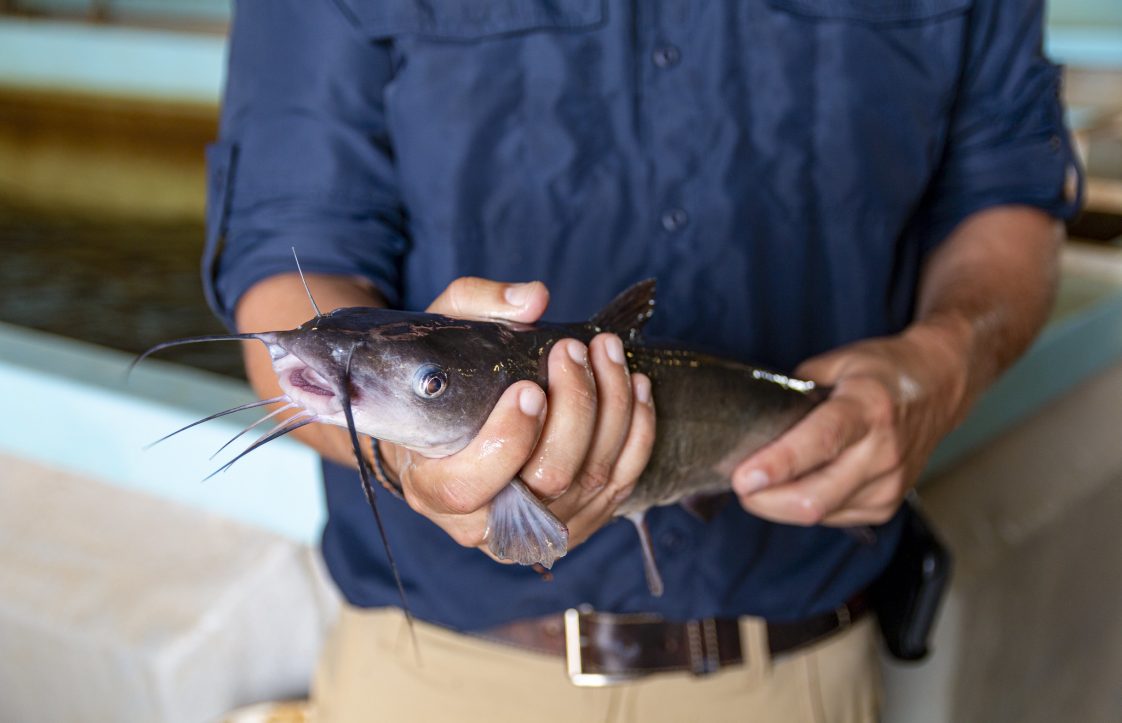
In 2023, 322 million pounds of catfish were processed in the southeast United States—about three million pounds below the 5-year average. Production occurred on 55,855 acres of water, primarily in Mississippi (57 percent by poundage), Alabama (29 percent), and Arkansas (5 percent).
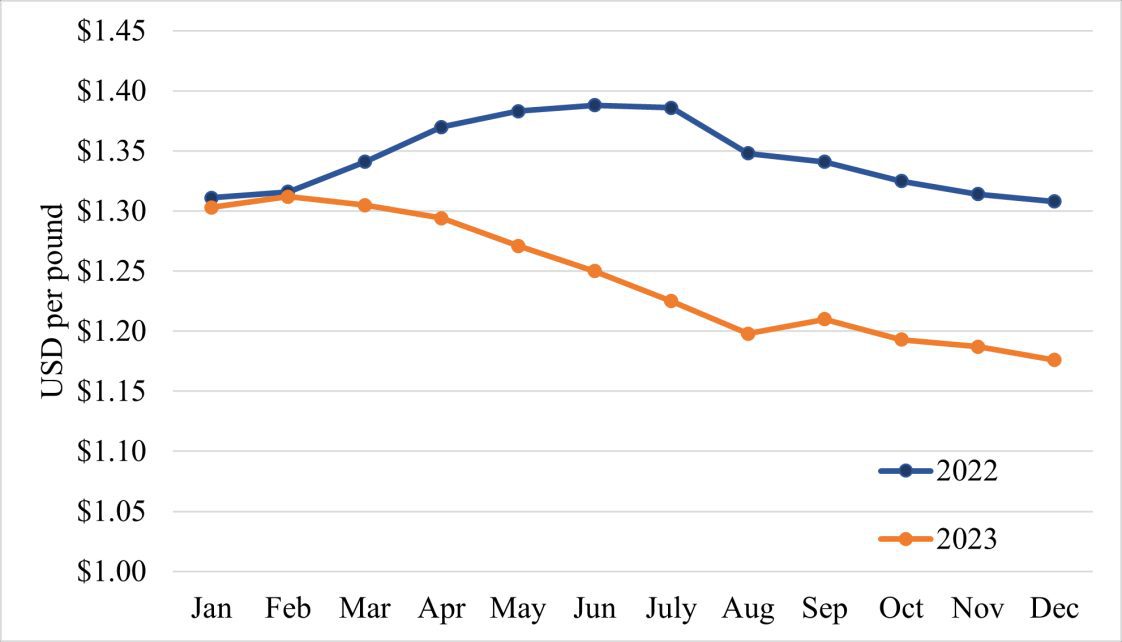
Figure 1. Average monthly price of premium-sized catfish (1 to 4 pounds) in 2022 and 2023. Price reported is at the processor’s door and includes seining and transportation costs.
Alabama ranks sixth in US aquaculture (including catfish) sales at $95 million. In 2020, the US farm-raised catfish industry produced 324 million pounds of catfish from 59,305 acres of water. Alabama produced 94 million pounds, worth $99 million, from 16,146 acres, representing 33 percent of all catfish produced in the United States.
Sales of live catfish to processors were valued at nearly $405 million in 2023. The average monthly price of premium-sized catfish (1 to 4 pounds) at the processor’s door was $1.24 per pound, which was $0.10 below the average price in 2022. Weaker demand due to inflation and higher inventories of US and imported catfish caused the price of premium-sized catfish to decline over most of 2023 (figure 1).
Ten percent, or 32 million pounds of catfish, were oversized (larger than 4 pounds) and received substantial price discounts. The large size category (4 to 6 pounds) received an average price of $1.12 per pound, very large (6 to 8 pounds) received $0.99 per pound, and extra large (8+ pounds) received $0.14 per pound. The steep price discount for oversized fish underscores one of the key challenges facing the US farm-raised catfish industry: managing the production of oversized fish.
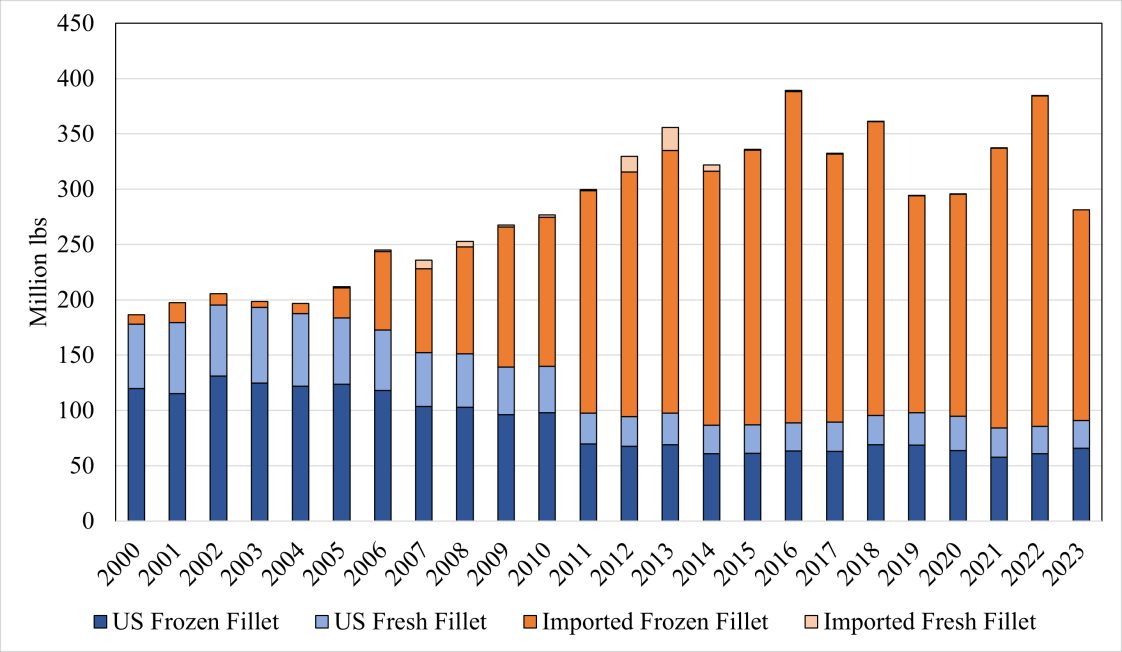
Figure 2. US-produced and import quantities of fresh and frozen catfish fillets (Pangasius and Ictalurus genera).
The decline in catfish prices comes amid high feed prices. The average feed price from January through August was $532/ton and $563/ton for 28 percent and 32 percent crude protein feeds, respectively. This represents 45 to 50 percent increases in the price of feed over the last three years. In the latter half of 2023, feed prices showed a downward trajectory due to falling prices for corn and soybean meal. Despite high feed prices, catfish feed delivered for food size, fingerlings, and broodstock production was 463,354 tons in 2023, a decline of only 1 percent from 2022.
The US catfish industry faced numerous other challenges in 2023, including ongoing labor shortages, poor inventory management, bird predation, and continued competition from imports. Independent farmers sometimes struggled to get fish into processing plants, which led to cash flow issues and exacerbated the issues with oversized fish. There were also staggering losses caused by bird predation on catfish farms, which has been a long-term problem for the industry but appears to have been worsened by drought in 2023.
Imports of frozen catfish fillets were 190.6 million pounds, down by 108 million pounds from 2022 (figure 2). The dramatic decline of imported catfish was likely due to a combination of factors including production issues in Vietnam and high US frozen inventories resulting from high imports in the previous year. Despite the lower import quantities, imported catfish made up 68 percent of the US catfish supply in 2023.
Outlook
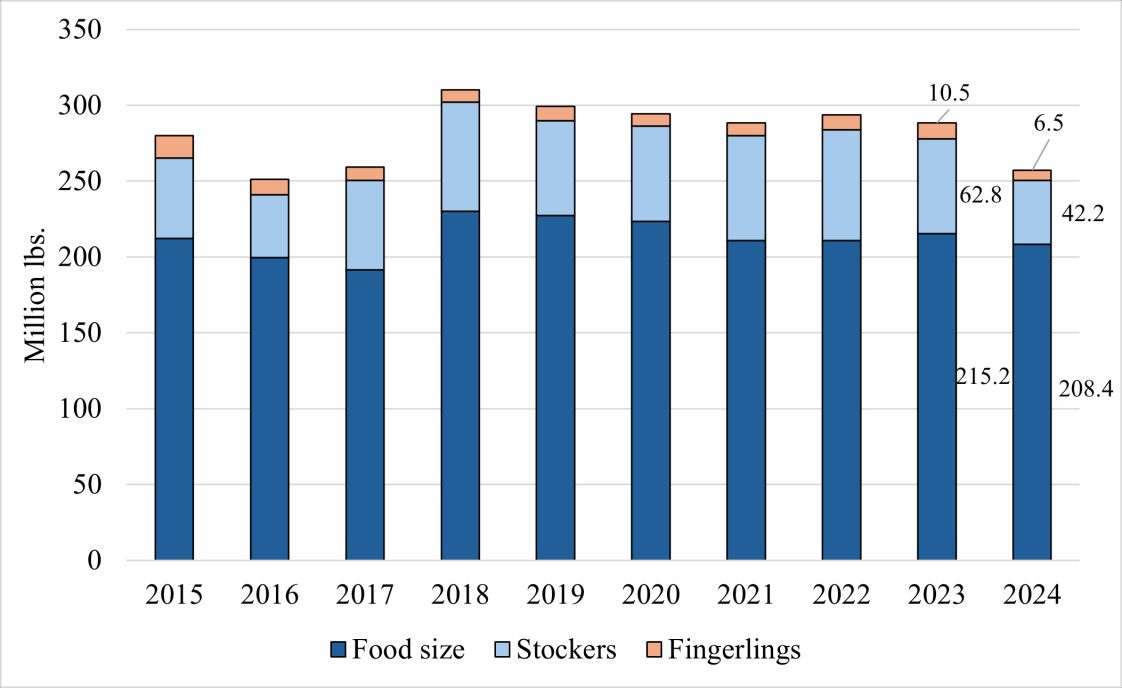
Figure 3. US catfish inventories at the beginning of the year.
At the start of 2024, 53,545 acres were used for catfish production in the United States. This was down 4 percent from the same time in 2023. Fingerling inventory was 6.5 million pounds, down by 38 percent compared to the previous year. Stocker inventory was 42.2 million pounds, down by 33 percent, and the food-size fish inventory was 208.4 million pounds, down by 3 percent compared to the previous year. This suggests that the production of food-size fish may be lower in 2024. In Alabama, the declines were slightly larger, with stocker inventory down by 37 percent and food-size inventory down by 6 percent.
Fish prices in 2024 will be influenced by many factors, including inflationary pressures, consumer demand, ability to move existing inventories, trade relations, and global economic conditions. It is difficult to predict how prices will move, but prices are generally expected to stabilize in the middle or latter half of 2024.
Table 1 provides production and price projections for three major catfish feed ingredients: soybean meal, corn, and wheat. Production is expected to be up, and prices are expected to be down for all three feed ingredients in the 2023–2024 marketing year. Thus, feed prices are expected to moderate, providing some relief to producers.
Table 1. Production & Average Price of Feed Ingredients
| Ingredient | 2021–2022 | 2022–2023 | 2023–2024 (Projected in March) |
|---|---|---|---|
| Soybean Meal | |||
| Production (1000 short tons) Average price ($/short ton) | 51,814 $439.81 | 52,493 $451.91 | 54,254 $380 |
| Corn | |||
| Production (million bushels) Average price ($/bushel) | 15,018 $6.00 | 13,651 $6.54 | 15,342 $4.75 |
| Wheat | |||
| Production (million bushels) Average price ($/bushel) | 15,018 $6.00 | 1,650 $8.83 | 1,812 $7.15 |
Conclusion
US catfish production has been stable in the last decade. In 2023, sluggish demand put downward pressure on catfish prices. Low catfish prices coupled with high feed costs led to tight profit margins for many producers. The outlook for 2024 is somewhat better with more moderate feed prices and a possible stabilization of catfish prices later in 2024.
1 The reported price is the price at the processor’s door. It includes the costs of seining and hauling, and it includes any premiums or discounts associated with quality.
Taryn Garlock, Extension Specialist, Assistant Professor, Fisheries, Aquaculture, and Aquatic Sciences, Auburn University, and Josh Maples, Associate Professor, Agricultural Economics, Mississippi State University
New June 2024, 2023 US Farm-Raised Catfish Industry Update, ANR-3088