
Commercial Poultry

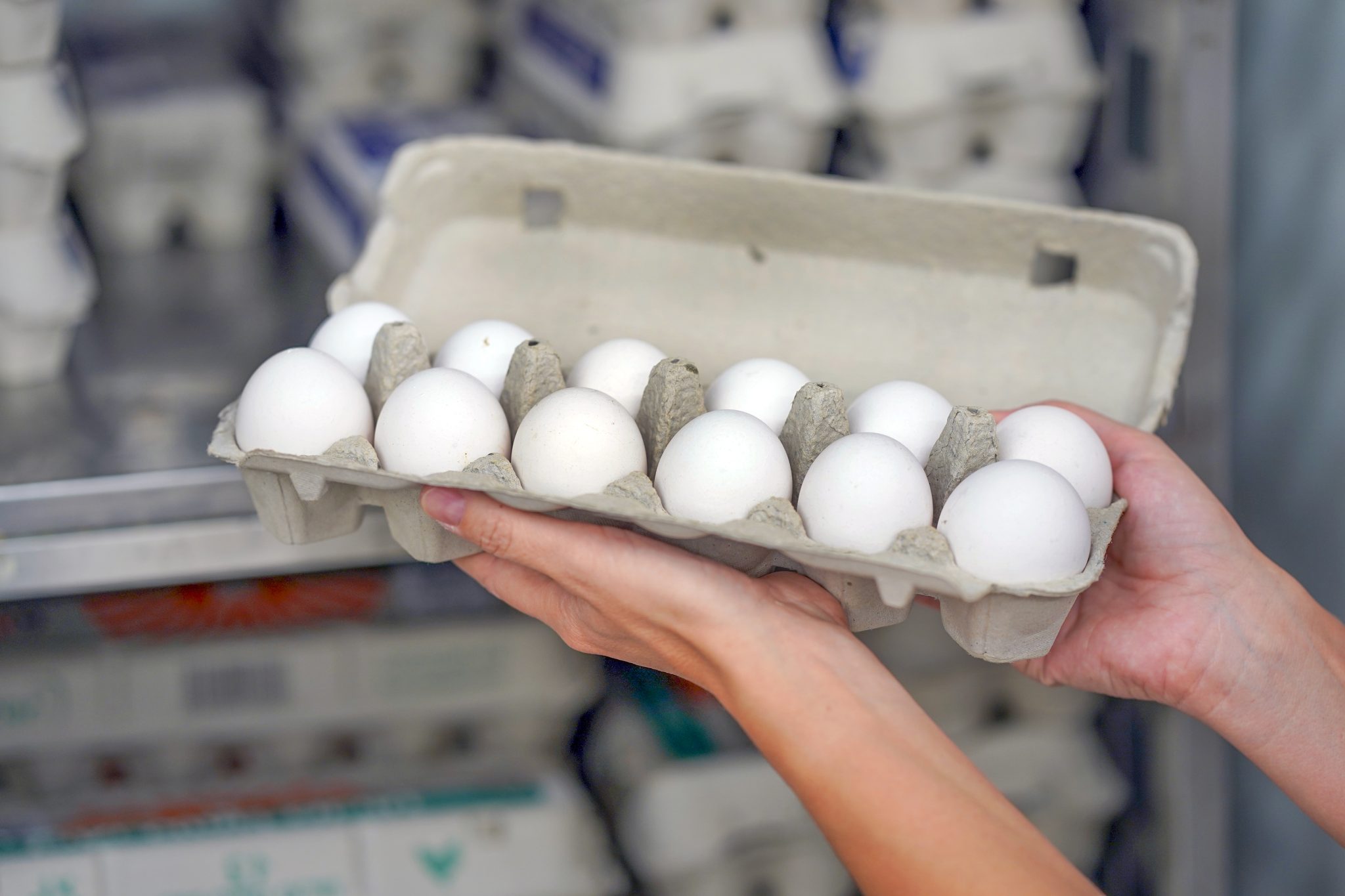
The holiday season brings with it numerous scrumptious baked goods — from Thanksgiving cakes and pies to Christmas cookies. Eggs are a key ingredient for most baked holiday treats. Consumers have experienced a roller coaster of egg prices throughout 2025. While prices have started to stabilize, changes could still be on the horizon.
High Prices in Early 2025
In early 2025, the U.S. saw a dramatic price increase for table eggs. Retail prices reached above $8.00 per dozen. This high price made many families rethink their egg consumption habits. Some restaurants that served breakfast staples started levying “egg surcharges” to help cover their increased wholesale costs.
These price shocks coincided with a dramatic decrease in eggs being produced because of outbreaks of Highly Pathogenic Avian Influenza (HPAI). HPAI causes high mortality in commercial table egg laying hens, and the only viable control method to date is to depopulate the entire farm to stop the spread of the disease to other nearby farms.
Price Stabilization Begins
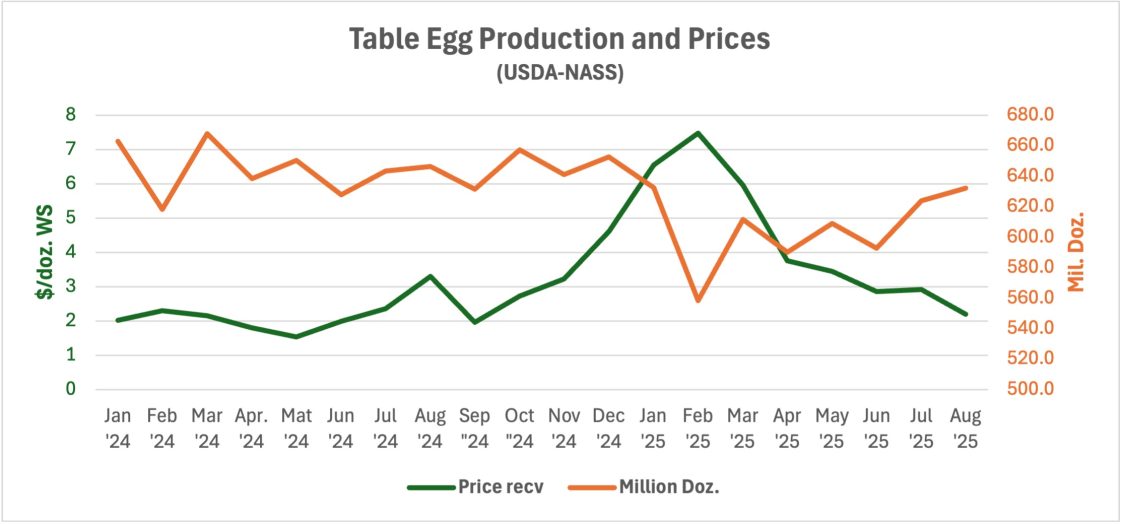
Thankfully, prices have decreased from those extreme highs. It looks likely that trend of lower prices will continue into this year’s holiday season (Fig. 1). However, another HPAI outbreak in an egg laying region of the country could quickly change prices.
Realities of Table Egg Production
Table eggs are primarily produced in the Midwest where many farms happen to sit along major waterfowl migration routes. Since waterfowl are known carriers and a source of HPAI infections, further outbreaks are anticipated. A few have already happened this fall season. If outbreaks continue, along with the accompanied depopulations required to control the spread, egg prices could rise again, and that could happen quickly.
Changes in Egg Consumption
One element that could help temper any potential price hike is that, according to U.S. Department of Agriculture data, egg consumption in the U.S. has dropped 5% per capita from 286 eggs per person in 2019 to 271 eggs per person in 2024. Reasons for this decrease in egg consumption could be the recent increases in egg prices, general food choices, or a decrease in cooking at home.