|
Maintaining Gardens in Summer
Heat & Droughts
By Jerry A. Chenault, Urban
Regional Extension Agent, Lawrence County
|
One of the best
and most effective things a homeowner can do to help protect
plants, trees, and shrubs from summer's heat and drought is to
mulch around them. That might not seem like a real news flash;
but what most people don't realize is that high temperatures
kill plant roots! We often think of mulching plants as a way
to prevent weeds and to hold in moisture; but moderating soil
temperatures just seems to drift right by us--and it may very
well be the most important fact!
Contrary to popular belief, the bulk of tree roots are in the
top 1218 inches of the soil, while soil temperatures at
or above 95 degrees F. kills plant roots. Without mulch, summer
soil temperatures can sometimes reach 110 degrees F. at 2"
deep and 100 degrees F. at 4" deep. That alone can spell
disaster for a tree or other plant. A 3-4 inch layer of organic
mulch can go a long way toward protecting your plants from summer's
heat and drought.
Dr. Bob Nuss, a horticulture specialist at Penn State's College
of Agricultural Sciences, offers the following advice about mulches:
"Whatever material you use depends
on where it will be used, appearance and cost." "Homeowners
can use two types of mulch: organic or inorganic. Make sure no
mulch touches the plant stem or trunk."
Organic mulches range from shredded newspaper
to shredded wood or wood chips. Inorganic mulches such as black
plastic will be just as effective although appearance may be
an issue. "You can top-dress plastic mulches with gravel
or wood chips," Nuss suggests. "But don't use gravel
alone because it takes a layer 6 to 8 inches deep to slow moisture
loss and control weeds." Gravel may increase heat.
Wilt is the most obvious sign of extreme
heat; but wilt isn't always caused by a lack of water as many
people believe. In fact, too much water can manifest itself in
the same visual symptoms as too little water! They both cause
wilt! And sometimes a plant will wilt (especially a young plant)
even though the soil appears to be wonderfully moist. What causes
that?
The explanation is that due to the considerable surface area
of the leaves, the plant losses moisture (especially in high
temperatures as it attempts to cool itself) faster than the plant's
roots can take it up. Containers can sometimes make this situation
worse (if they aren't big enough) whereas a planted landscape
plant can develop a large enough root system to help maintain
moisture levels. If we don't have a drought, that is.
So, how often should we water plants
in a drought situation? Many a plant has been killed by the desire
to provide it an oasis in time of drought. Instead of watering
daily, rather, provide your plants with one good soaking per
week. Watering lightly means the water won't penetrate very far
and roots will grow only near the soil surface. Therefore, it's
important to water deeply to get the moisture to quench the thirst
of those roots deep within the subsoil. This, in turn, encourages
deeper root growth and makes your plants better able to withstand
drought conditions.
What else can we do to help in drought
situations?
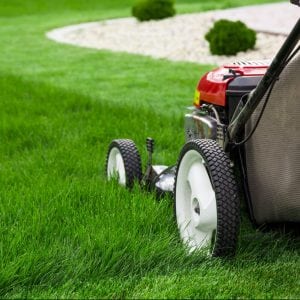
- Maintain a lawn height of 2_-3 (2.5
to 3) inches to help protect roots from heat stress and to reduce
the loss of moisture to evaporation.
- Water before 8:00 a.m. or after 6:00
p.m. Avoid watering in high winds or in the heat of the day.
- Install a drip irrigation system for
watering young trees, gardens, and shrubs.
- Consider using "gray water"
(water left over from bathing and clothes washers) on ornamentals;
but make sure soaps and detergents have been diluted. Don't use
water with chlorine bleach, boron, or liquid fabric softeners
(sodium from the salt used to soften water and in fabric softeners
can be harmful to plants). Gray water can also be used on the
soil around fruiting plants such as tomato, pepper, beans, and
broccoli.
References
Costello, L. R., Perry, E. J., Matheny,
N. P., Henry, J. M., and Geisel, P. M. (2003). Abiotic disorders
of landscape plants: A diagnostic guide. Oakland, CA: University
of California, Division of Agriculture and Natural Resources.
Montana State University Extension. (February
19, 2002). Heat and drought. Retrieved June 4, 2006.
Nuss, Bob. (July 27, 1999). Garden under stress from drought?: Relief is
on the way.
Penn State College of Agricultural Sciences News Release Archive.
Retrieved June 26, 2007.
Hammond, Sheldon C. (2007). Urban
tree specialty training program manual. Griffin, GA: Georgia
Cooperative Extension Service.
HGTV. (2007). Heat and drought tolerance q&a. Gardening.
Retrieved June 26, 2007.
If
you do not have the latest version of Adobe Acrobat and wish
to view the
PDF publication on this site, click here
to download:
Return to Metro News...
|