
What’s in the bag?
eXtension
Dirty Little Secrets
About Pike County
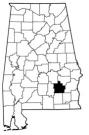
Pike County was organized in 1821 and named for General Zebulon Pike of New Jersey. The county first encompassed 1,100 square miles and was so large that it was referred to as the "State of Pike." After other counties were carved out, Pike County was left with 671 square miles.Green Beachamp was one of the first settlers in the area. Monticello was the first county seat. Troy became the county seat in August 1838. At that time, it was called "Deer Stand Hill."
Pike County's population is 28,294 and mostly rural. There are 15 educational outlets in the county including Troy University.
Major agricultural crops in Pike County are poultry, cattle, timber, peanuts and cotton. Other crops grown are hay, corn, fruits and vegetables and nuts. Major industries include Wiley Sanders Trucking and Lead companies, K&W Plastics, Lockheed Martin, Sikorsky, Carter Brothers Manufacturing, and Henderson, Black and Green.
Pike County is home to the Pocossin, an evergreen area that is home to unique tropical growth and reptiles (the Blue Indigo Snake). These plants only grow in this area and in desert areas. Other tourist attractions include Pike Pioneer Museum, Troy Fest Arts Festival, Troy University, College Street and Antique City (Brundidge). Brundidge is also the home to Alabama's official Folk Life Festival production of "Come Home, It's Suppertime". "Come Home" features the "ponderin's" of a local writer and is presented four (4) weeks each year, two in the spring and two in the fall, in the We Piddle Around Theatre in Brundidge.
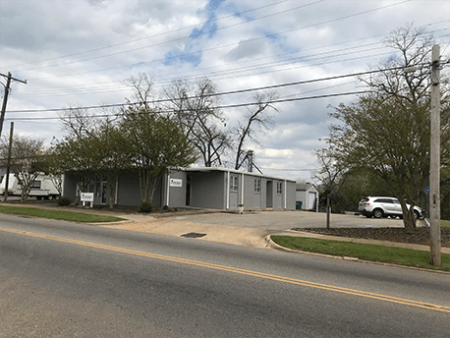
The Pike County Extension Office has six full-time employees. It has a very active and varied Extension program including agriculture, forestry and natural resources, family and consumer science, nutrition education, community leadership and development and 4-H. About 1,600 youth are involved in 4-H.


