
Marketing, Promotion, and Advertising
Estimating Profits
Preparing Your Product/Standardizing Recipes
Keeping Written Records
Packaging and Labeling Your Product
About Perry County
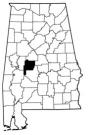
PERRY COUNTY is located in west central Alabama. From the northern part of the county where forests cover the trailing end of the Appalachian Mountains, the hills and valleys give way to the grass covered prairies and geometric crop lands of the fabled Black Belt.
Perry County was established December 13, 1819 and was named for Commodore Oliver H. Perry, a U.S. Navy officer. Its county seat is Marion. Many of the local churches was built in the 1800s. Judson College was established for women in 1838 and is still the only state women's college. It is named for Anne Hasseltine Judson, the first American female to become a foreign missionary. Marion Military Institute was established in 1842 and has provided an exceptional educational opportunity to many people.
This rural county has a population of 11,186 with 68.8% Black, 30.3% White and the remaining 0.9% are Hispanic and other. Perry County has eight educational outlets including Judson College and Marion Military Institute. More than 62% of county residents are high school graduates and 10% are college graduates (based on 2000 Census reports).
Among the major agricultural industries in Perry County are catfish farming, beef cattle and dairy cattle. Principal agricultural crops in Perry County include forestry products, soybean production, wheat & corn production. Area manufacturing companies include Tek-pak Salada Laguna and Citation-Marion.
Visitors are attracted to Perry County by its exquisite antebellum homes, remarkable confederate cemeteries, a lavish array of antique malls, and many churches that are full of rich, vibrant history.
The Perry County Extension Office has three full-time employees and a number volunteers who help with Extension programs. Some of the more popular Extension programs in the county are 4-H, EFNEP (Expanded Food & Nutrition Education Program), NEP (Nutrition Education Program), Family and Consumer Science, Forestry, Agricultural and Natural Resources. More than 500 youth participate in 4-H through in-school and community based clubs.


