
About Choctaw County
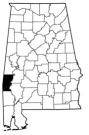
Created by the Alabama Legislature in December 1847, Choctaw County was carved from Washington and Sumter counties. The county was named after the Choctaw Indians and is bordered on the west by Mississippi and on the east by the Tombigbee River. It was the site of the first oil well in Alabama.
The rural county has a population of 15,855 residents, 7,076 of whom are black and 8,779 are white. About 65% of its adults have completed high school. The county has two elementary schools, two high schools and one two-year College.
Abundant wildlife draws sportsmen to Choctaw County, and the county has many hunting and fishing lodges. Additional tourist attractions include the Choctaw County Museum and Bladon Springs State Park. The Choctaw County Chamber of Commerce & Community Development Foundation also offers the AERN program (Alabama Entrepreneurial Research Network) for small business development (a partnership with the University of Alabama). Business and community based programs at the Chamber provide for long range and strategic planning.
The county produces beef, timber, poultry and cotton. Its chief industrial product is paper.
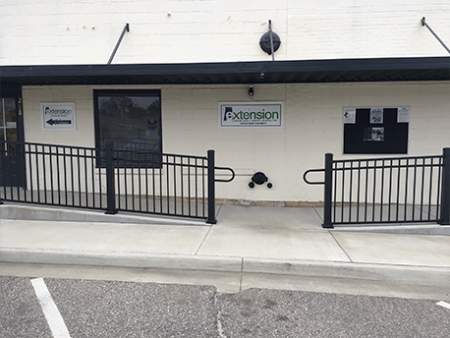
Choctaw County's Extension office employs four people full time (two of these are Regional Extension agents), one part time person and three agent assistants. The Choctaw County Extension office offers educational programs in 4-H and Youth Development, Agricultural, Forestry, Wildlife and Natural Resources, Family and Consumer Sciences, and Community Resource Development. The Agent Assistants offer programming in 4-H T.G.I.F. (Teens Getting Involved for the Future), Expanded Foods Nutrition Education, and 21st Century 4-H After School programs.