









![]() |
2006 Summary of Accomplishments |
Vision Statement
The Alabama Cooperative Extension System envisions a comprehensive
statewide Urban Affairs and New Nontraditional Programs Unit encompassing
traditional, nontraditional, new and emerging programs, and delivery
approaches in order to meet the needs of Alabama citizens wherever
they live and work. The focus, however, is to meet the needs of
urban and suburban communities and improve their quality of life.
Mission Statement
The mission of Alabama Cooperative Extension System's Urban Affairs
and New Nontraditional Programs Unit is to provide learning opportunities
to meet the needs of all urban and nontraditional audiences with
a specific focus on limited resource families, underserved audiences,
individuals, and small enterprises.
Organizational Restructuring: In Change
for Change
In 2004, the Alabama Cooperative Extension System (Extension)
underwent a major restructuring that brought about significant
changes in the way programs are planned and implemented across
the state. Extension continued to maintain a presence in each
of the 67 counties in Alabama. Additionally, teams comprised of
regional agents were established to define broader needs and shape
responses in 13 program priority areas. Specialists within the
organization were charged with the task of coordinating these
teams to develop projects, programs, resources, and expertise
that would address critical needs and relevant issues.
Working in concert with the vision to be a world-class educational organization providing real-life solutions to improve the lives of all Alabamians, the administrative and programmatic leaders worked to design, develop, and implement the following:
Over the past two years these teams have developed and evolved into proactive and reactive mediums to meet client needs. Team reviews in 2006 provided feedback for future organizational development that is achievable through leadership, training, and strategic decision making that encompasses the economic as well as the socio-psychological impact of organizational restructuring.
During 2006, Extension's Urban Affairs Unit developed and implemented urban, new, and nontraditional programs through 18 ETPs under 8 of the 13 priority areas, including Animal Science and Forages, Family and Child Development, Community Resource Development, Consumer Science and Personal Financial Management, Forestry and Natural Resource Management, Home Grounds and Gardens, Human Nutrition, and 4-H and Youth Development.
|
Quick Fact: Research shows that work satisfaction correlates with trust and a willingness on the part of top management to listen and to help solve job-related problems. Source: Lee, Grace and Teo, Albert. (March 2005). Organizational restructuring: Impact on trust and work satisfaction. Asia Pacific Journal of Management, 22. Retrieved August 1, 2007. |
Relay for Life takes a team approach to raising funds to eliminate cancer and to provide support through research and education to individuals and families who are suffering. In 2006, Urban Affairs continued work with the American Cancer Society through state and county-based collaborations and partnerships that are more than a decade old. The Metro Knights, the Urban Affairs Relay Team at Alabama Agricultural and Mechanical University (AAMU), were among the many teams and service organizations that joined the fight against breast cancer by celebrating life through awareness education.

Breast cancer accounted for 31 percent of female cancers in 2006 with 679,510 cases diagnosed in the US. The average age for breast cancer in Caucasian women is 57 compared to 46 in African-American women. African-American women are also more likely to die from breast cancer than are Caucasian women. Research attributes the mortality increase to pre-menopausal attraction when surgery may pose a greater risk.
The increased mortality rate of some population groups has made them a target for educational outreach. International researchers are currently pursuing the interrelatedness of social, cultural and genetic incidences of cancer among women in countries with limited resources to offer recommendations on health and care. International research and guidelines offer opportunities for Extension educators to expand training to new audiences through a global initiative for breast health in the areas of early detection, diagnosis, treatment, and public policy.
References
American Cancer Society. (2007).
Cancer facts and figures 2007. Retrieved August
2, 2007.
Blackwell Publishing. (February 6, 2006). International breast health guidelines for developing counties. eMaxHealth. Retrieved August 2, 2007.
|
Quick Fact: With the current advances in breast cancer research and treatment, nearly 90 percent of women diagnosed with the disease have an increased survival of at least five years. Source: National Cancer Institute, United States National Institutes of Health |
Easy access to Extension
resources significantly increased our ability to keep our customers
up-to-date and informed. Since the launching of the Urban Affairs'
official newsletter Metro News in the year 2000, Internet
users have an opportunity to learn more about Extension worldwide.
Editor Wendi Williams and the Metro News editorial board ensure the publication features research-based articles by Extension personnel at all levels from administrators to graduate students. Moreover, archives of previous issues are accessible online and readers are afforded opportunities to provide immediate feedback on current issues.
Metro News also facilitates program marketing and promotion across all disciplines addressed through Extension outreach and serves as a link to other resources and websites that are maintained by staff such as Communications Specialist Jean Dwyer, which includes the Programación en Español, A Look at Alabama Families, Faith Gardens, and WECAN4U websites. The online publication is an excellent resource for keeping the lines of communication open and flowing between Extension educators and their customers. By uploading the newsletter to the Internet offers Urban Affairs provides inexpensive and cost-effective outreach to global readers. As a result, Metro News ranks second as the most visited page on the Urban Affairs' website.
During 2006, Metro News provided diverse outreach to both English and Spanish speaking audiences in an array of content areas. The newsletter is published quarterly and can be accessed at www.aces/urban along with other program links.
|
Quick Fact: The Internet as a marketing and service resource is a powerful medium with significant impacts for customer responses. Source: Stephens, Scott. (January 2002). Three keys to a successful web presence. The Briefing. Retrieved August 2, 2007. |
The Expanded Food and Nutrition Education Program, funded by the United States Department of Agriculture (USDA), helps low-income youth and families with young children to acquire skills and the chance to change behaviors in food selection and consumption to contribute that will contribute to personal development and improve nutritional well being. EFNEP is a highly visible program, operating in more than 800 U.S. counties and American territories. In 2006, for the first time since the program's inception in the 1960s, 1890 land-grant institutions were invited to develop letters of intent and submit formal program plans to received funds through this program. Minimal funds were granted in 2006 with projected increases in 2007. Start-up activities in 2006 focused on identifying educational resources and structuring evaluation models.
The EFNEP project
implemented at Alabama A&M University, targets underserved
Hispanic audiences in the state. Statistics support the contention
that the health status of Hispanics is consistently lower than
that of whites or blacks among all age groups, justifying a need
for more nutrition and health education for this underserved,
limited resource audience. Expectations are for continued growth
of the Hispanic population according to projections from 2000
Census data. There are about 37.4 million individuals of Hispanic
origin residing in the US, representing about 13.3 percent of
the total populations. Projections are that by 2040 there will
be some 87.5 million comprising over 22 percent of the population
if the present growth rate continues.
Research data from the Centers for Disease Control on minority health confirms that while common heritage characteristics exist, Hispanics have varying profiles on health issues. There is a disproportionate number of Puerto Ricans who suffer from asthma, HIV/AIDS and infant mortality. Mexicans are more likely to form diabetes. Factors that contribute to poor health outcomes for Hispanics include language and cultural barriers, and lack of access to preventive care and health insurance.
References
Minority
Health: Quick Facts about Health Disparities, Families USA,
The voice for Health Care Consumers.
CDC office of minority Health.
| Quick Fact: Only 12percent of white, non-Hispanic children are in less than very good or excellent health, compared to 24 percent of African-American children and 26 percent of Hispanic children. |
A native of Brazil, Dr. Maria Leite-Browning is
a veterinarian, specializing in animal reproduction. She currently
works as an animal scientist with Urban Affairs. Browning has
been involved in goat research and Extension since 1980, launching
her career as a research scientist and field veterinarian in northern
Brazil. An author of several scientific articles published in
peer review journals, her work has been presented at national
and international scientific conferences. Dr. Browning is an active
professional in the goat industry across the US. Alongside her
husband Dr. Richard Browning, a research associate professor at
Tennessee State, Maria has helped to establish Extension goat
services in the state of Tennessee.
Robert Spencer joined Urban Affairs as an urban
area specialist in July 2006. Spencer focuses on agricultural
production needs, consumer demands, and market niches of alternative
animal production systems among small ruminants and rabbits. He
previously served as the small farms resource management specialist
with AAMU's Small Farmers Outreach and Technical Assistance Program,
and as the facilities manager for AAMU's Agribition Center.
The expanded specialist expertise, working in concert with ongoing and successful statewide small ruminant programs, will enhance Extension's capacity to provide outreach on many aspects of goat production and management. A number of seminars, workshops, and conferences throughout the state, the US, and internationally, have enabled Urban Affairs to meet its objective of educating producers, Extension agents, industry representatives, and veterinarians on several issues of goat farming, such as nutrition, genetics, husbandry, health, reproductive management, and marketing.
The success of Extension outreach is measured by its ability to reach diverse audiences with research-based information in response to priority issues. In keeping with the organization's mission and goals, Extension offers educational outreach to all people without regard to race, color, national origin, religion, or disability. During 2006, Urban Affairs exhibited an international flavor as programs were provided at local, state, national, and international levels.
A Cinco
de Mayo Festival organized by Urban Regional Extension Agent Juana
Macias was held in Marshall County in May of 2006. The annual
event was supported by the Albertville Chamber of Commerce, and
planned with more than 30 community partners and exhibitors. Implemented
now for four consecutive years, some 250 Hispanic families were
in attendance at the event. The primary focus was to provide health
and nutrition information, including free basic screenings and
referrals for reduced and affordable health care.
However, an array of agencies and organizations were available such as local banks and mortgage companies with information on home purchasing, loans, and banking.
Mr. Robert Spencer was invited by the Center for International Agricultural Trade, Development, Research and Training at Florida A&M University (FAMU) to participate in the John Ogonowski Farmer to Farmer Program in Haiti in July of 2006. Mr. Spencer was invited to train rabbit raisers on meat production and meat quality relationships and to educate meat inspectors on meat quality control. The program was funded through Partners of the Americas (POA), which is the largest private voluntary organization in the western hemisphere, dedicated to promoting economic and social development while fostering inter-American friendship and cooperation.
Dr. Maria Browning presented at the Eighth World Congress in Applied Livestock Genetics held in BELO Horizonte, Brazil in August of 2006. The professional development activity afforded opportunities for Dr. Browning to learn about the latest research, to network with geneticists from other institutions, to interact for possible collaborative research activities, and to discuss potential collaborative activities with other investigators.
|
Quick Fact: CSREES, in cooperation with US land-grant institutions, launched an initiative in 2003 to strengthen the international dimension of state extension services nationwide. Source: Cooperative State Research, Education, and Extension Service (CSREES). (July 23, 2007). National initiative to internationalize extension. Retrieved August 3, 2007. |
The Urban Family Network
of the Alabama Cooperative Extension System hosted the Eighth
Annual Family Conference and Networking Reception on October 4-5,
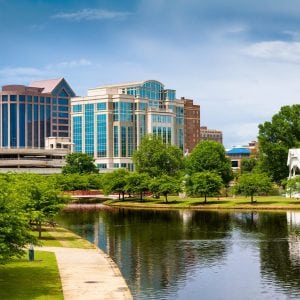
2006. The conference was held at the Von Braun Center in downtown
Huntsville with over 600 participants.
The pre-conference
Networking Reception was held in the Engineering Auditorium on
the campus of Alabama A&M University. The annual reception
provides a venue to highlight existing partnerships and creates
networking opportunities for future collaborations. Dr. Richard
Powers (shown above with Alabama A&M University President
Dr. Robert Jennings), with the Bureau of Geriatric Psychiatry
shared ideas for potential expansion of the ongoing "Successful
Aging Initiative" partnership with the Department of Mental
Health. Donna Gullatte, Urban Regional Agent and manager for the
Family Life Center provided an overview of the existing partnership
with the Huntsville Housing Authority. And, Judge Lynn Sherrod
discussed successful Extension collaborations for family court
and Relatives as Parents programs.
The Conference was chaired by Dr. Wilma Ruffin and featured Wally
Amos as the keynote speaker. Since 1979, Amos has been the national
spokesperson for Literacy Volunteers in America and is a board
member of the National Center for Family Literacy and Communities
in Schools. Alabama's First Lady Patsy Riley was in attendance.
Ms. Kimberly Oliver, 2006 National Teacher of the Year presented
a session on "True Learning for All." Her discussion
included the recognition of language and literacy barriers, the
involvement of non-English speaking families in day and after-school
programs, and ways to get parents involved in their children's
education.
Functional Foods: The New Medicine was the theme for the 2006 Urban-Rural Interface
Conference. Dr. Cathy Sabota, 2006 Conference chair, defined
functional foods as those foods or food substances designed to
lower the risk or delay the onset of certain diseases. The conference
follow-through provided excellent opportunities for participants,
educators, and consumers to enhance their knowledge about fruits,
vegetables, mushrooms, and other foods with proven health benefits.
New ways to market these products were also discussed. Experts
focused on ways to expand the knowledge and skills of participants
on eating healthy, identifying beneficial foods, and making intelligent
choices about organic food products.
The objectives of the Urban-Rural Interface Conference are to: 1) convene agencies and individuals addressing urban-rural community needs; 2) identify common issues, opportunities and resources; 3) recognize strengths and potential contributions; and 4) and provide training models and educational resources to build partnerships and plan programs to enhance communities.
Music transcends language
barriers as a universal communicator that inspires all ages and
provides wonderful opportunities for youth to grow. Moreover,
musical experiences provide opportunities to mobilize the essential
components of positive youth development by engaging the head,
heart, hands, and health.
Assessments to determine the benefits of music to younger audiences validate its potential. Research shows that daily vocalization increases lung capacity to improve physical health. There are also positive correlations between music skills, science and math proficiency. Students with experience in music courses and performance scored higher on the 2006 College-Bound Seniors profile of SAT test-takers. In addition to enjoyment and personal development, the world of music provides rewarding careers.
The power of music
was demonstrated by Alabama youth during the first Ruben Studdard
Music Camp coordinated by Urban Regional Agent Rosalind James
at the Houston County Urban Center. Held July 25 thru August 1,
2006, the camp allowed more than 100 youth from Alabama and Georgia
to enhance their skills in songwriting, stage and voice performance,
and music theory, as well as receive practical advice about the
music industry.
The camp culminated with a concert where participants performed live with the 2003 American Idol in front of an audience of over 1,000 community leaders and young adults at the Dothan Opera House. Because of the success of the first camp, the Ruben Studdard Music Foundation sponsored the camp again in Houston County in 2007.
|
Quick Fact: Music increases left brain development involved with reasoning and thinking skills. Source: Children's Music Workshop. (2007). Twelve benefits of music education. Retrieved August 3, 2007. |
Six hundred fifty-seven students participated in the Students Promoting Action/Community Education (SPACE) and Service Learning Expo at Alabama A&M University. A total of 100 volunteers planned and implemented the volunteer recruitment event. A total of 347 AAMU students actually signed with local participating agencies to serve as community volunteers, resulting in a cumulative total of 40,000 hours of volunteer service. More than 50 local volunteer agencies were represented in areas such as tutorial assistance, health care, performing arts, elder care, animal care, tour guides, storytelling, and clerical assistance.
A horticulture green house program was implemented for a special needs audience in a Tuscaloosa high school providing vocational skills, horticulture therapy and a sense of pride to participants. An annual plant sale raised $2,200 to help fund the program and a $35,000 donation supported the construction of a commercial size greenhouse in 2006.
Educational workshops designed to promote esteem, personal development and leadership skills in urban youth were continued through the Urban Youth Teen Leadership Academy. The academy was established in Mobile County in 2005 through an Extension mini grant to augment and help bridge educational gaps in content areas in schools. Thirty academy graduates benefited from outreach in the areas of healthy relationships, financial management, community service, career education, and computer skills.
The Welcome to the Real World curriculum
successfully reached over 3900 youth, young adults and adults
in 2006. A supporting resource for the Urban Unit's workforce
development outreach programs, this educational tool delivers
a fast paced real life simulation that facilitates decision making,
career choices, financial management as well as other personal
economic choices.
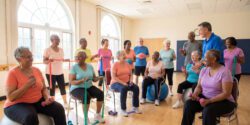
A 10-week Walking and Eating for Your Health Sake program was
designed and implemented in the Florence metro area in partnership
with the local hospital and the University of North Alabama's
School of Nursing. As a result of this program, the 74 participants
lost a total of 350 pounds, 28 inches, cholesterol dropped 199
points and blood pressure dropped 234 points. Five participants
were able to come off of their high blood pressure medication.
The Houston County Urban Extension Center partnered with the Troy State Business Center and the Dothan Chamber of Commerce to implement a business start-up program entitled Next Level Business. Twenty-five participants attended and completed the 10-week training. Five participants started their own business.
A weekly body-love radio program in Calhoun County coupled with workshops and classes educated 294 diabetic program participants on how to monitor glucose, and other symptoms of diabetes with recommendation for health eating and physical activity. Behavioral changes included practicing portion control and altering recipes for healthier eating.
A 3-day "Caring for the Care Giver" Conference was held at the Chattanooga Choo Choo Holiday Inn in October of 2006. The conference represented a multi-state collaboration between the Extension Systems in Tennessee, Alabama, and Georgia (TAG) and other collaborating agencies. The 189 attendees explored topics that included medication management, legal options for grand families, and resolving conflicts in relative care.
Over 3000 families participating in the federally funded Urban Nutrition Education Program (UNEP) were trained using the Extension developed the Wise Eating for A Lifetime of Health (WEALTH) curriculum for adults and the USDA developed Power of Choice Curriculum for youth. At the completion of the ten lesson series, results showed significant increases in participants' use of the USDA MyPyramid recommendations, increased consumption of fruits and vegetables, increased participation in daily physical activity and an increase in the number who comparison shop and who use a spending plan to manage their food dollars. The program services the ten metro centers of Alabama.
Extension's Saving Towns Through Asset Revitalization (STAR) program partnered with the town of Gordon in Houston County and engaged in community revitalization activities to help them gain Tree City U.S.A. status.
Volunteers for the Grape Tomato Project in Morgan County harvested more than 400 pounds of grape tomatoes. These tomatoes had a value of $800 and were delivered to Meals on Wheels clients throughout the growing season. The project provided a serving of tomatoes on 3200 meals during the summer of 2006.
In 2006, Extension's Urban Horticulture
Project continued its partnership with the Coosa Valley Youth
Services, Alabama Tree Trust. The 10-week program in Calhoun County
is geared toward male youth-at-risk who are perceived as potential
juvenile detention residents. The goal is to intervene with positive
guidance and direction to avoid future incarceration. The camp
format instills structure, obedience, and physical growth. The
program involves two aspects including the management of the Alabama
Tree Trust Nursery
and a 10-week educational training course promoting job skills
and horticulture/plant science.
The 2006 Water Festival in Jefferson County taught about 1600 Birmingham City School children about the many wonders of water over the course of two days. This program was sponsored by a number of collaborating organizations including the Alabama Cooperative Extension System.
Extension's Urban Affairs and New Nontraditional Programs Unit continued to strengthen its HIV/AIDS education efforts by hosting the largest national Black Entertainment Television Network Rap-it-Up Teen Forum in 2006 under the leadership of the Houston County Urban Center staff.
Eighty five percent of jobs created by agriculture are not on the farm. The Annual Urban Youth Farm Day was held at Alabama A&M University's Winfred Thomas Research Station. The more than 500 energetic elementary school students enhanced their awareness of farm management from the perspective of farmers, farm service organizations, and agricultural research.
For more information about programs and services visit our website at www.aces.edu/urban.
© 2007 Alabama Cooperative Extension System. All rights reserved.