


ANR-577 MANAGEMENT OF RECREATIONAL FISH PONDS IN ALABAMA/Nine
Management Of Recreational Fish Ponds In Alabama
Weed Control
Aquatic weed control is a common problem in farm ponds. Some aquatic
vegetation might be good for the pond. Rooted aquatic vegetation does provide
habitat for some small aquatic animals, which adds to the food chain. Vegetation
also provides small fish with places to hide from larger predators. The
problem with weeds is uncontrolled growth. If too many weeds become established
in the pond, too many small fish survive (that is, over-populate), and removal
of nutrients by the weeds reduces algae production (food). Also, predators
become thin because they are not able to prey on the forage species.
Aquatic weeds can be controlled by manual, chemical, and biological means.
Manual control of species like cattails is practical when they first start
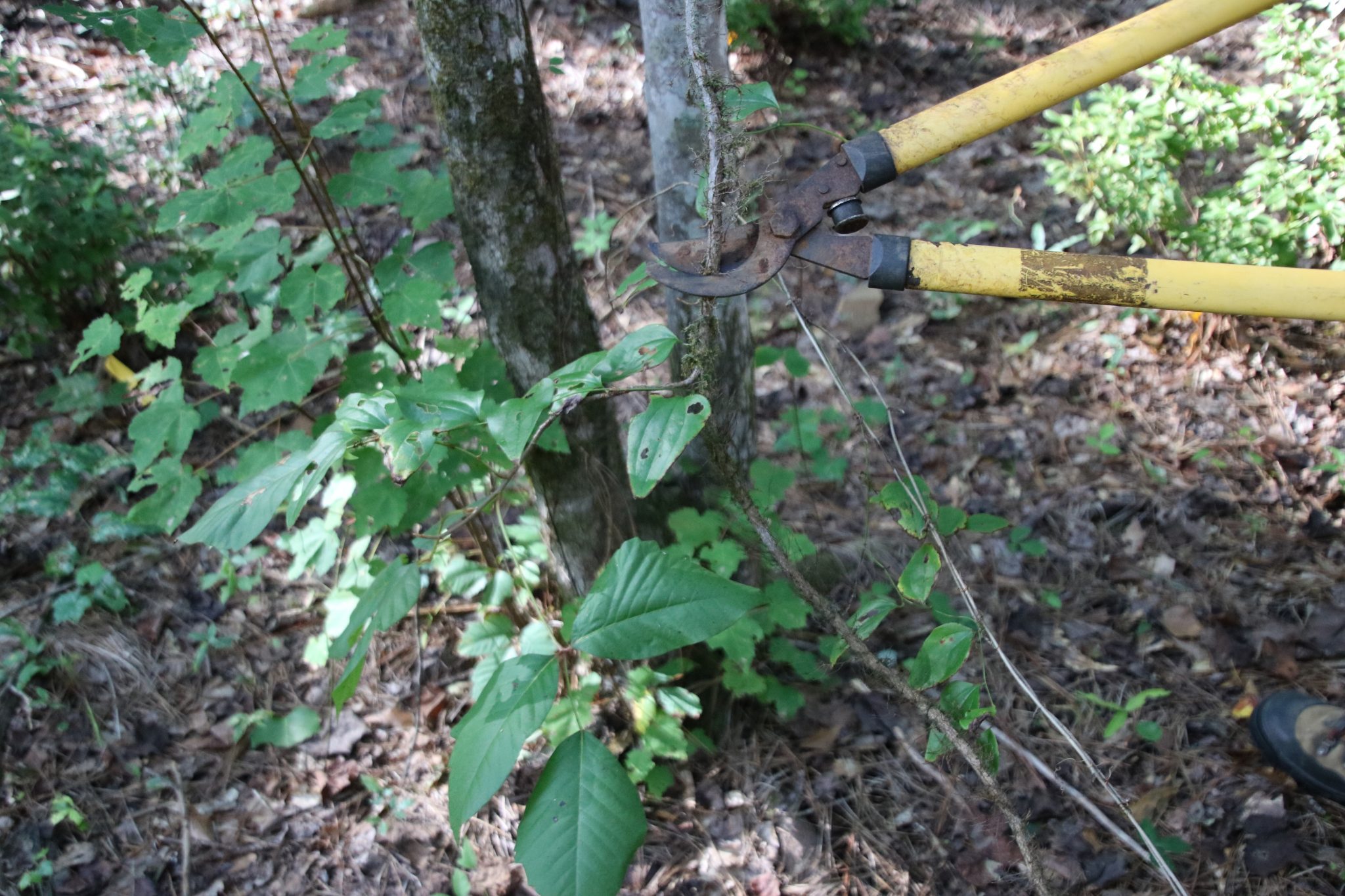
to colonize a pond. Woody vegetation along the dam also can be controlled
manually.
Chemical control with herbicides is possible, but few herbicides are
approved for aquatic use, and the type of aquatic vegetation must be accurately
identified before it is treated. Herbicide applications can kill planktonic
algae, leading to oxygen depletion. Oxygen depletions after herbicide treatment
are particularly common in hot weather or if the pond is heavily infested
with weeds, or in both conditions. Check with a fisheries biologist or the
county Extension office for plant identification and current herbicide recommendations.
When using chemical pesticides, protect yourself and others by strictly
following all label directions.
(Photo left) Grass carp grow
rapidly and will control most underwater weeds if stocked at recommended rates.
The simplest and most economic long-term aquatic weed control method
is to stock grass carp. The grass carp, or white amur, is an Asian carp
brought to this country for aquatic weed control. Grass carp consume vegetation
almost exclusively after they reach 10 inches in length. They will not reproduce
in the pond, will not muddy the pond like common carp, will not disturb
the nests of other fish, and they will consume 30 to 40 percent of their
body weight in weeds every day during warm weather.
Grass carp are attracted to running water and will leave the pond over
the emergency spillway during heavy rains. Prevent escape by building a
correctly designed barrier across the spillway. A list of where to purchase
grass carp and information on how to build an escapement barrier can be
obtained from your county Extension office.
The number of grass carp that should be stocked depends on the type of
weed, condition of the pond, and magnitude of the weed problem. Table
6 gives recommended stocking rates. If stocking grass carp into a pond
with mature bass, stock an 8-inch or longer (10- to 12-inch) fish. Grass
carp are less effective at controlling weeds after they reach 20 to 30 pounds
in size (usually 5 to 7 years after stocking). As vegetation starts to reappear,
restock the pond with new grass carp fingerlings. Remove the large grass
carp by bow-fishing or spearing. Grass carp are excellent table fare.
Table 6. Recommended Stocking Rates For Grass Carp.
Weed Evaluation
|
Number of Fish to Stock
per acre
|
New pond or very slight weed problem
|
5
|
Moderate weed problem (10 to 20 percent coverage)
|
10 to 15
|
Severe weed problem
|
15 to 20 or more
|
In the case of a severe weed problem it may be practical to treat the
pond with a herbicide first and then to stock 10 to 15 grass carp per acre
to maintain weed control. Contact your county Extension office for information
on chemical control of aquatic weeds.
|