
The Alabama Cooperative Extension System
 
 Saturday, November 21, 2009
About Extension  ·  County Offices  ·  Calendar  ·  Publications  ·  News  ·  Multimedia Resources
Alabama A&M University  ·  Auburn University  ·  Extension Units & Departments
Staff Directory  ·  Employment Opportunities  ·  Weather  ·  Related Websites

Untitled Document
Upcoming Events:
--No events found--


Click for the Rockford, AL Forecast


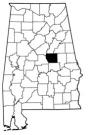
Coosa County Extension Office


Meet the Staff  &  Directions
Office Hours: 7:30-12:00; 12:30-4:00

Roger C. Vines
County Extension Coordinator
P.O. Box 247
Rockford, AL 35136
Phone: (256) 377-4713
Fax: (256) 377-1271

Email Us

Calhoun County

HELPFUL LINKS


4h

Coosa Students Compete in Mathematical Forest Expedition

Crunching numbers in math class can sometimes cause a student to ask the question, “Why do I need to learn all this stuff?  Does this really apply to real life?”  The answer is a very definite “yes”.  To demonstrate this point, the math students at Coosa County Central High School were invited to participate in a program called the “Mathematical Forest Expedition”. 

The idea came to County Extension Coordinator, Roger Vines who then wrote a grant through the Coosa Valley R,C and D Council.  Upon receiving approval for the project, Vines teamed up with the Coosa County Forestry Planning Committee and Coosa County Central High School math teacher, Amy Tucker, to pull this project together.

math for

Mathematical Forest Expedition begins...

The idea was to take the math class out to a farm and let them use their math skills to solve real world problems.  While Mrs. Tucker had already provided the math background, the students still needed some training on basic terms and concepts related to forestry and wildlife management on a tree farm.  Forestry Planning Committee members, Doug McConnell and Roger Vines visited with the class prior to the event to provide some in-class instruction.  The students learned about calculating board feet volumes of  timber, calculating acreage, mixing herbicides, pond construction, fertilizer applications, estimating wildlife population growth, tree planting, and estimating financial returns from growing timber.

The following Tuesday, the class rode the school bus to the Vines TREASURE Forest not far from the school.  The students were divided into teams of five and then rotated through six different stations.  At each station they were challenged with a different set of math problems and common calculations made on a farm.  The event was conducted as a competition among the teams for high score.

At the first station Doug McConnell, who is a consulting forester, had the students measure the circumference of a tree, then calculate the diameter using pi, and then use the Pythagorean Theorem to covert the round tree to a square log.  Next the students calculated the cubic inches of wood in the tree, converted this to board feet, and finally applied current prices to estimate the value.

Annette Spivey with the Natural Resources Conservation Service led station #2, in which the students measured the dimensions of an earthen pond dam including length, top width, height, and base width.  Since this forms the shape of trapezoid, the students then calculated the cubic foot volume of the dam, converted this to cubic yards, and applied current construction rates to come up with the cost of building the pond. They also figured how many gallons of water would be added to the pond after a one inch rain – over 32,000 gallons!

math for 1

Measuring the pond dam

At station #3, Bryan Wood who is an engineer for the City of Auburn, had the teams measure the size of a wildlife food plot.  The students then calculated how many pounds of seed would be needed to plant the food plot.  They also used soil test recommendations to calculate the number of pounds of fertilizer and lime needed on the site.  Finally they were asked to project the growth of a deer herd over a three year period.

Next the teams moved to station #4, led by County Extension Agent Roger Vines.  At this station the participants measured off a 1/10th acre sample plot of timber.  Then they determined the number of trees per acre, the average diameter of the trees, and the average height of the trees and then converted this into the number of cords and tons of pulpwood that could be harvested.  Then the groups applied current timber prices to estimate the financial value of the stand.

Consulting forester, Sara Baldwin, led station #5 dealing with herbicide mixtures.  The students calculated the number of ounces of herbicide needed to treat the area, how many gallons of water per acre would be applied, and how much water and herbicide to put in each tank of the 3 gallon sprayer.  They also solved problems based on mixing a percent solution spray mix.

The final station was led by Blake Kelly with the Alabama Forestry Commission in which the participants determined how many tree seedlings were needed to plant a given area.  From there the students extrapolated to a larger acreage, determined the cost of site preparation, tree seedlings and planting.  These expenses were then compared to projected income calculated by applying today’s timber prices to growth and yield tables for loblolly pine.

After a lunch sponsored by the Coosa County Farmer’s Federation, each instructor went over the problems from their respective stations and answered questions.  Then to conclude the program, the winning teams were announced.  The winning team members received a trophy and a cash award.  The awards were sponsored by Bryan Wood and CGS Surveying.  Bryan is a former Coosa County 4-H Forestry and Wildlife Team member who enjoyed the success of two state championships and placing second and third in two national 4-H Forestry and Wildlife Events. He simply wanted to give something back.

math for 2

The Winning Team!


About Coosa County

Hernando DeSoto was the first white man to visit what is now Coosa County in north central Alabama. The county was formed in 1832 out of lands ceded by the Creek Indians through the Treaty of Cusseta. The county was named for the Coosa River, which flows through the western part of the county and serves as the boundary between Coosa and Chilton counties.

The town of Goodwater is Coosa County's largest, but the county seat is in Rockford, 26 miles north of Wetumpka. Originally named Pondalassa by settlers, the town's name was later changed to Rockford.

The rural county's population is 34 percent black and 65 percent white. Of all adults over age 25, 53.9 percent have graduated from high school, and 6.3 percent are college graduates. The county has an elementary school, a middle school, and a high school which are centrally located in Hanover.

Hatchet Creek flows from the northeast corner of the county to the southwest corner. Considered by many to be the state's finest for canoeing, Hatchet Creek is also noted for its beds of the rare Cahaba Lily. Other attractions include the Old Rock Jail in Rockford and Flag Mountain State Park.

Coosa County's main agricultural products are timber, beef and hay. Others include catfish, horses, vegetables, fruits, nursery plants and corn. Major industries are shelving and cotton yarn.

The county Extension office employs four full-time staff members and eleven Regional Agents who specialize in various areas. Active Extension programs include the Treasure Forest Program, Master Gardener, Forestry Adopt-A-School, New Leaf Program, Hunter Education, Outdoor Classroom, and Computer Literacy Labs. The Coosa County 4-H program involves approximately 100 youth.


        Click here to ask a question